How interior pivot doors make your project flexible
07 July 2026
Interior pivot doors answer the desire for flexibility in every phase of a project: free choice of material and dimensions, placement anywhere from kitchen to bathroom, and a door that goes in when the floor is already finished.
Pivot doors keep being specified for bigger and bigger entrances. The drama of a large pivoting front door explains that trend, but the same movement is happening indoors. Architects and interior designers worldwide are choosing interior pivot doors, and for one underlying reason: they answer the desire for flexibility in every phase of the design and building process.
An interior pivot door offers near-limitless design freedom and fits both new builds and retrofits. It also keeps your planning flexible. The door is one of the last elements to go in, so decisions about finishes, handles, thickness and handing can wait until the rest of the project has taken shape.
And because installation is fast and needs no construction work in the floor, that freedom does not come at a premium. A pivot door is a cost-effective choice as well.
Flexible pivot door design
Design flexibility comes in several forms: the material you choose, the dimensions of the door, and the way the door transforms a space.
Material flexibility
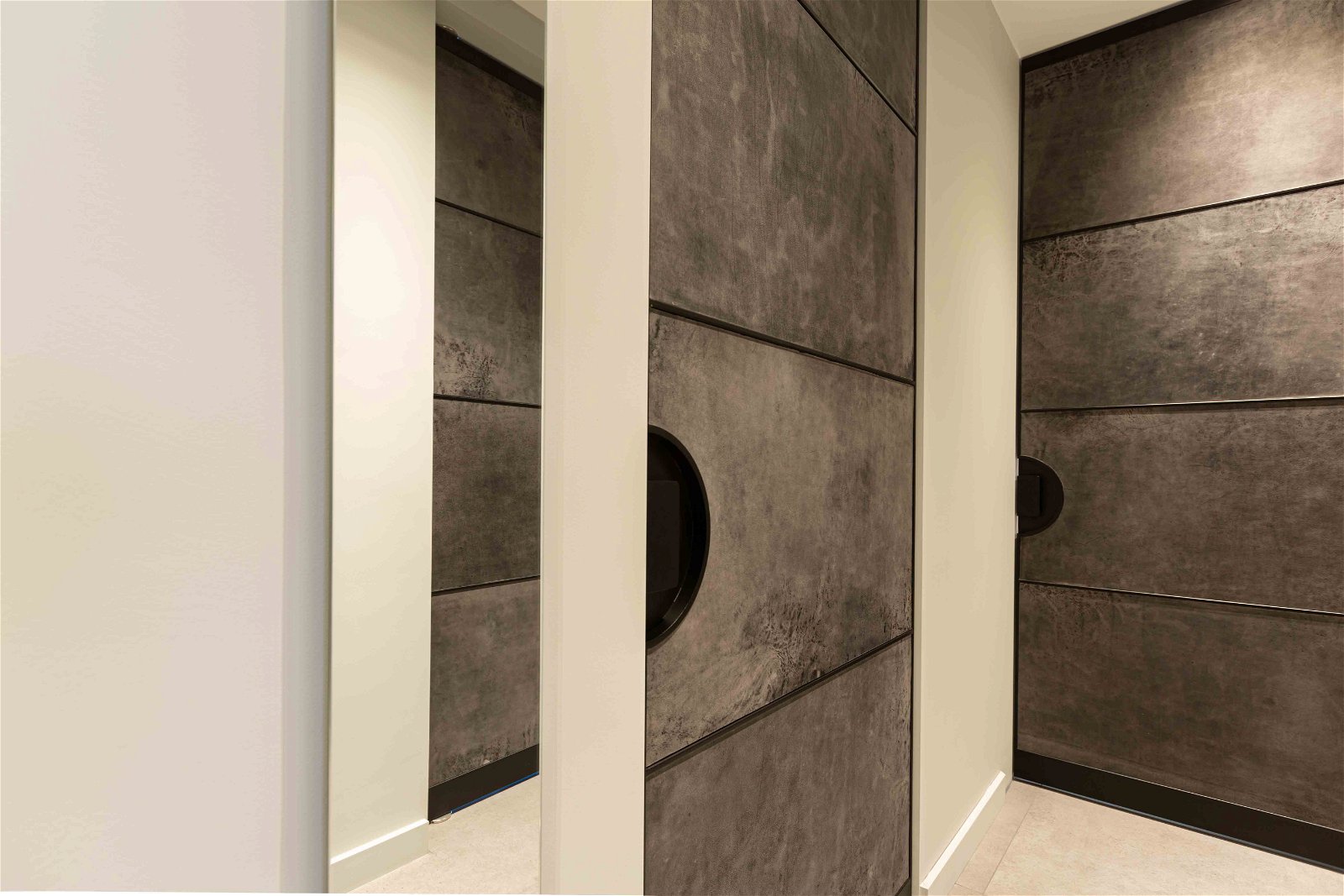
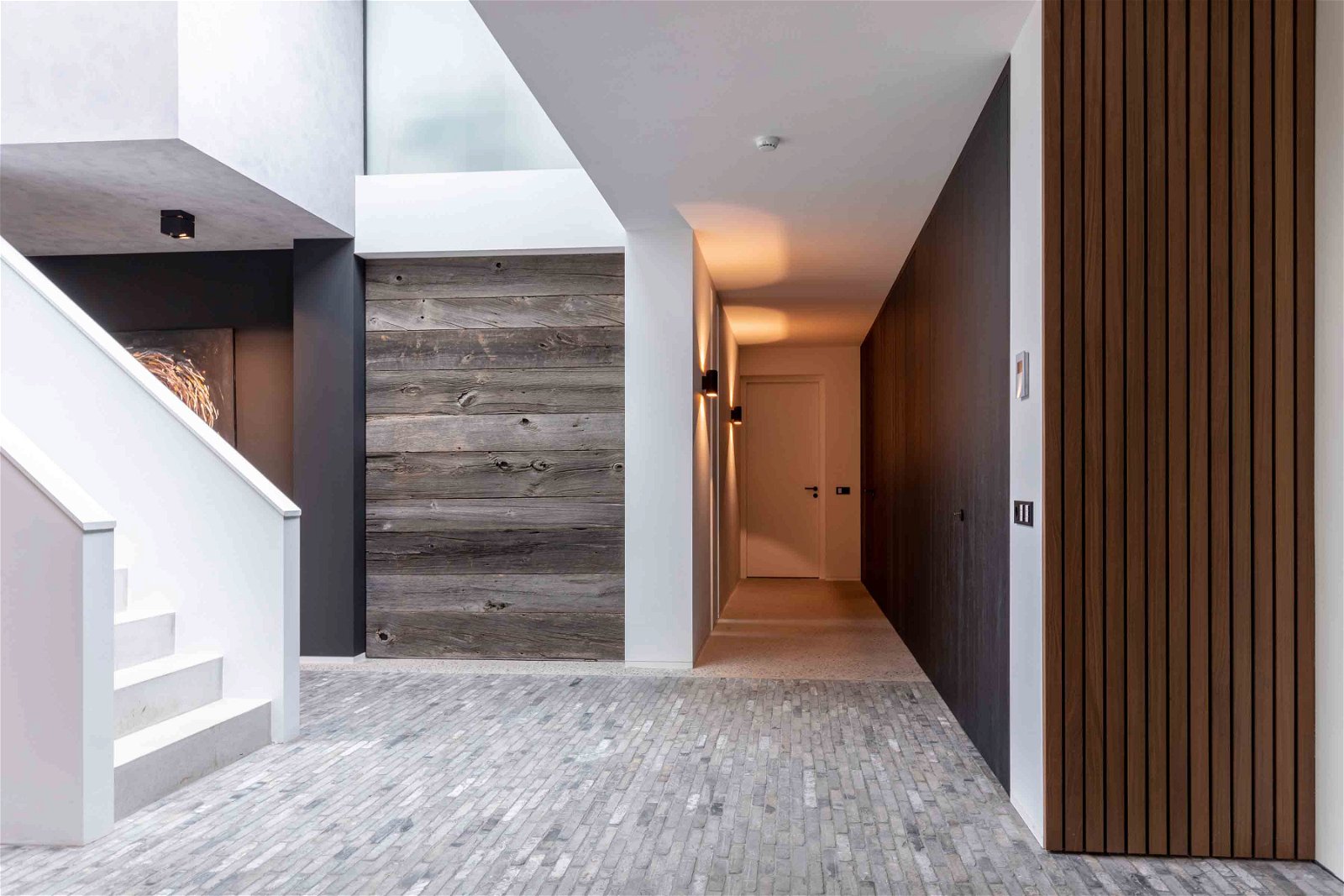
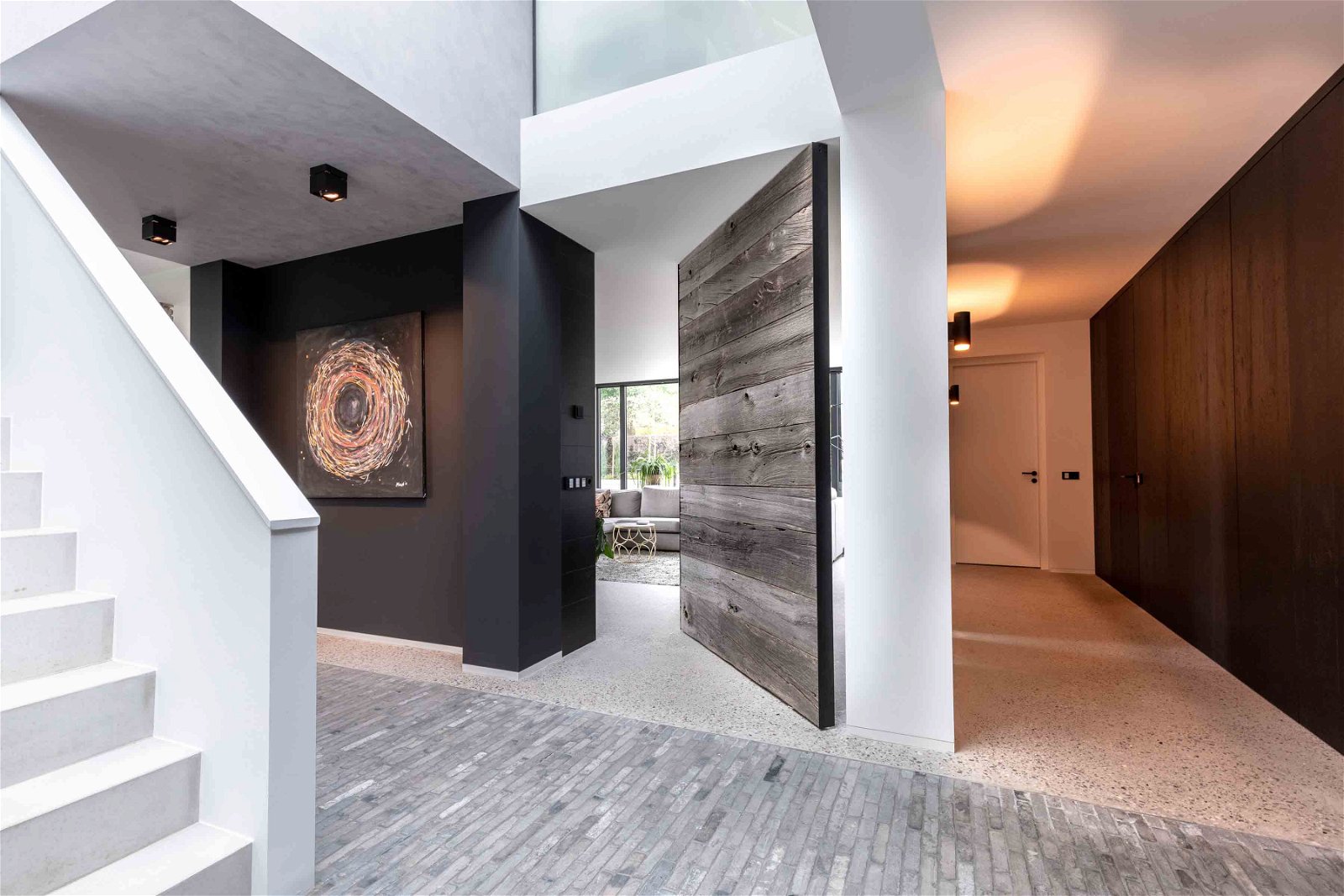
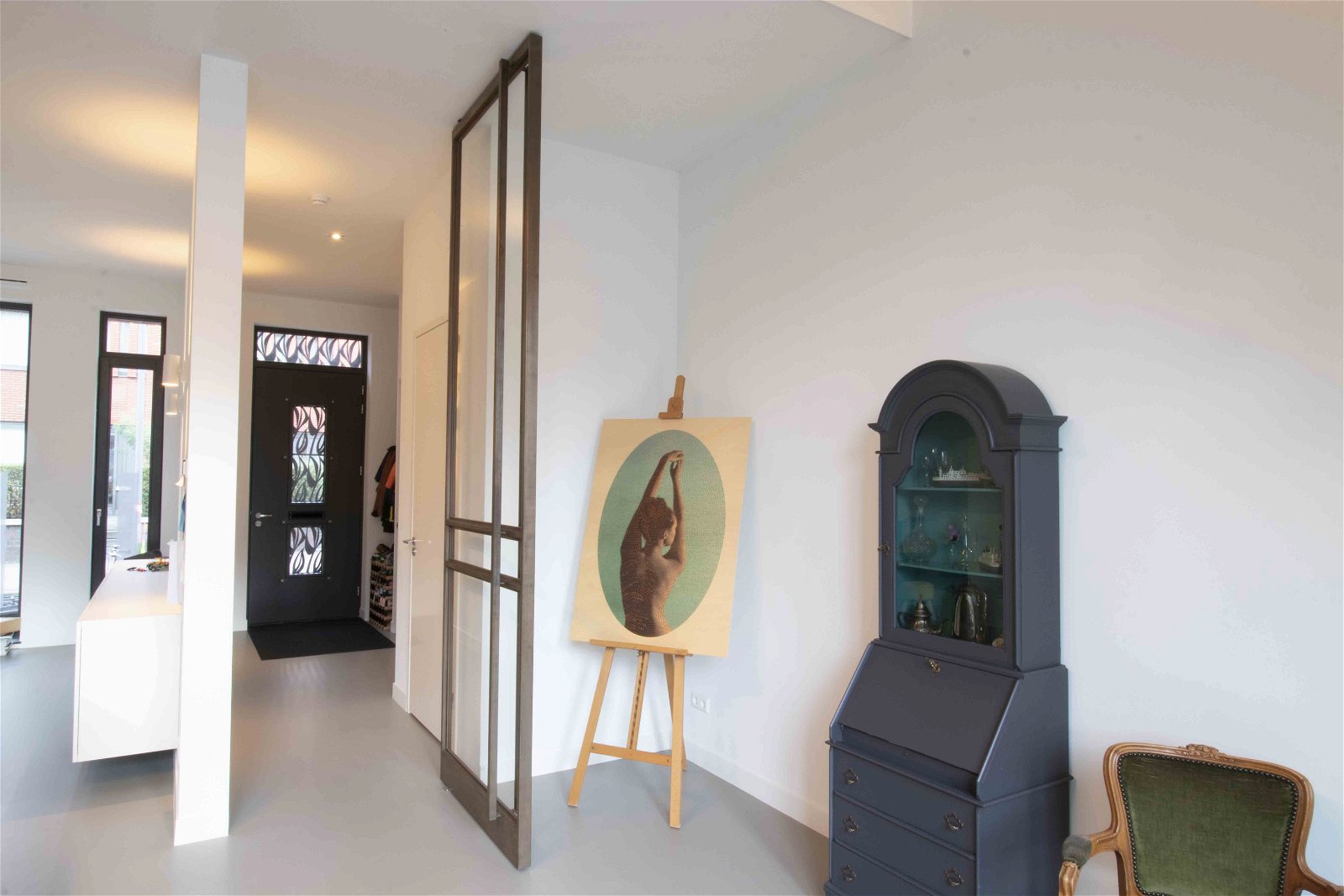
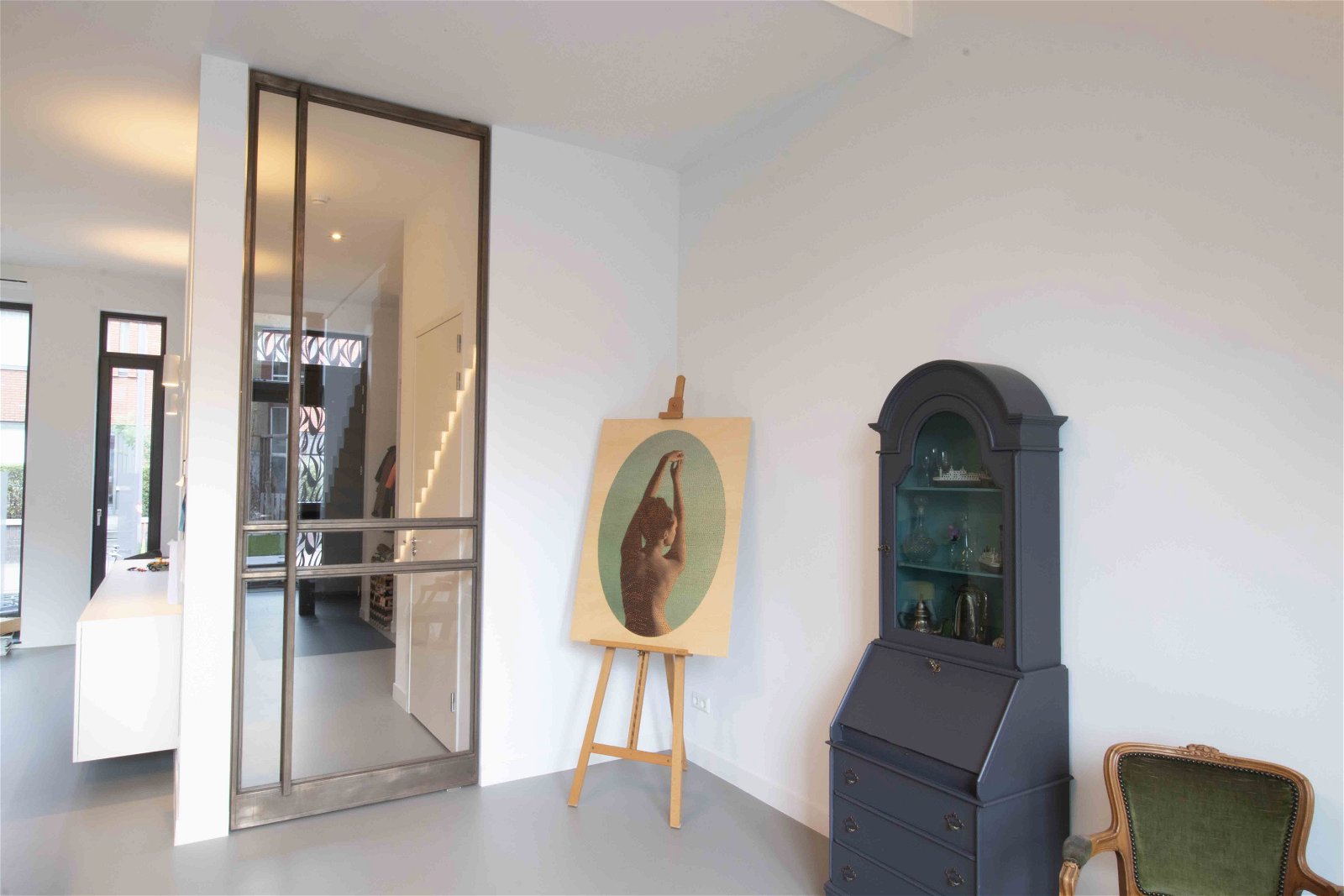
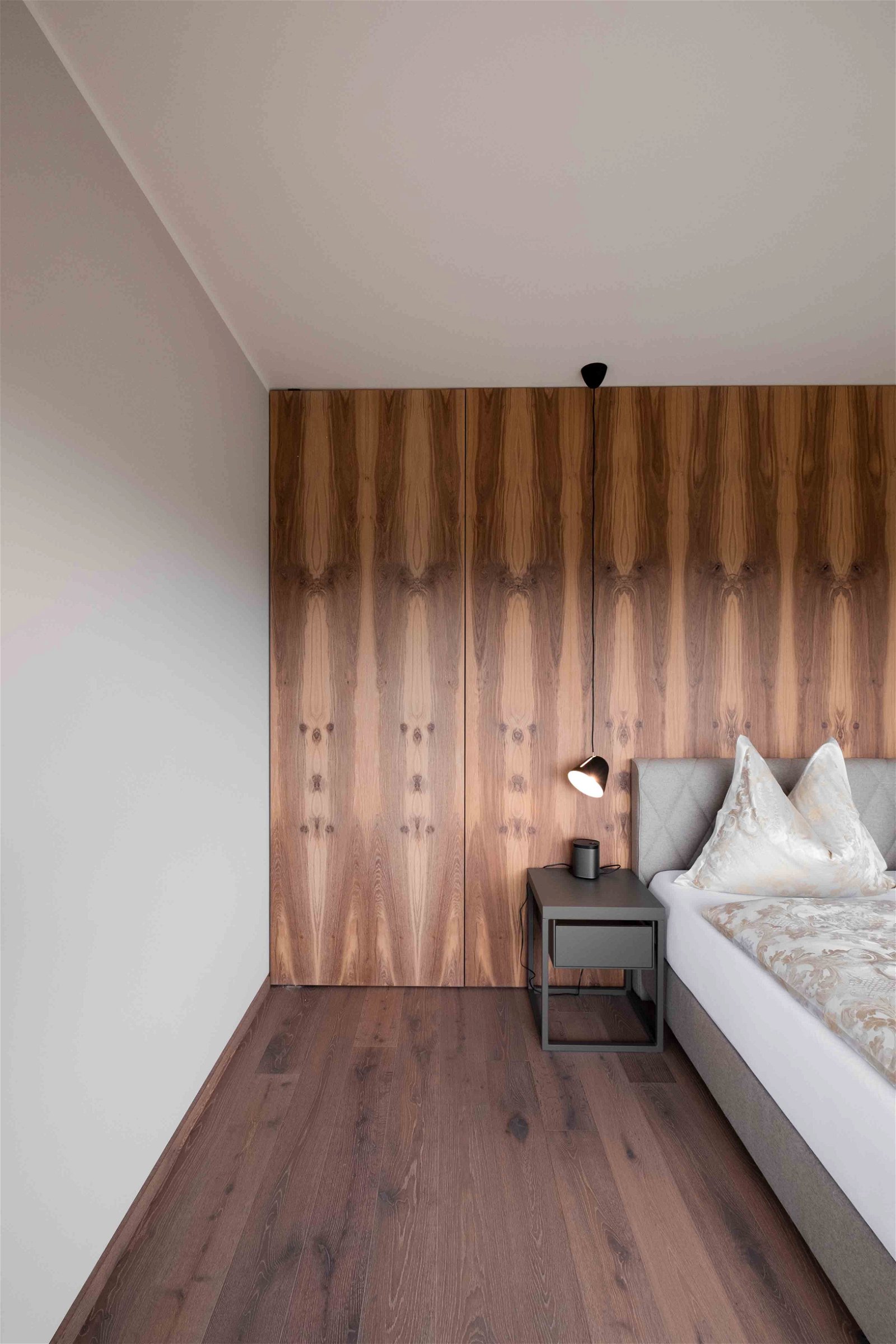
Almost any material is suitable for an interior pivot door. Because the hinge system is invisible inside the door, the design of the door itself is completely free. At FritsJurgens, we have seen pivot doors made of solid marble slabs, scaffolding wood with steel details, glass, and even leather-clad steel.
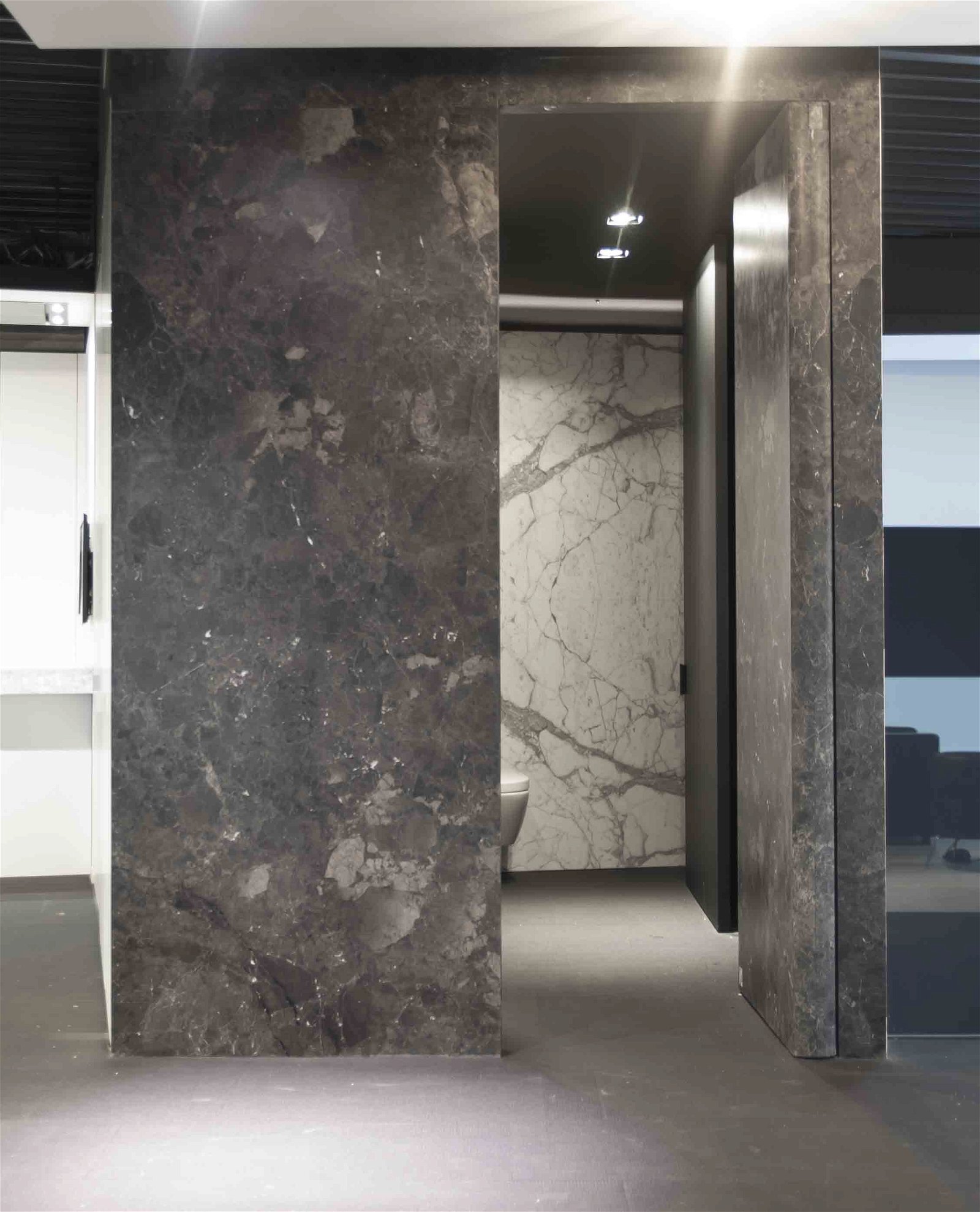
Solid marble interior pivot door | SheCi, Potier Stone
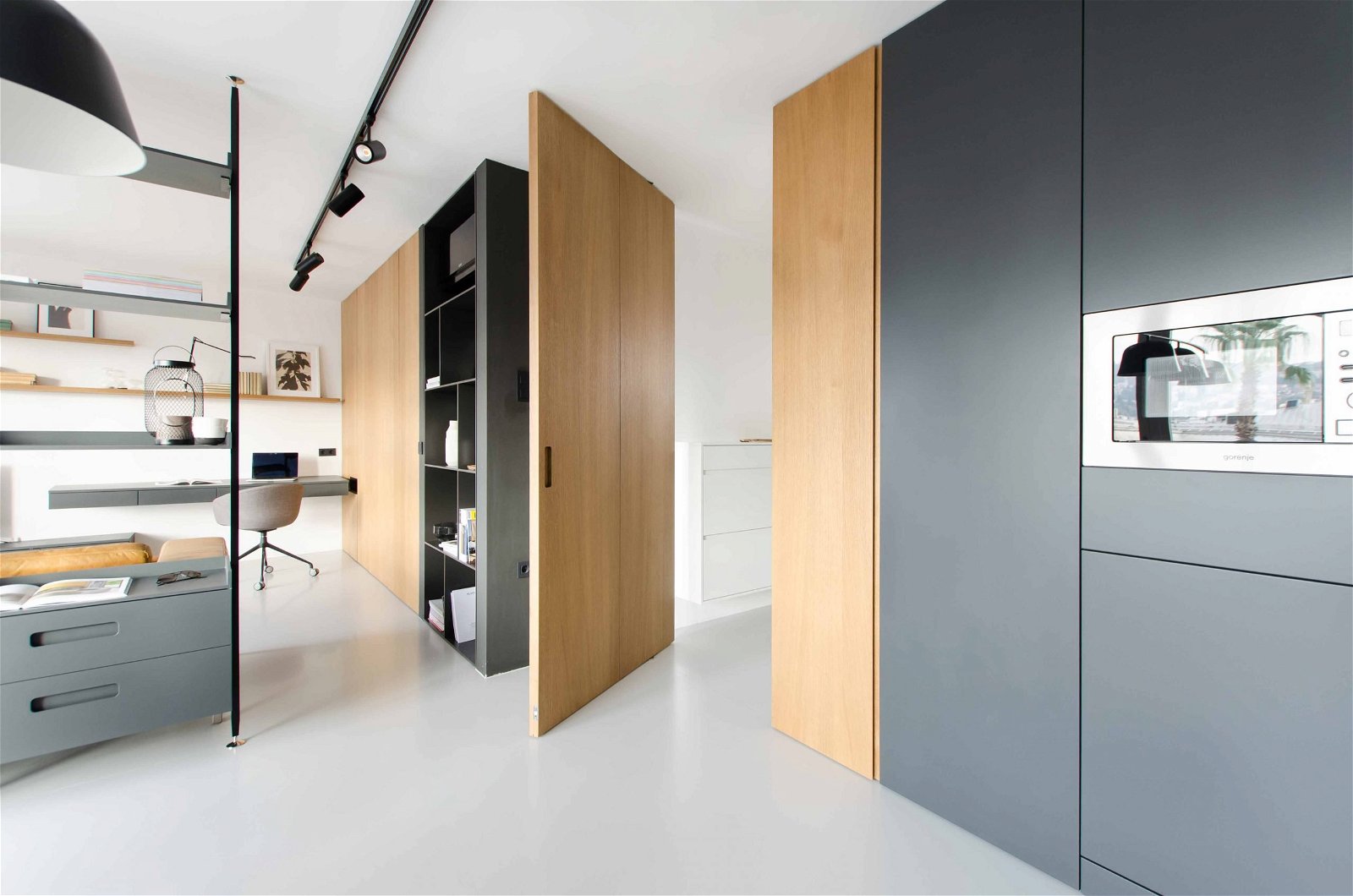
Wood ceiling-height interior pivot door | marasovic arhitekti
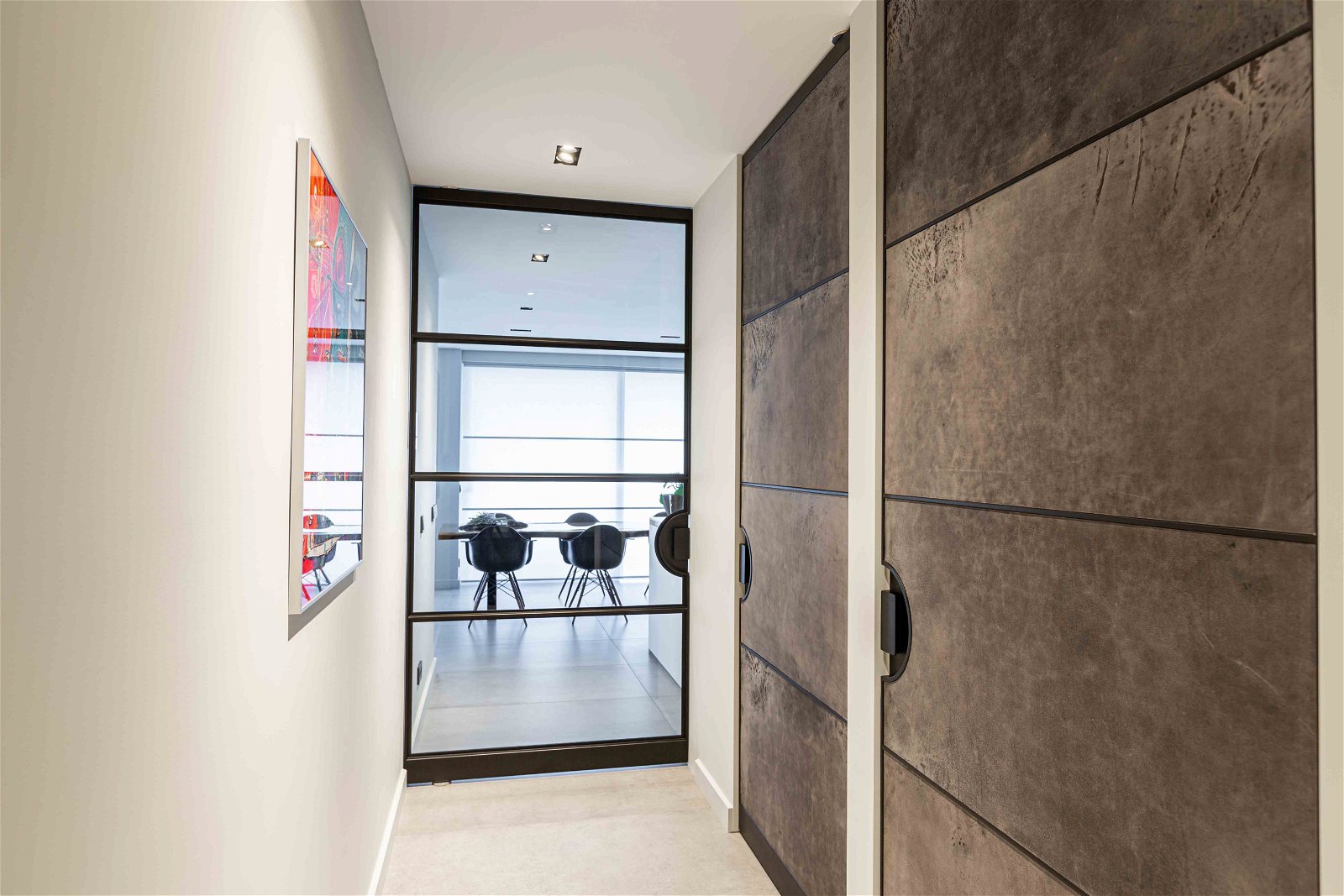
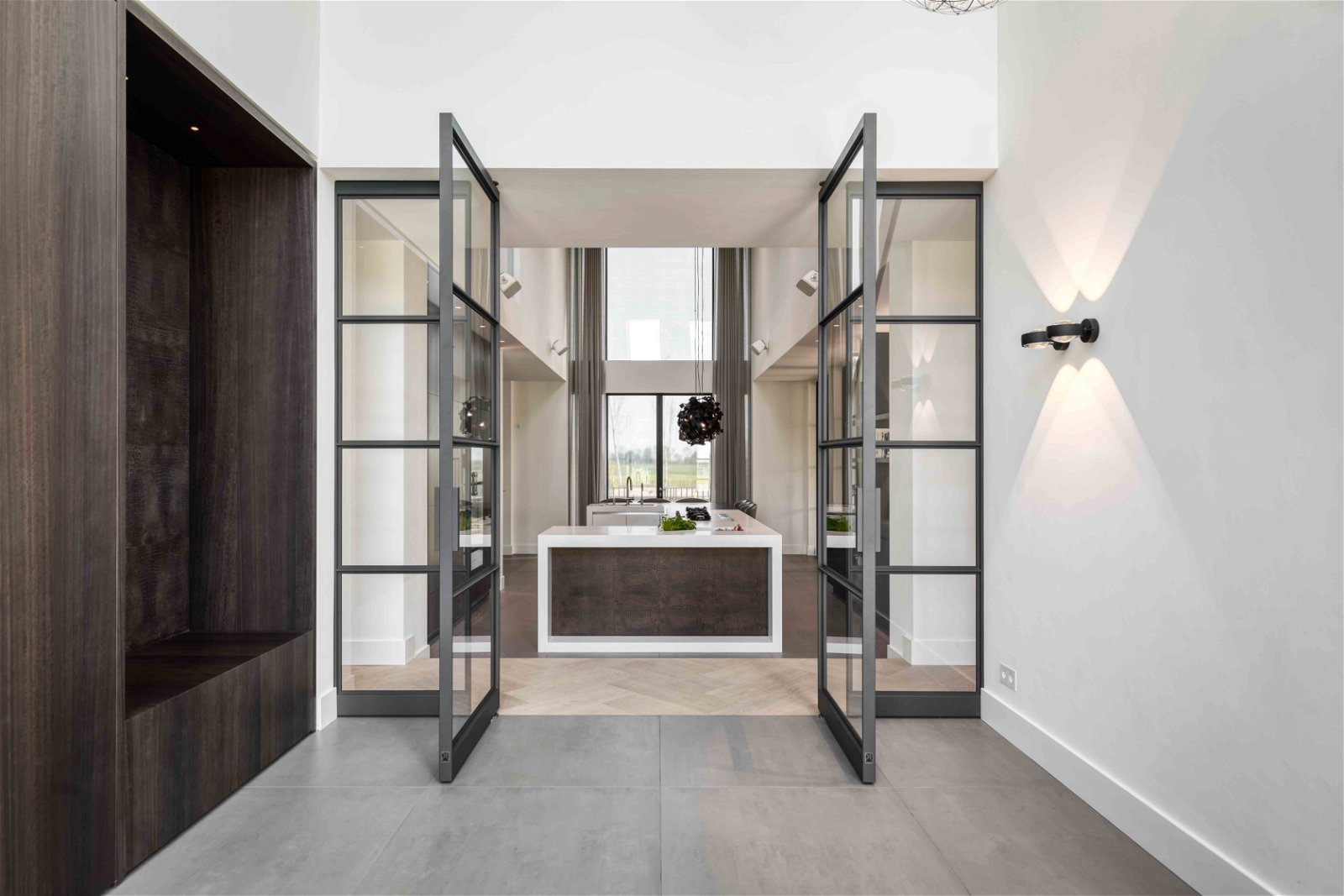
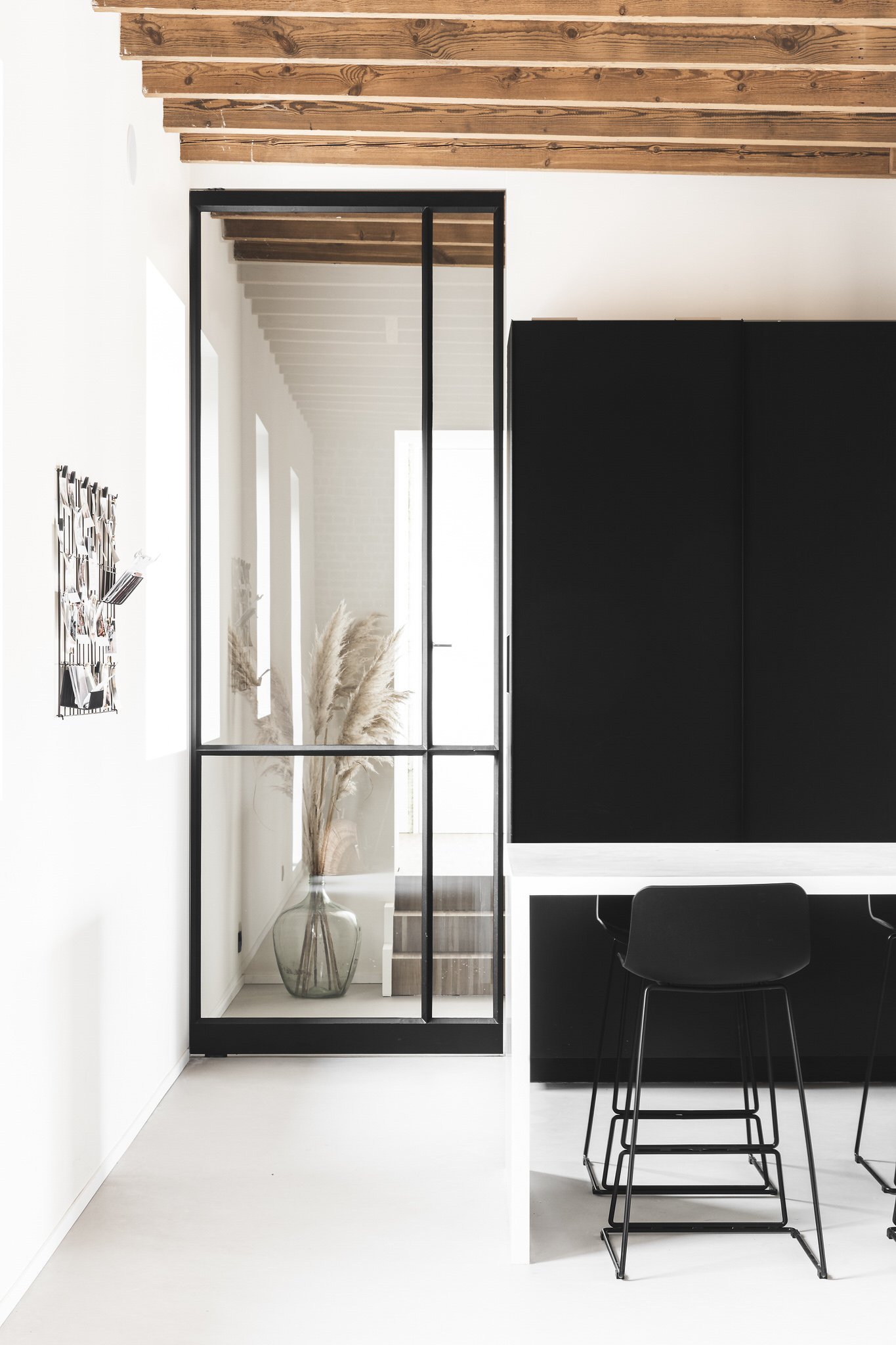
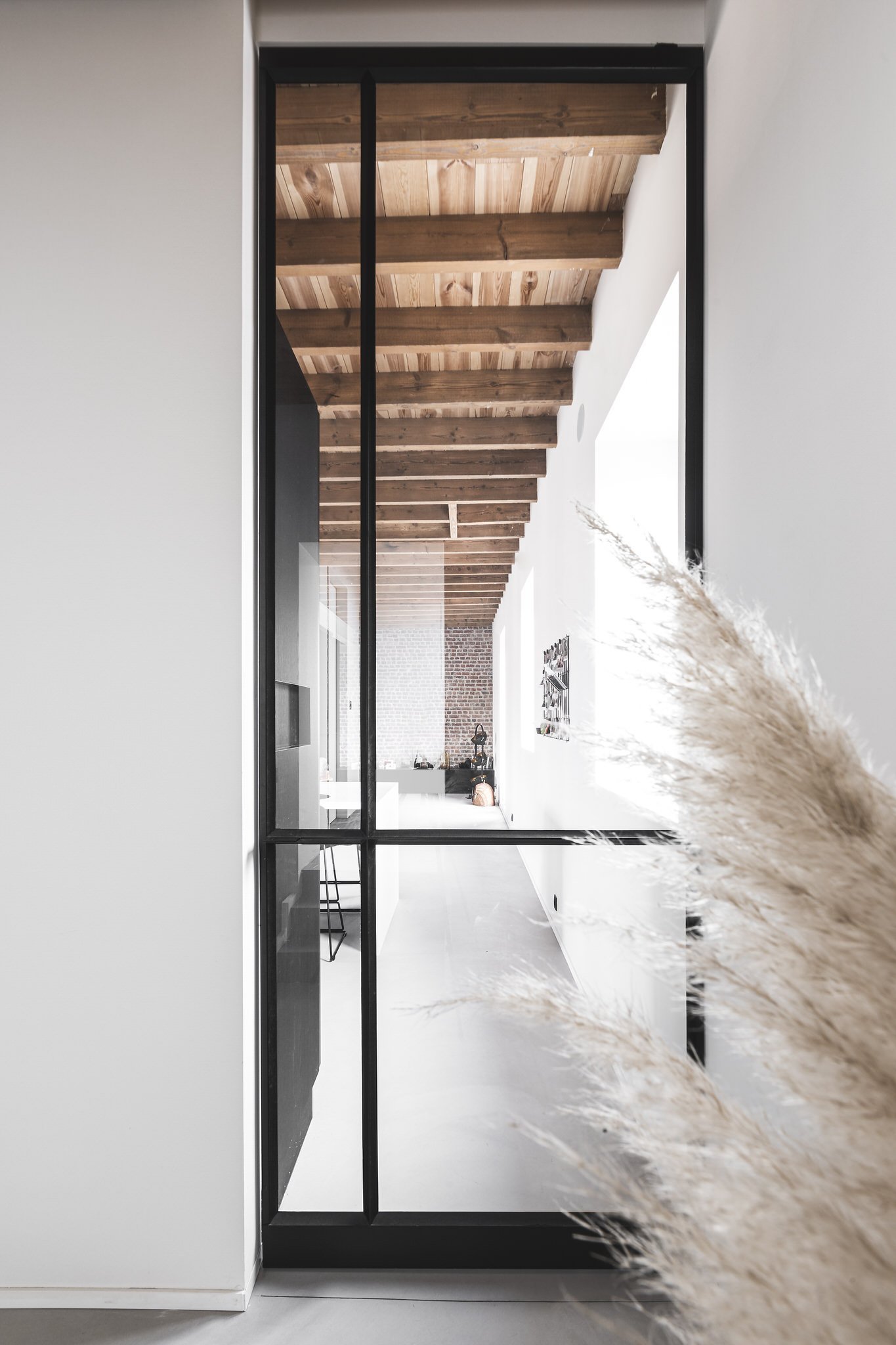
Glass and steel, and even leather and steel interior pivot doors | De Rooy Metaaldesign, Osiris Hertman
Interior pivot door made from scaffolding wood with a steel frame | Toon van Seggelen Interieurdesign
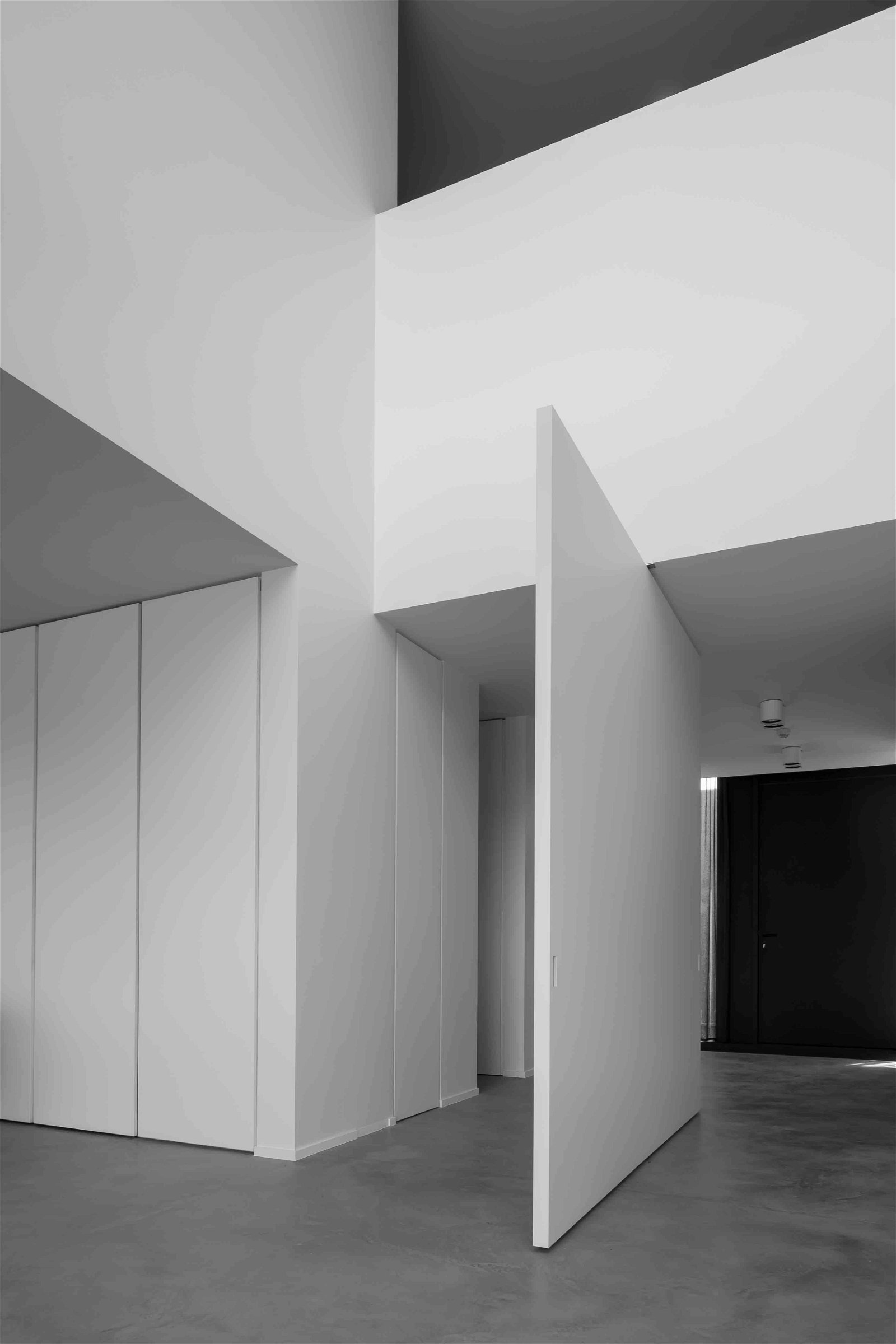
A pivot door rotates on a vertical axis, so its height is as good as limitless. A high-performance pivot hinge also carries wide and heavy doors: FritsJurgens systems take doors up to 500 kg.
That capacity makes floor-to-ceiling interior doors easy to realise. They emphasise the height of a space and make it feel larger. At the other end of the scale, short pivoting panels and louvres work with exactly the same hardware logic.
Ceiling-height interior pivot door made with glass and bronze-coated steel | Pols Metaal
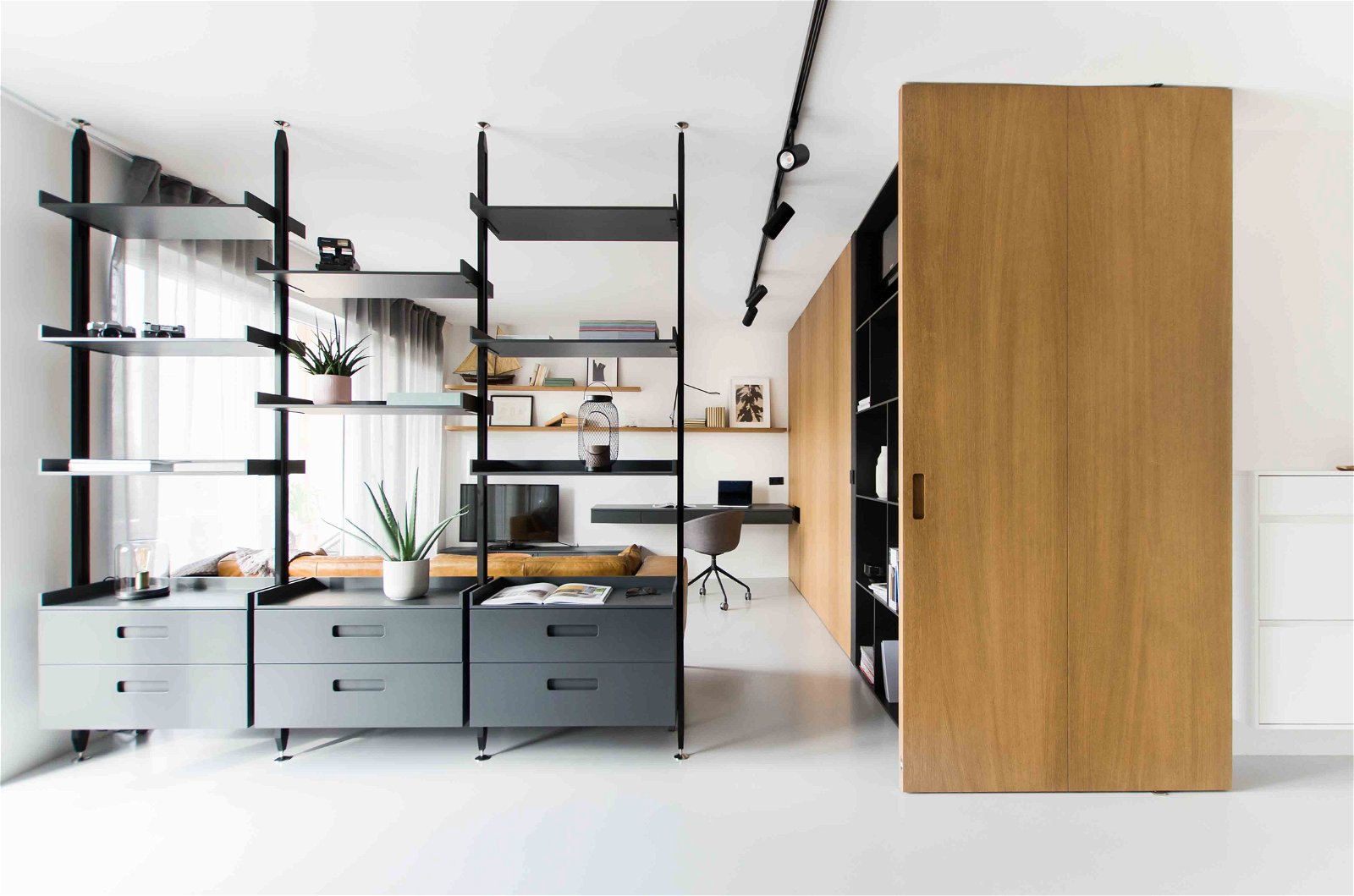
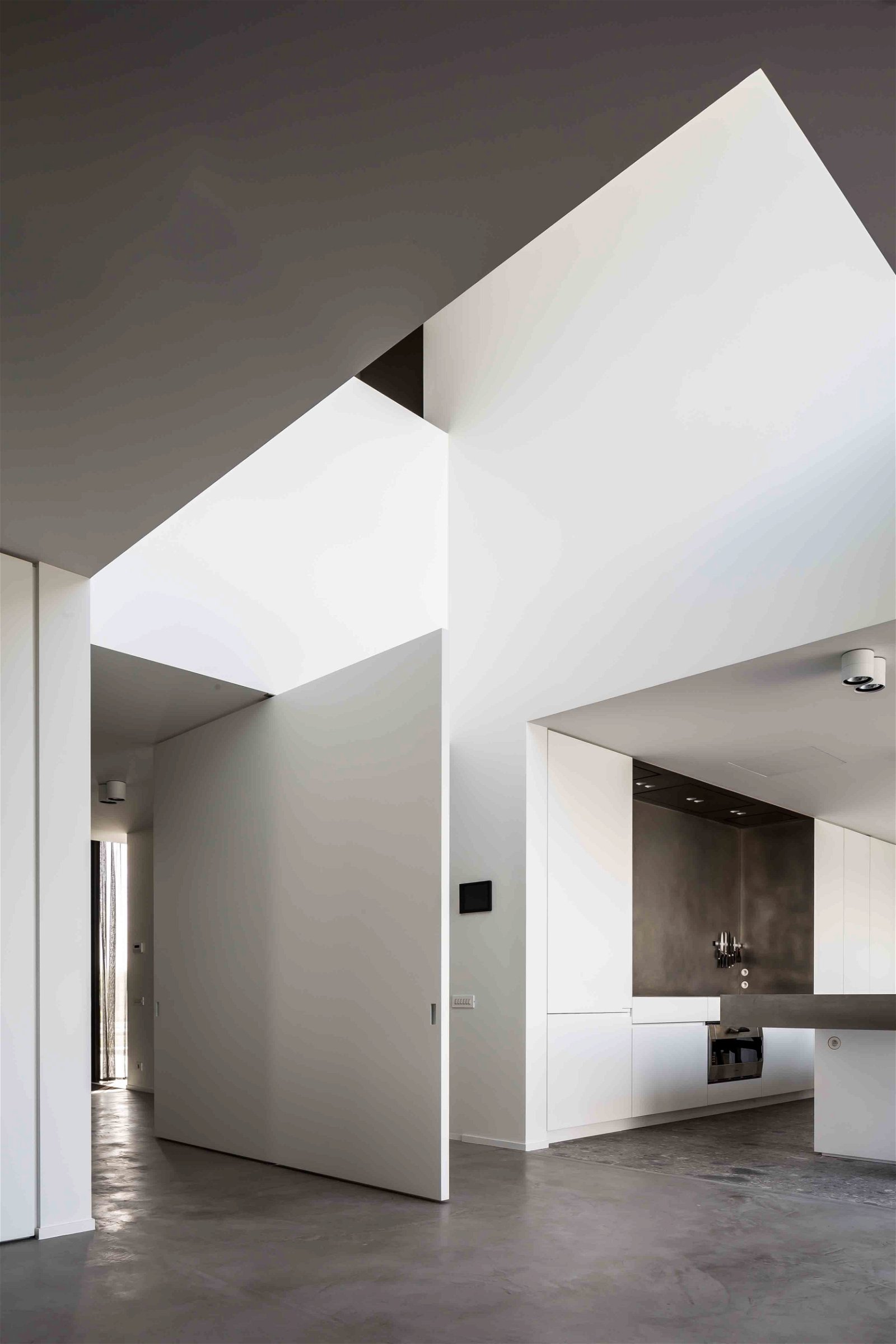
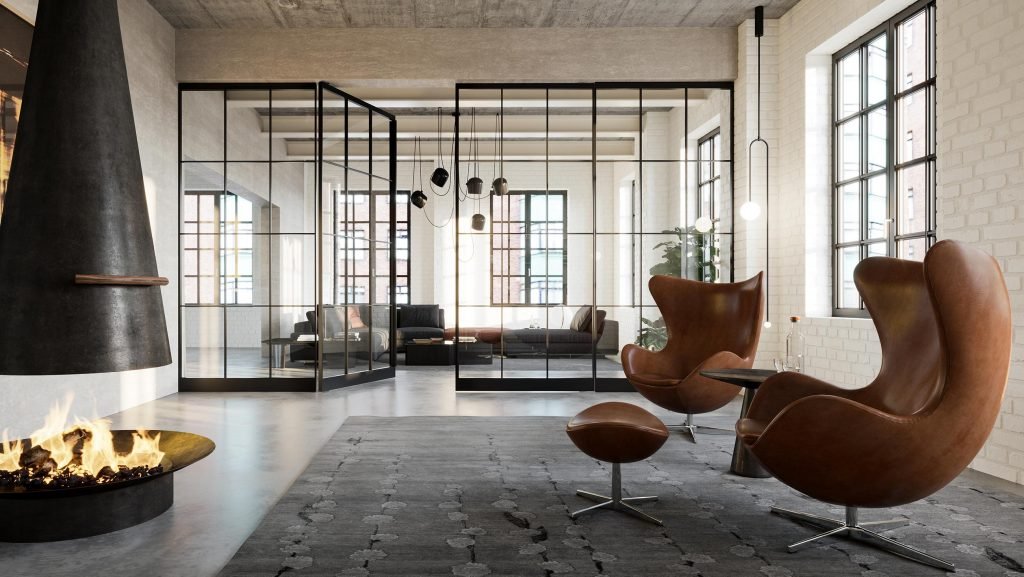
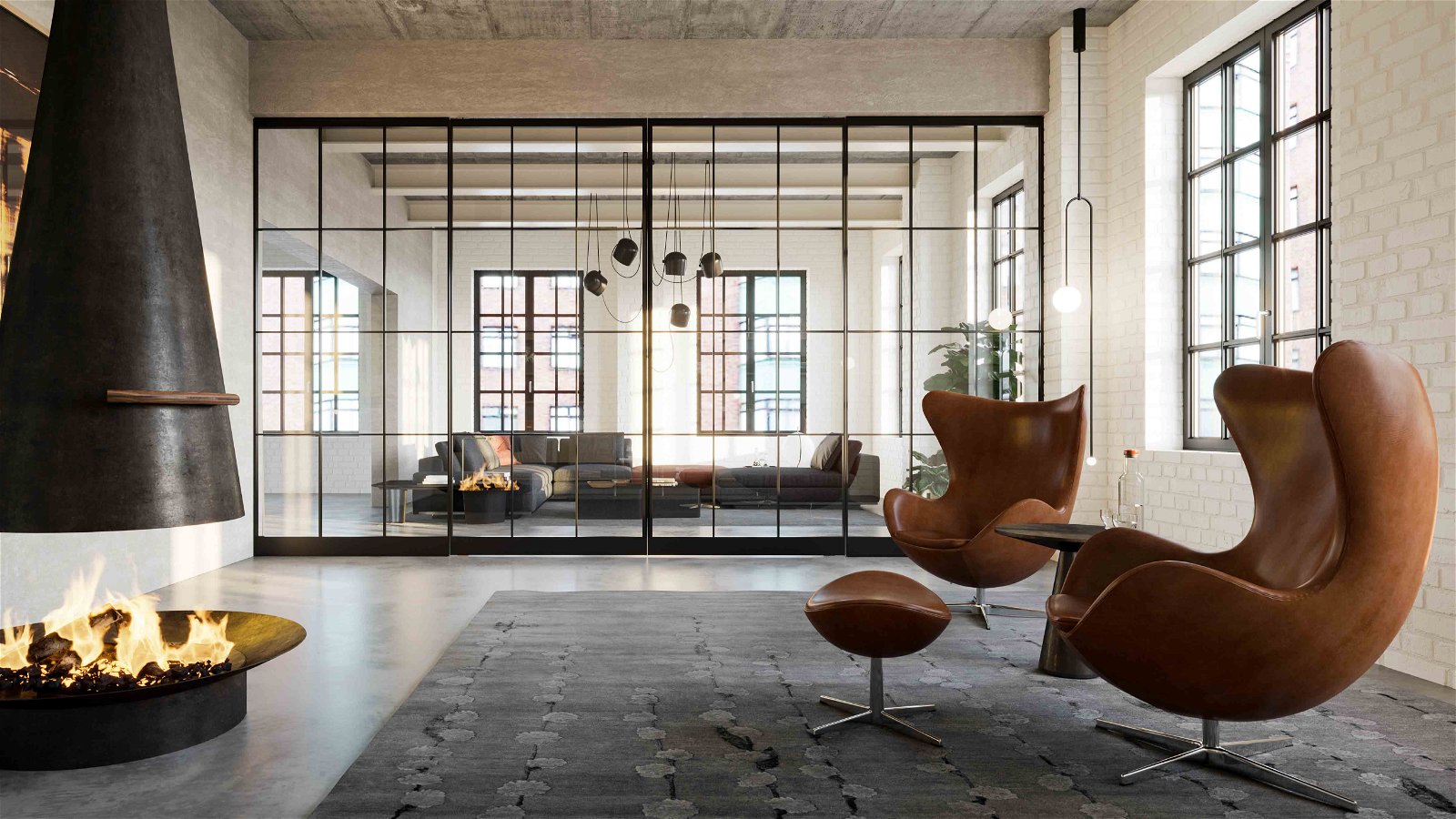
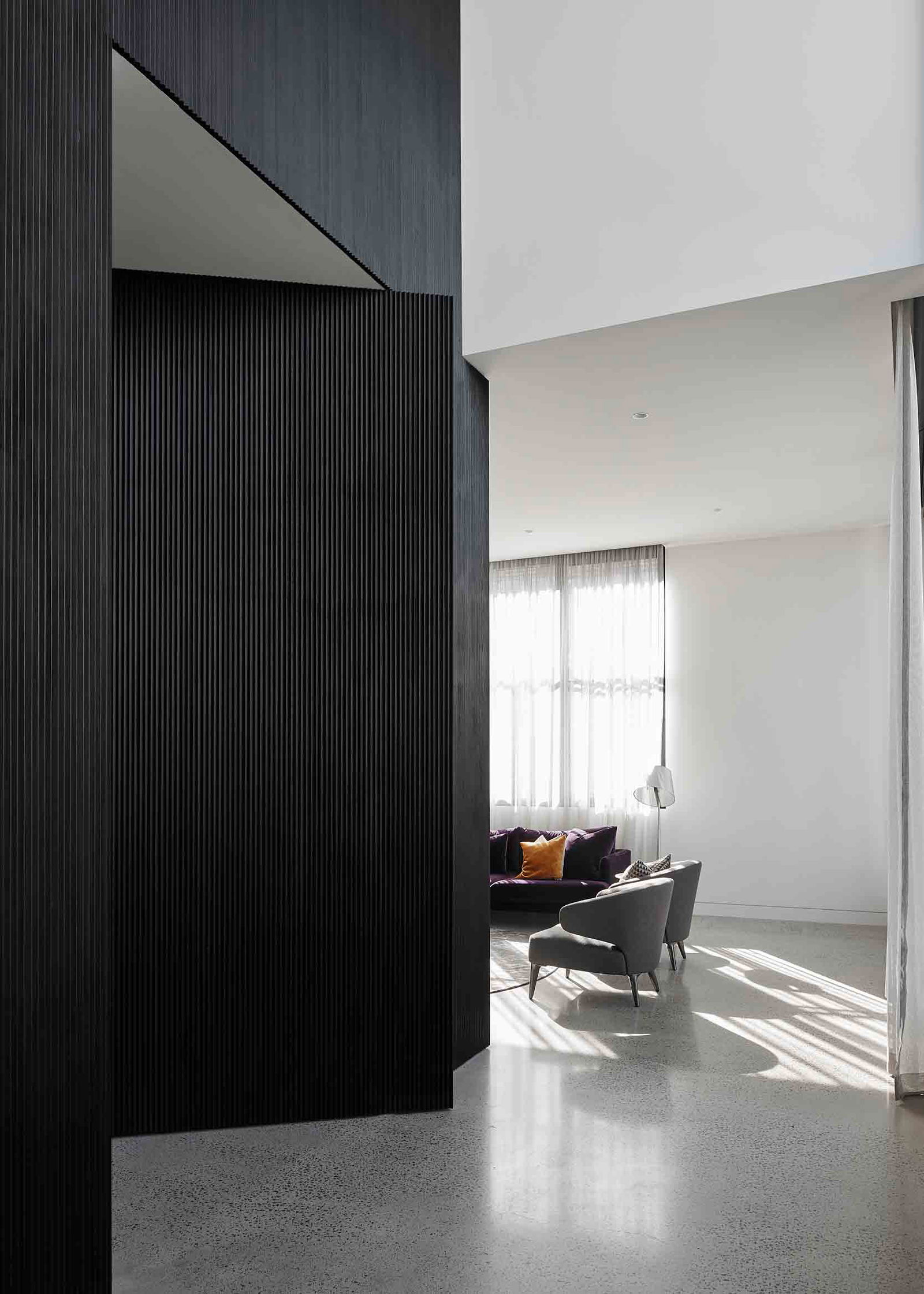
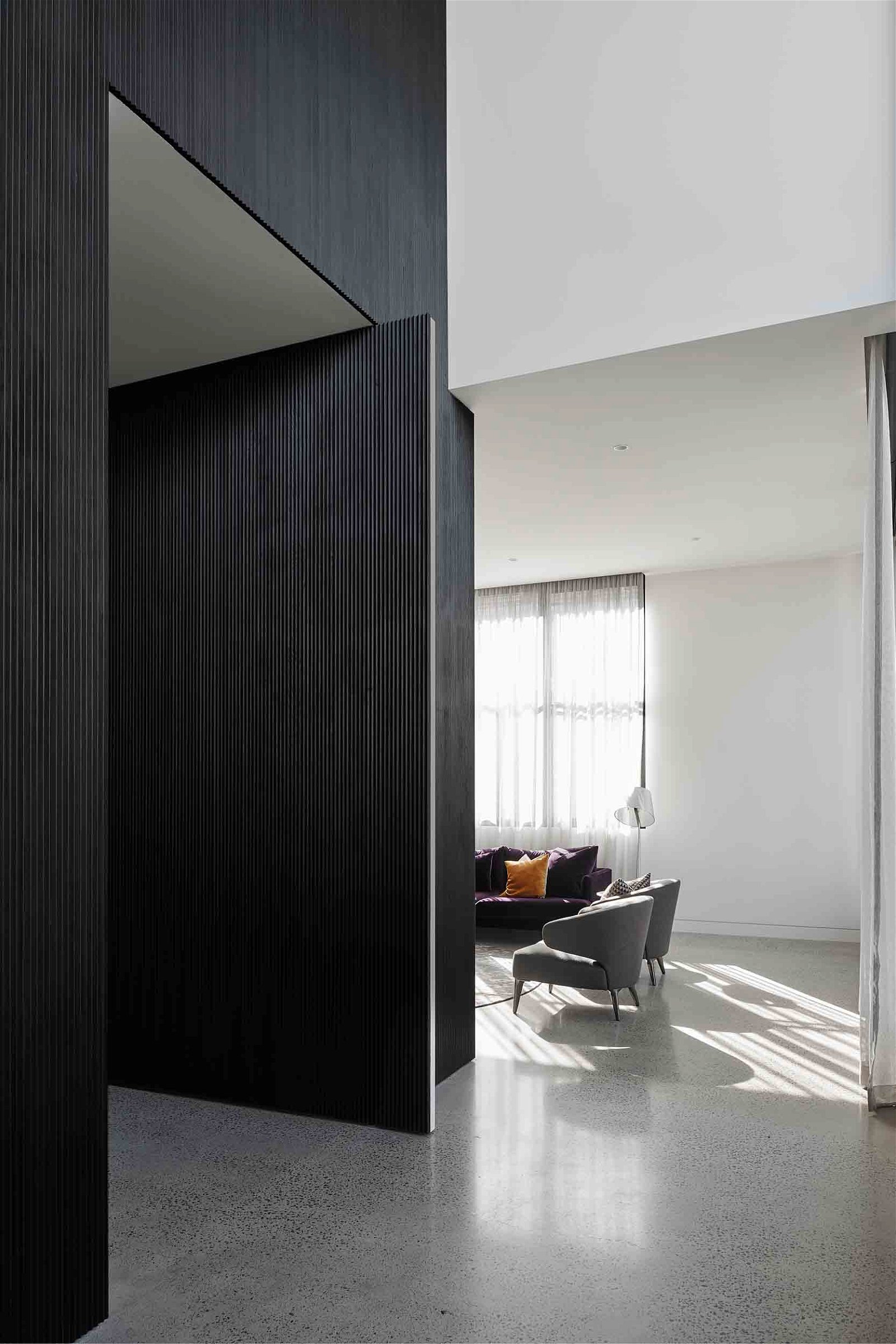
Spatial transformation thanks to a tall and wide interior pivot door | Govaert & Vanhoutte
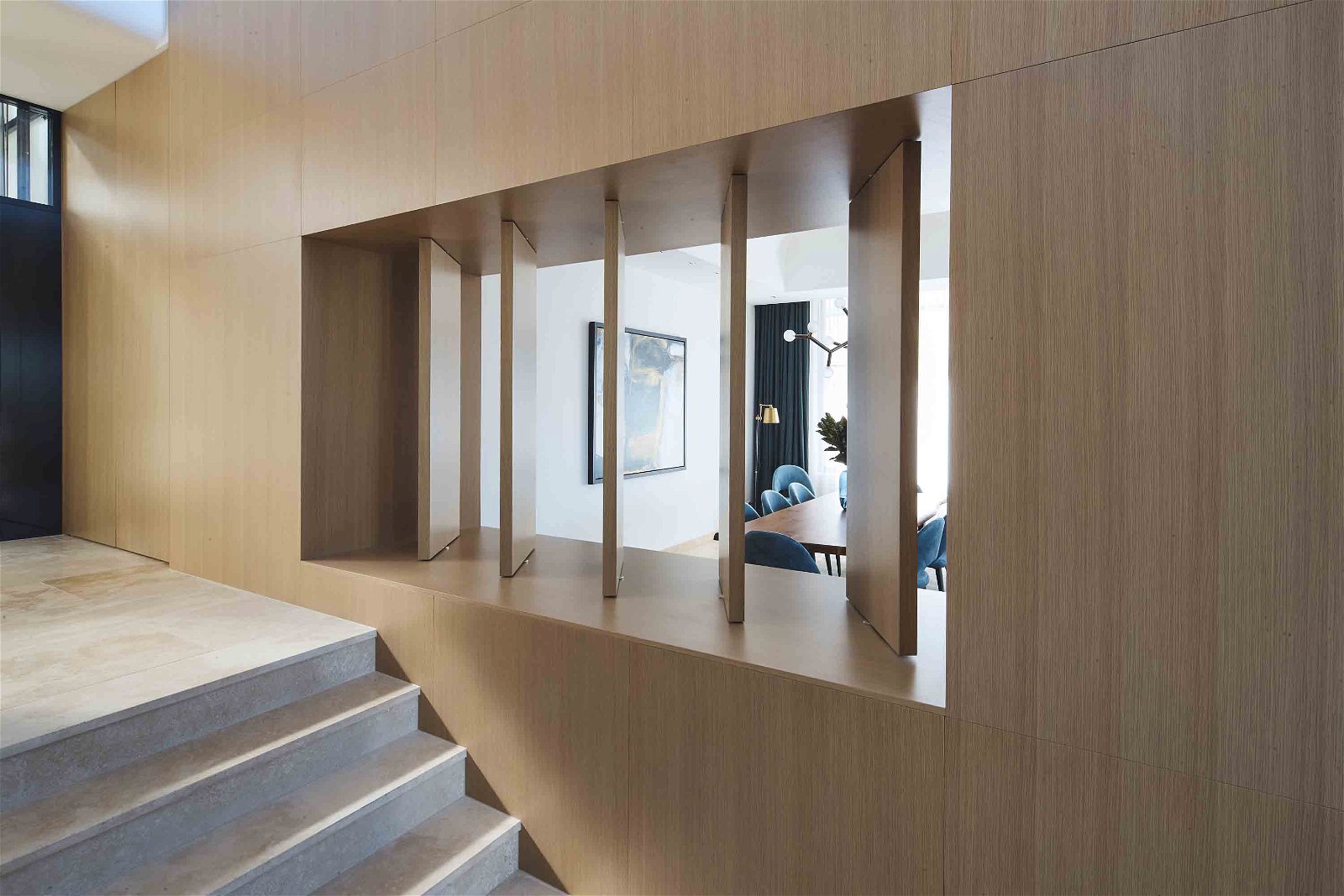
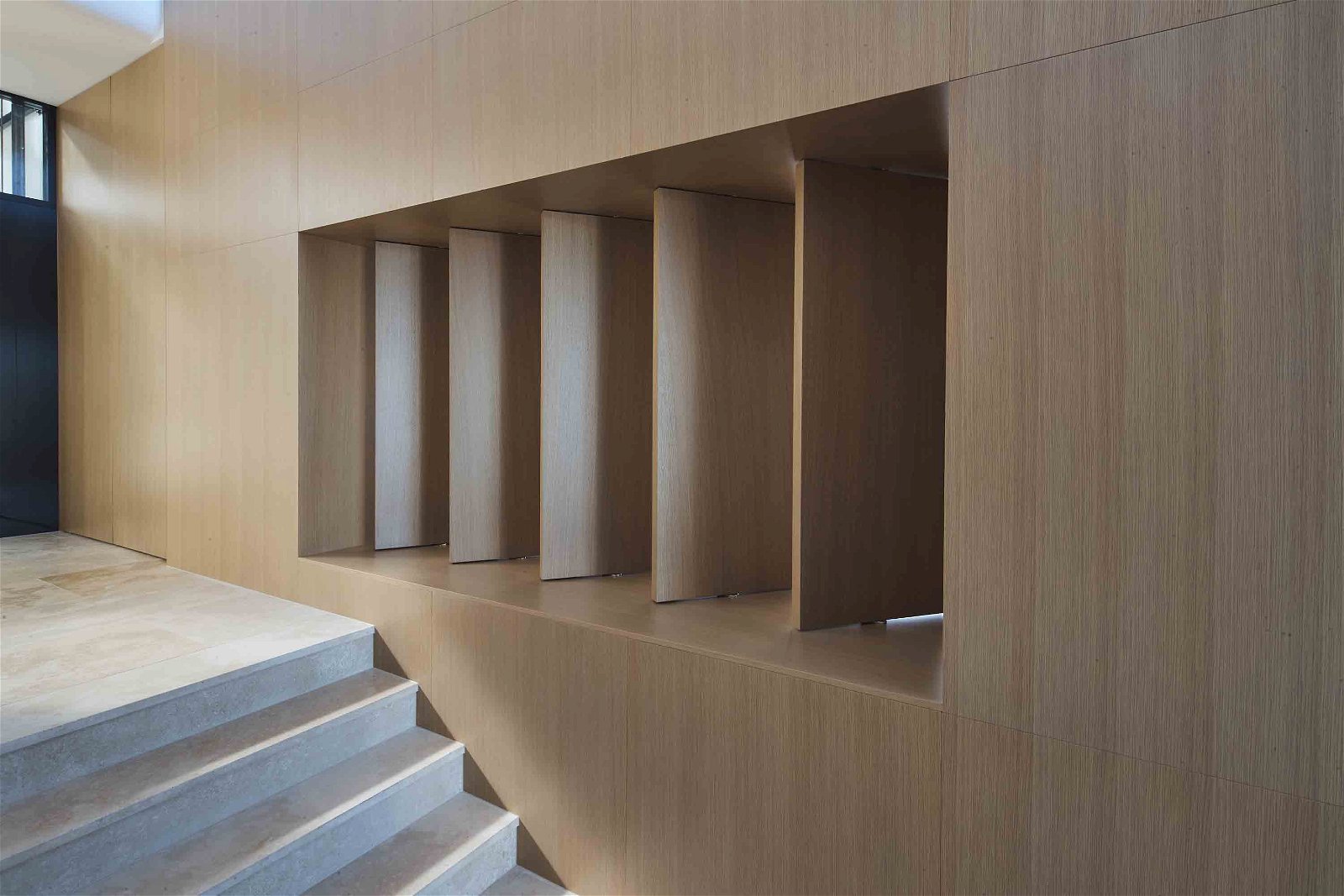
Short, pivoting louvres that create privacy between a hall and dining room | Space Joinery
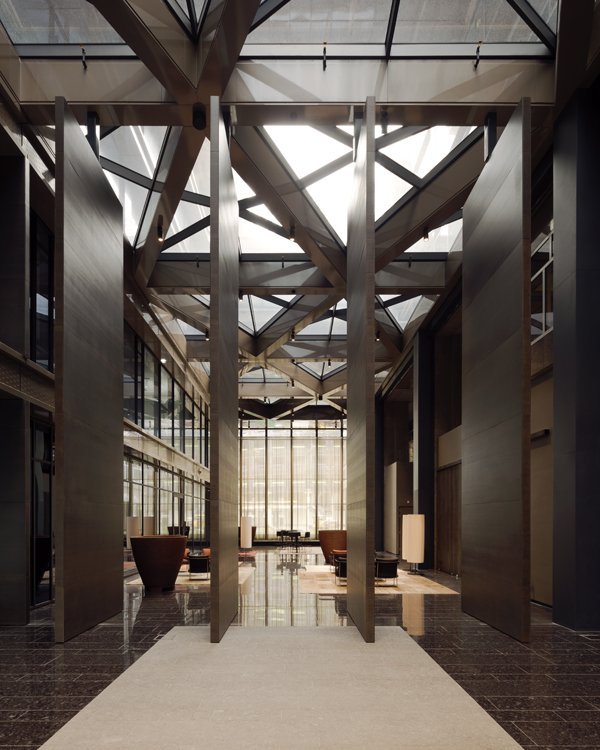
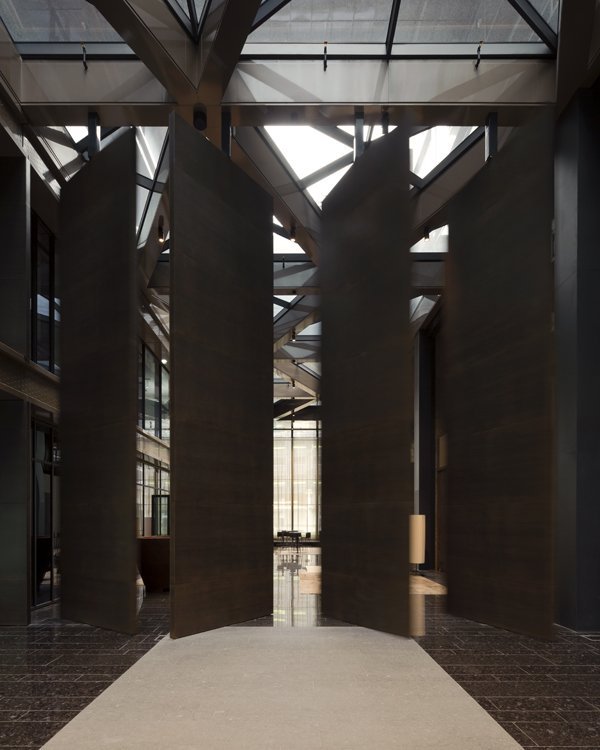
7.5 metres tall pivoting wall consisting of four pivot doors | MVSA Architecten, Harryvan Interieurbouw
Placement flexibility
A pivot door can be applied almost anywhere you would place a swing door, and in several places where a swing door disappoints.
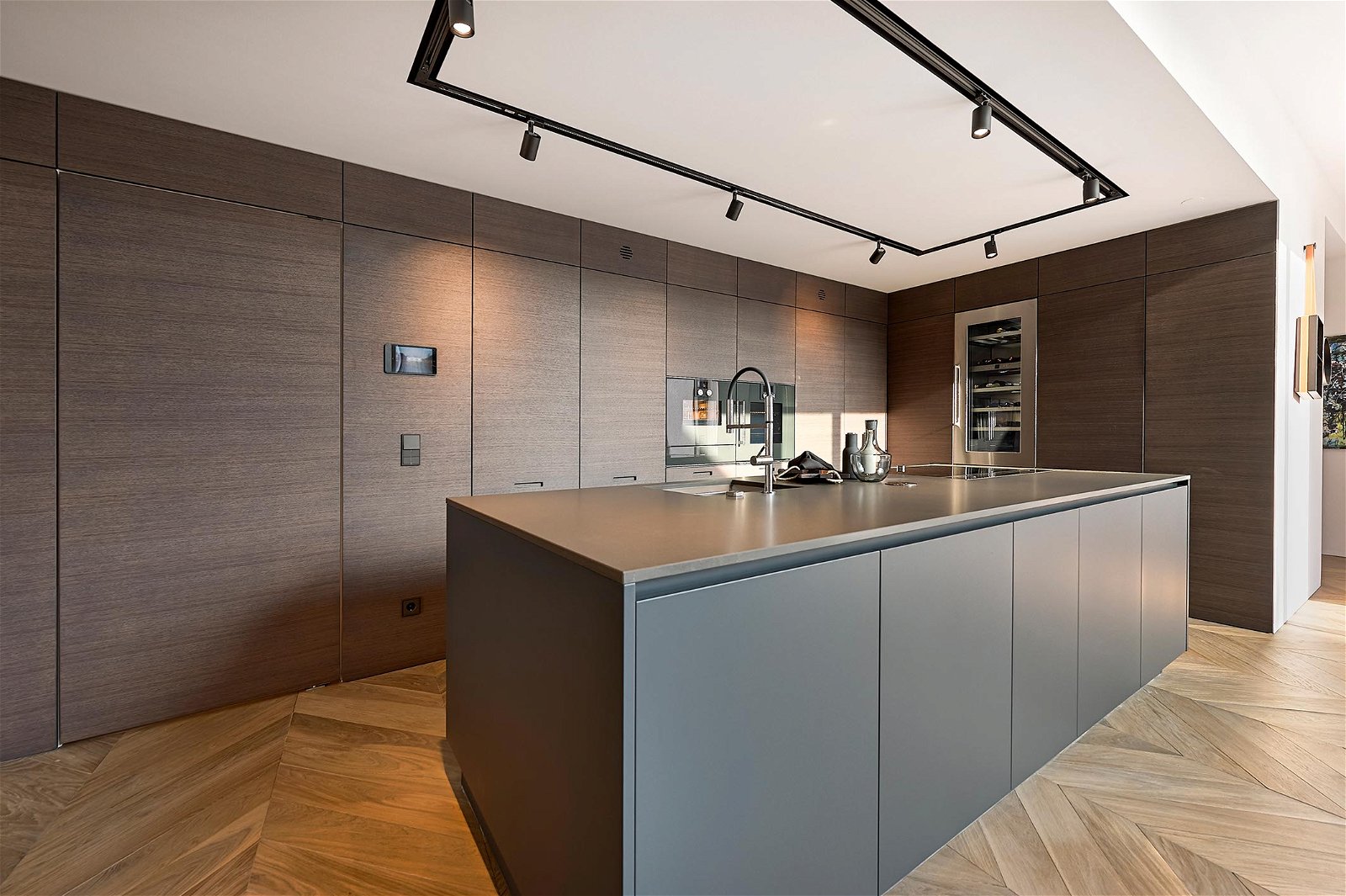
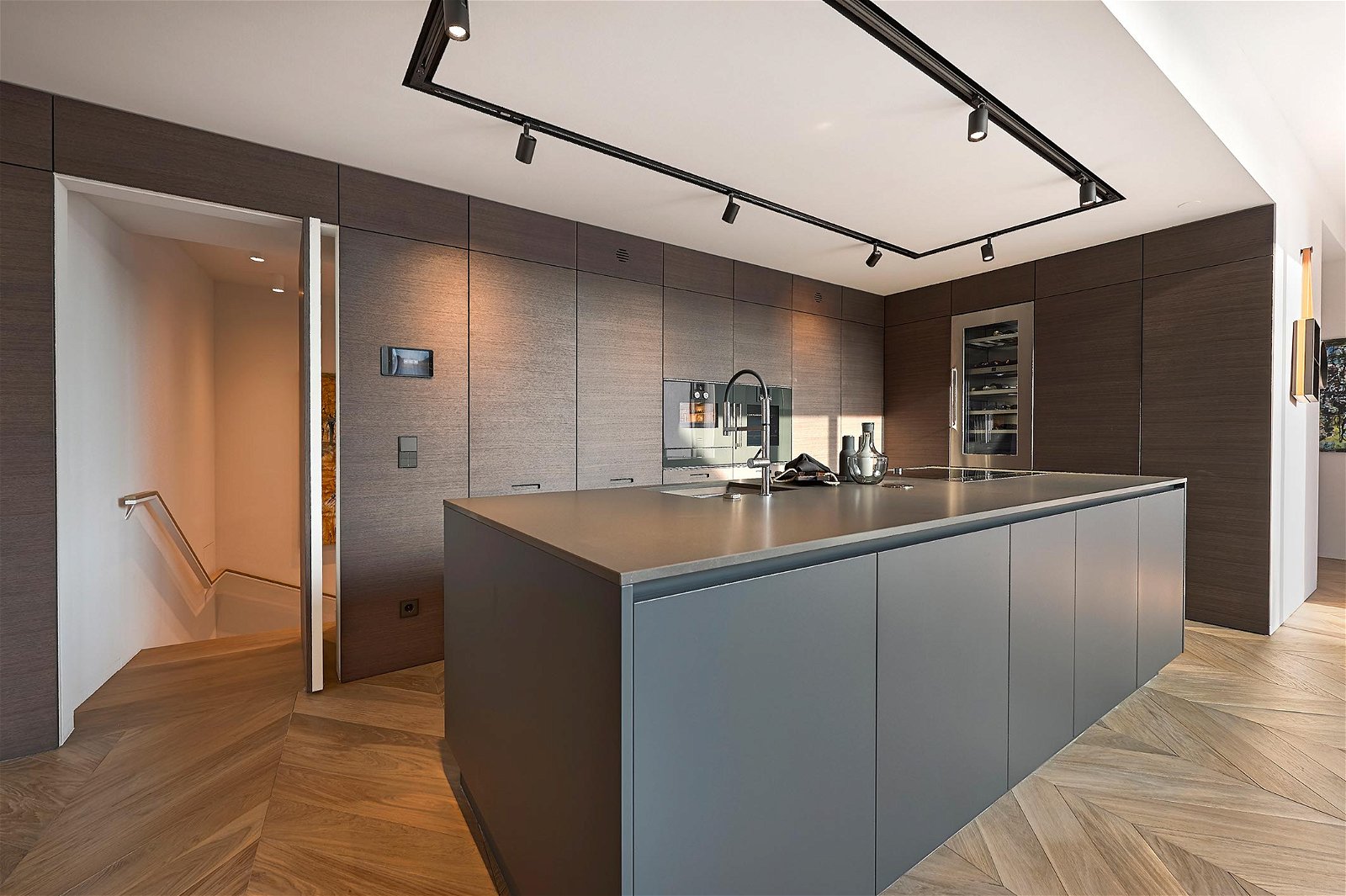
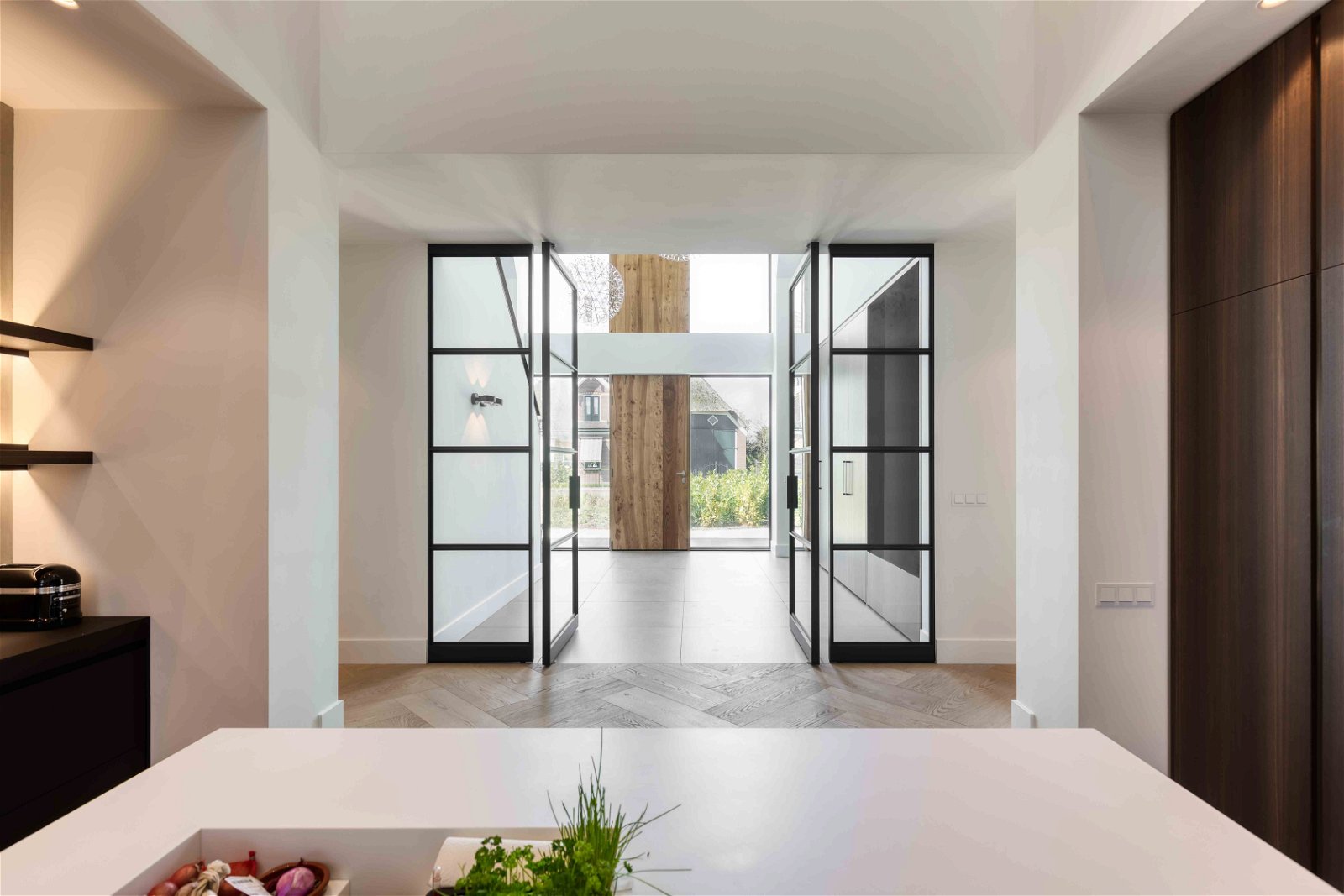
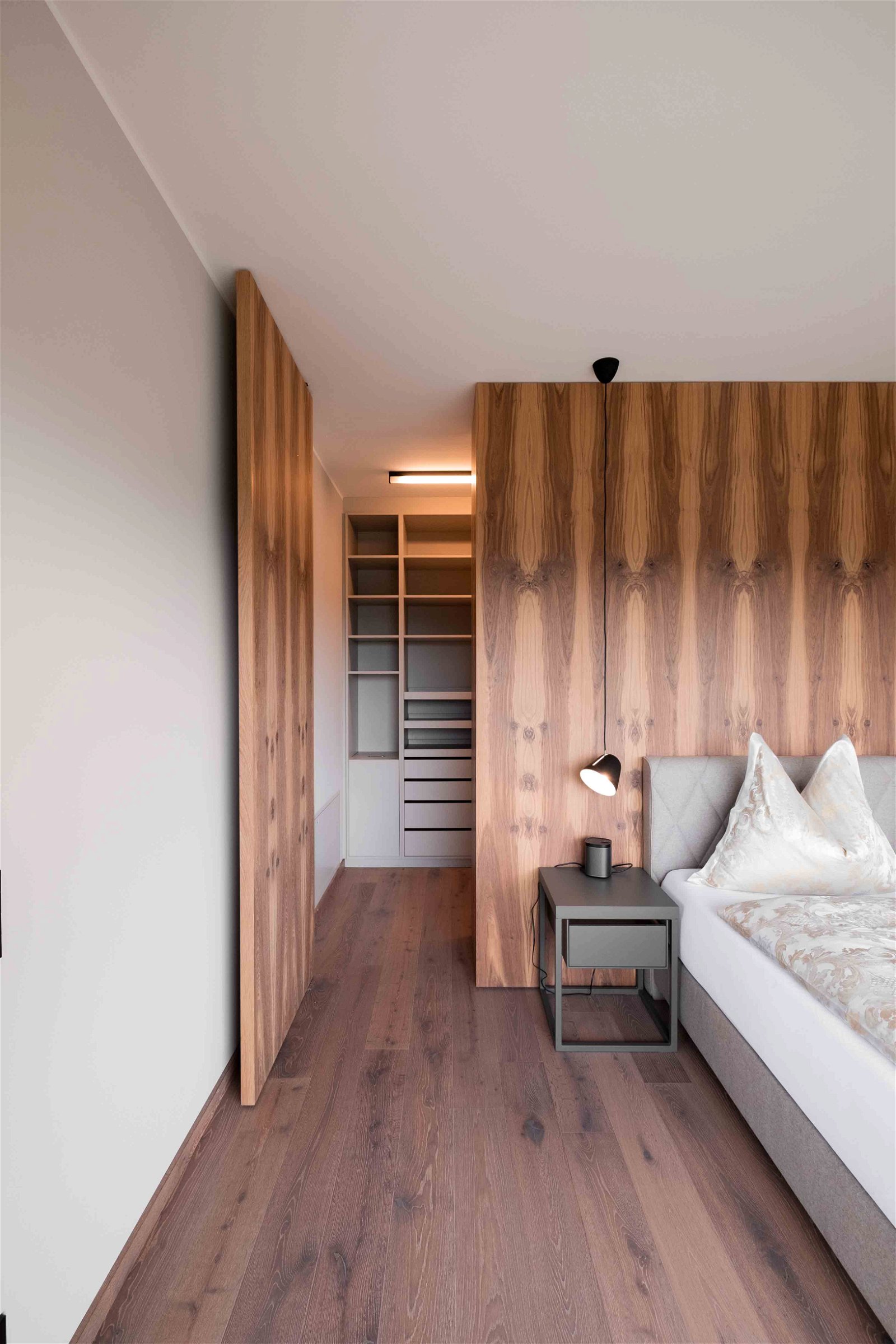
The kitchen is a natural fit. A double-acting kitchen pivot door swings in both directions and, with a self-closing hinge such as the FritsJurgens System M+, closes itself behind you. Exactly what you want with your hands full. A pantry pivot door can be clad in the same material as the kitchen wall, so the pantry disappears when the door is closed. The same applies to bathroom doors, bedroom doors and utility areas: one hardware concept covers them all.
Hidden pantry or kitchen pivot door, clad with wood to merge into the wall when closed | FADD Architects
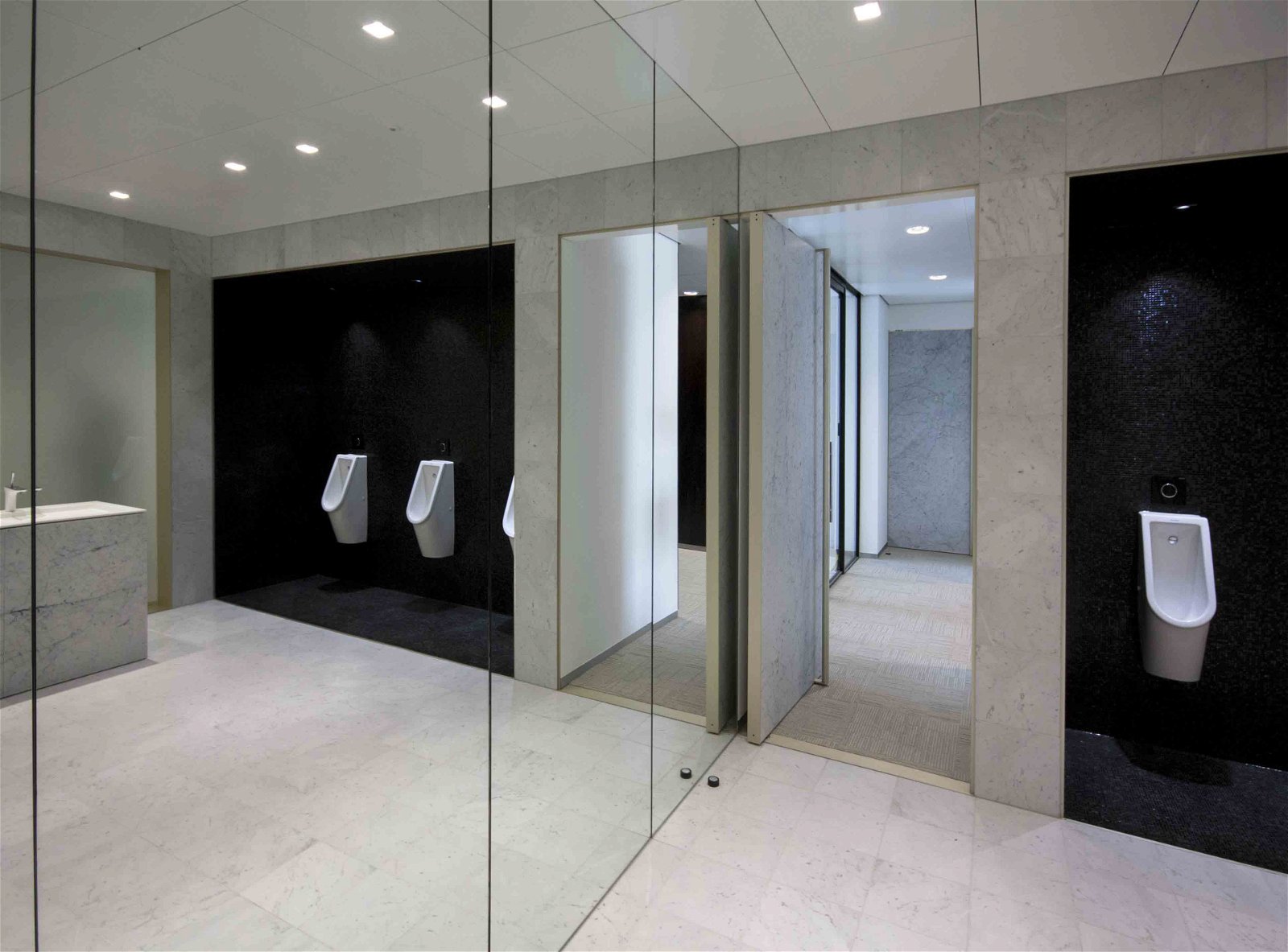
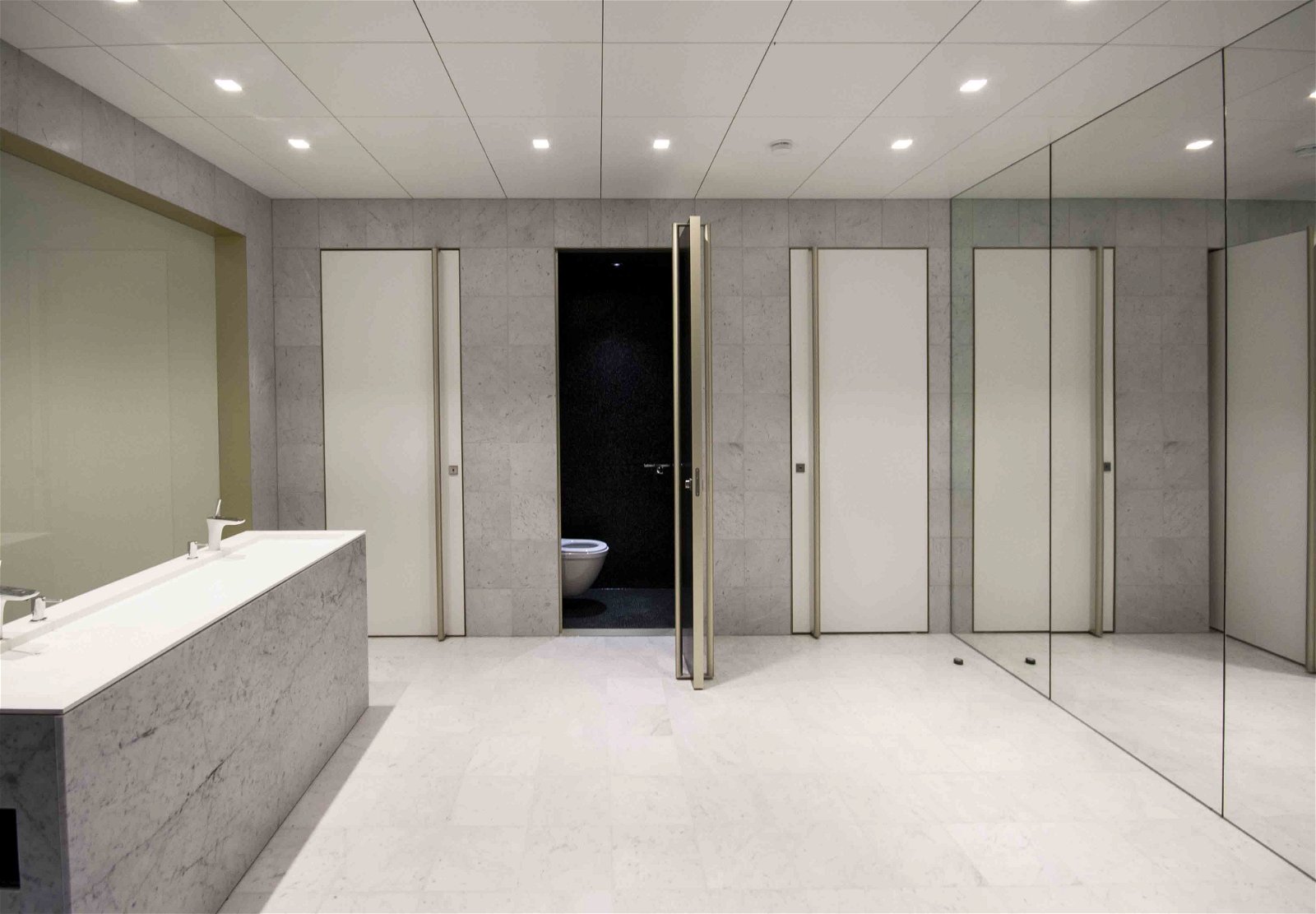
Bathroom pivot door, clad with a thin layer of marble | Powerhouse Company, Wim Quist, Punt Interieurbouw
Garage or utility pivot door with a clean and very elegant design | Ian Moore Architects
A pivot door on the floor plan
A pivot door is drawn differently from a hinged door. A hinged door shows one quarter-circle from the hinge side of the frame. A pivot door rotates on a vertical axis set slightly in from the door edge, so the plan shows two arcs: a large sweep for the long side of the door and a small counter-sweep for the short side behind the pivot point.
Three planning rules follow from that geometry. First, a double-acting pivot door sweeps on both sides of the wall opening, so keep the swing zone free on both sides. Second, no door frame is needed; the floor and ceiling are the only fixed points, which simplifies the wall detail. Third, the pivot point position determines the clear passage width. With a FritsJurgens hinge the standard pivot position is 70 mm from the door edge, with a compact 40 mm position available where every centimetre of passage counts.
For the exact gap dimensions around the door, use the FritsJurgens Gap Calculator.
Open-plan living gives houses a light, spacious atmosphere, and larger spaces increasingly carry overlapping functions. Sometimes, though, you want to separate those functions: privacy for a call, quiet around a dining table, a study that closes.
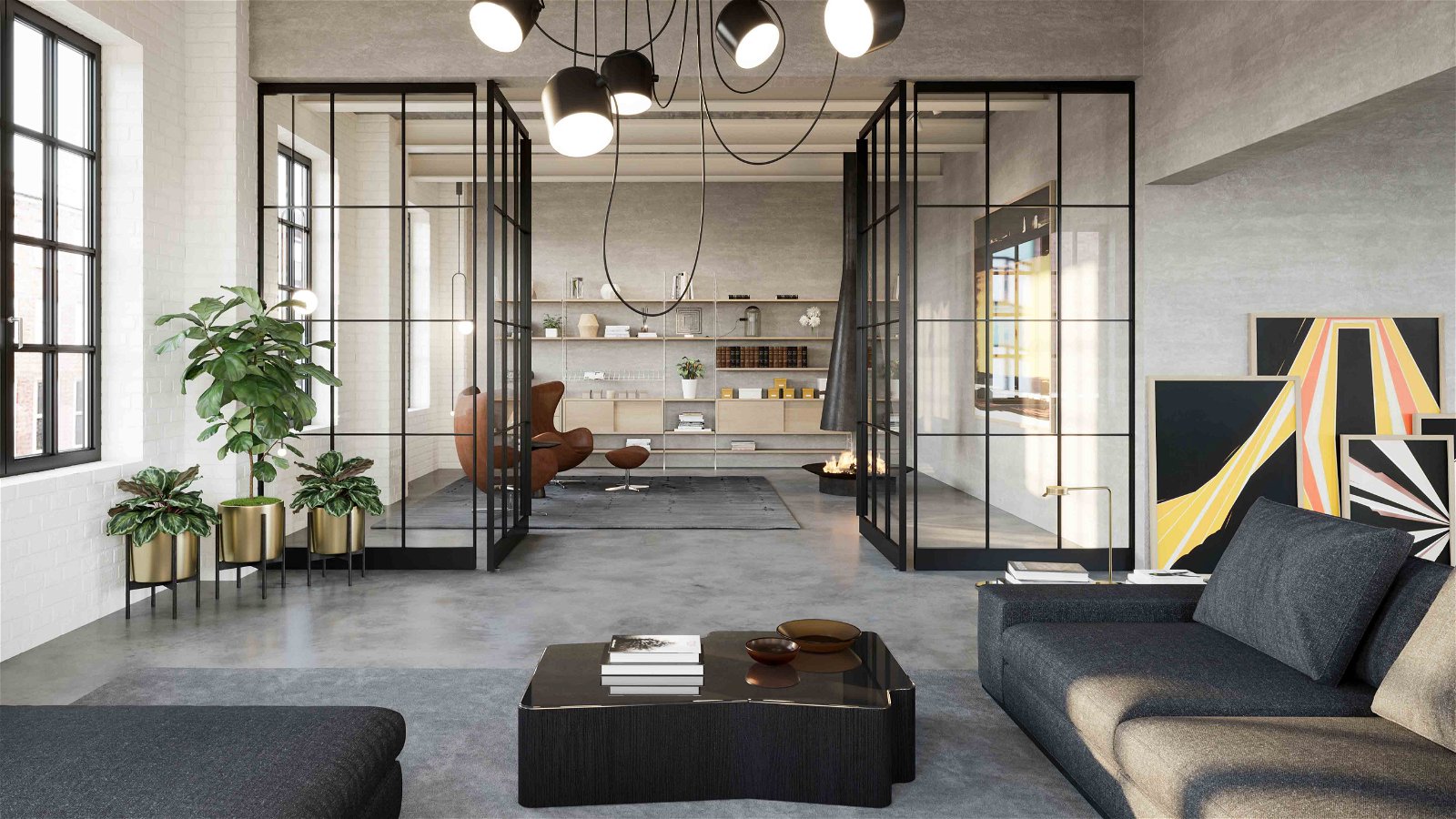
Interior pivot doors transform a space without interrupting its flow. Opened, they connect rooms into one; closed, they divide them cleanly. A row of double-acting pivot doors even turns a wall into something you can walk through anywhere.
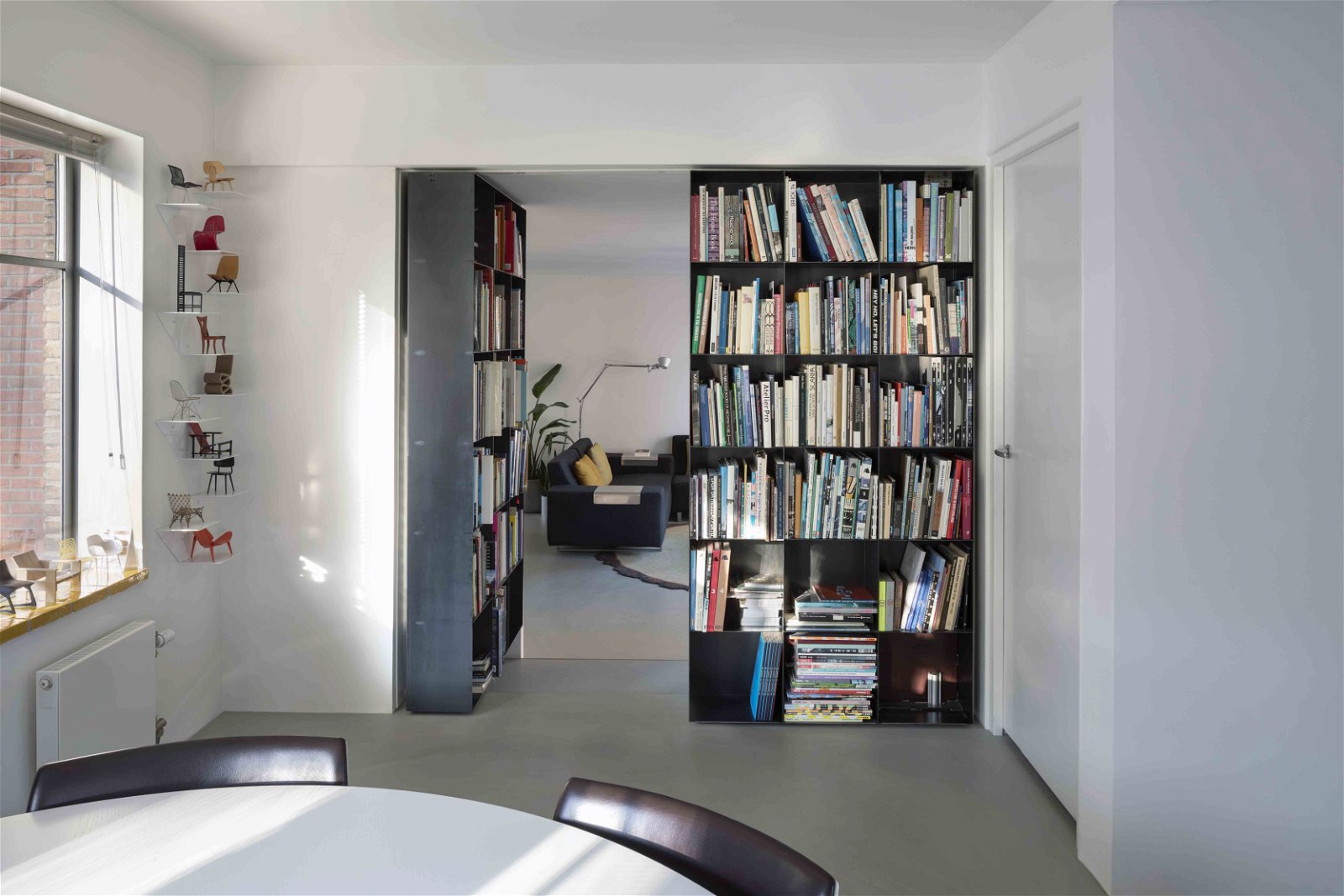
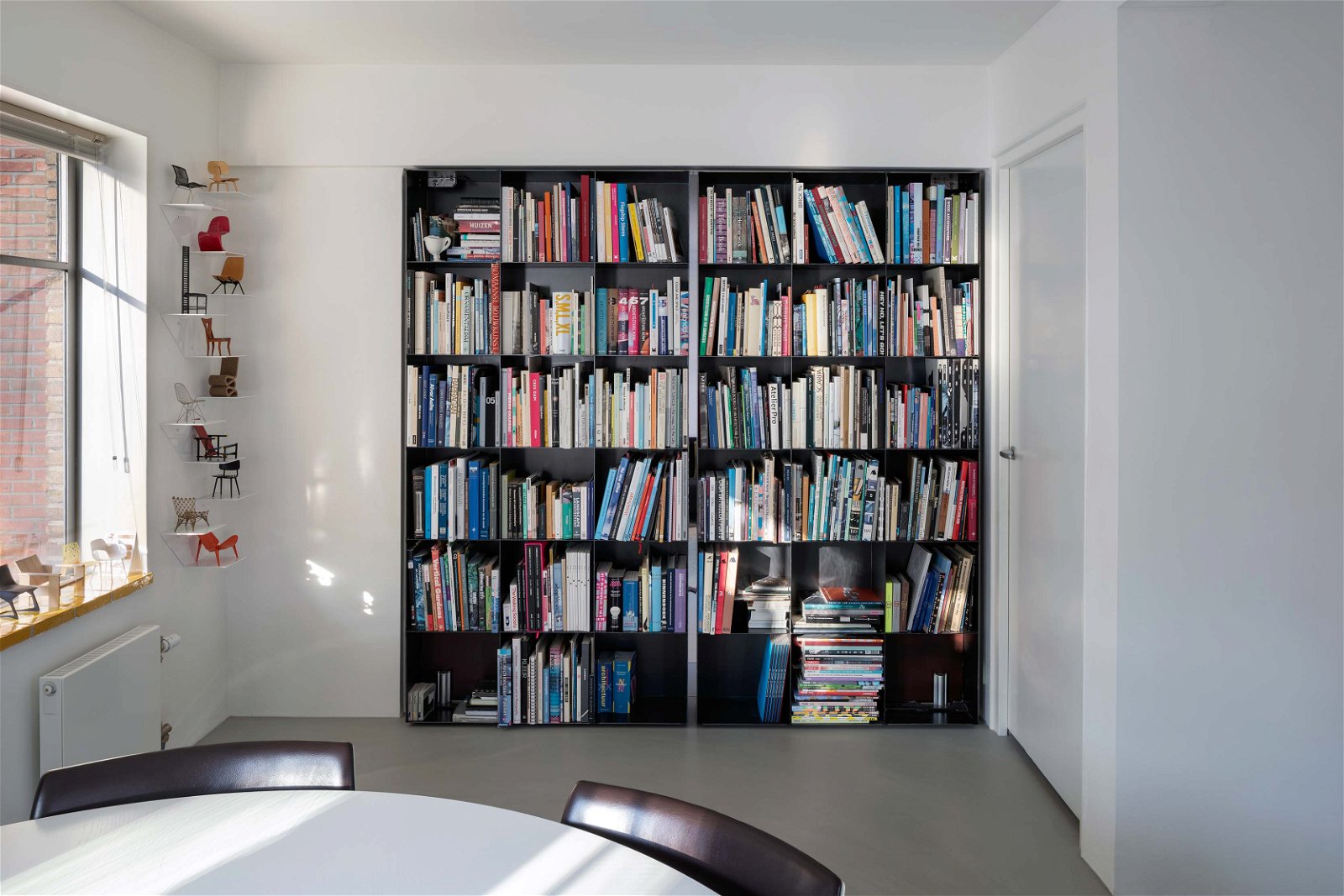
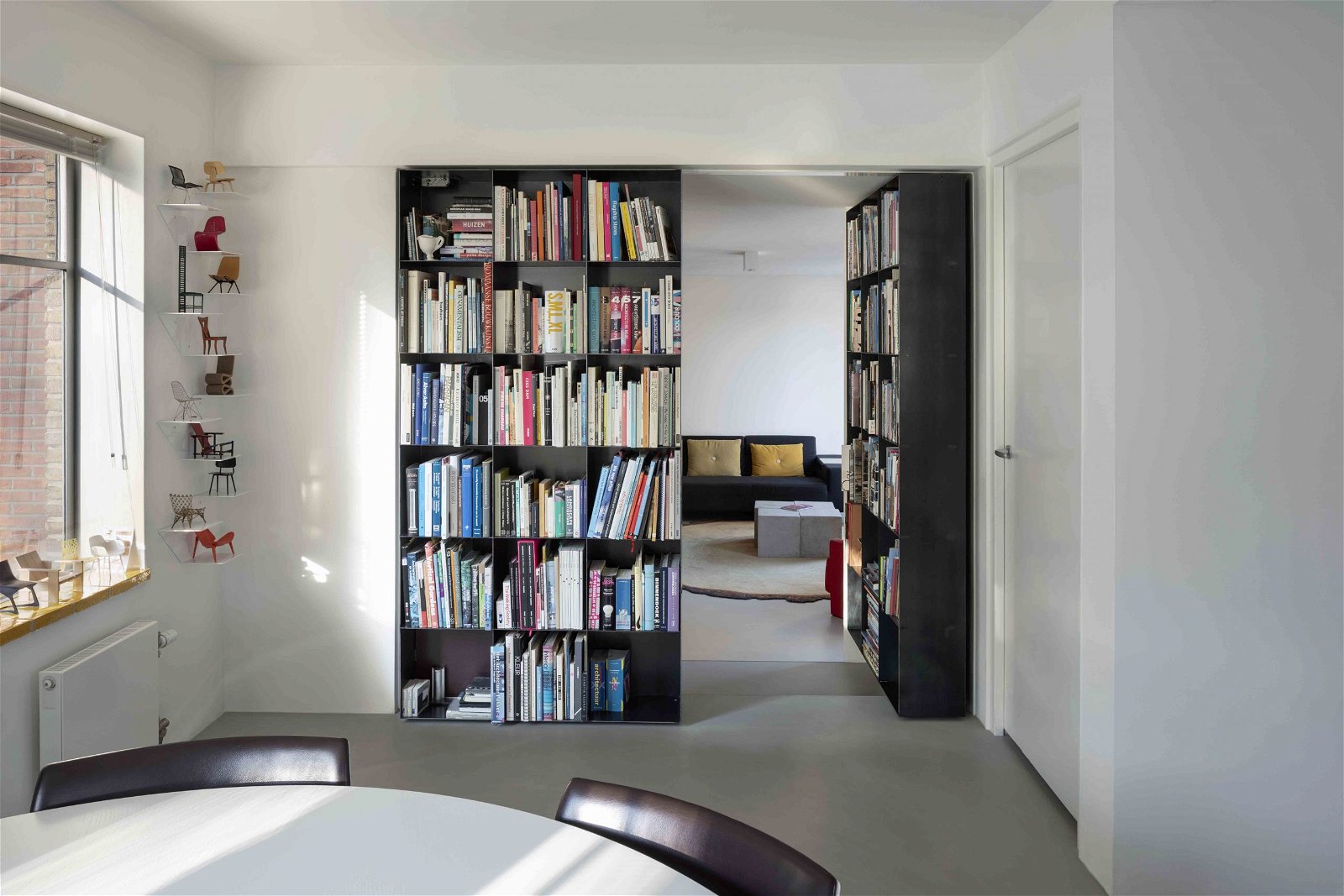
A flexible and functional space divider with two 500 kg bookcases | Hoek & de Wit Architecten
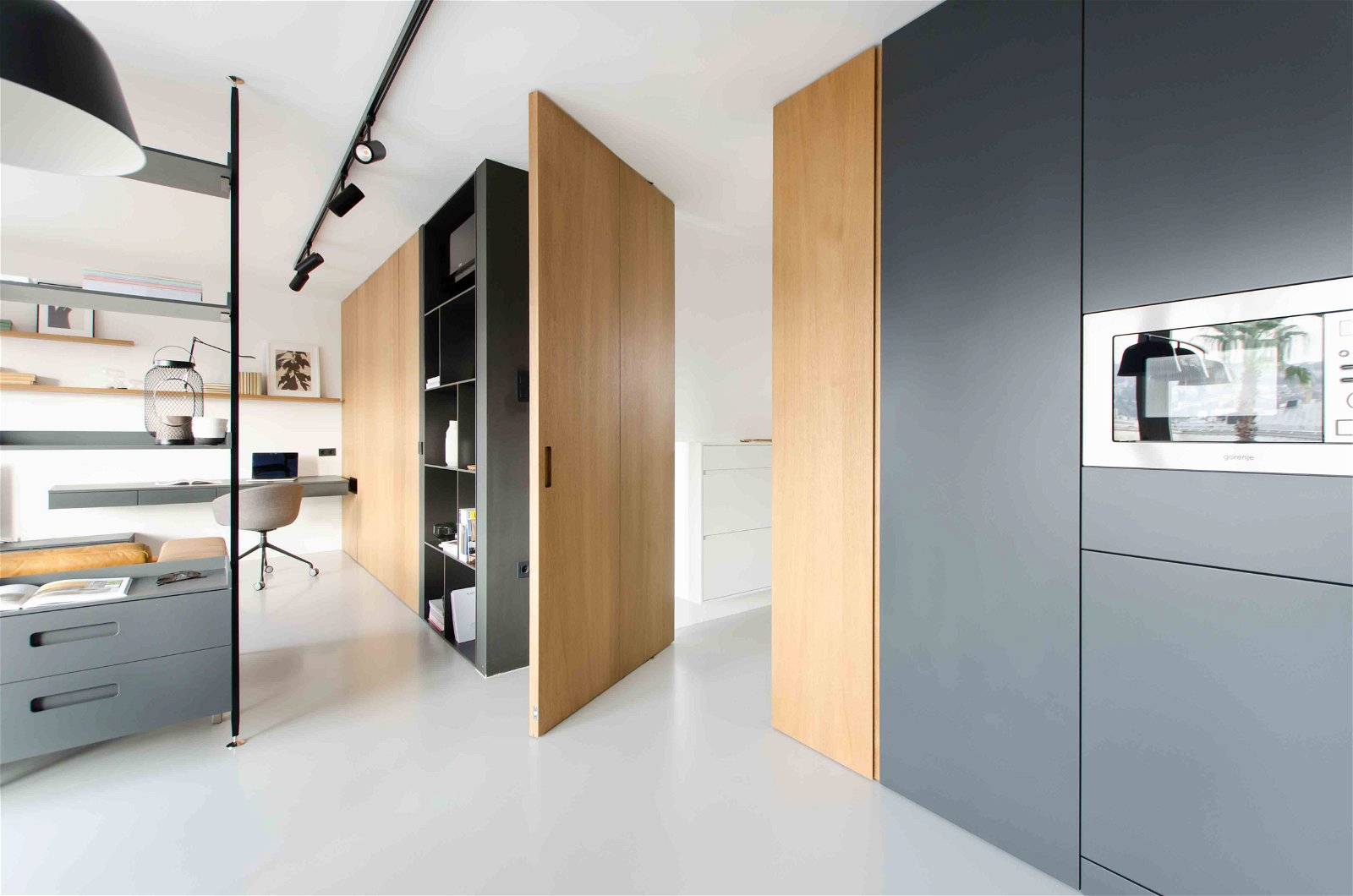
Transforming an apartment with a row of double-acting pivot doors | Valenso
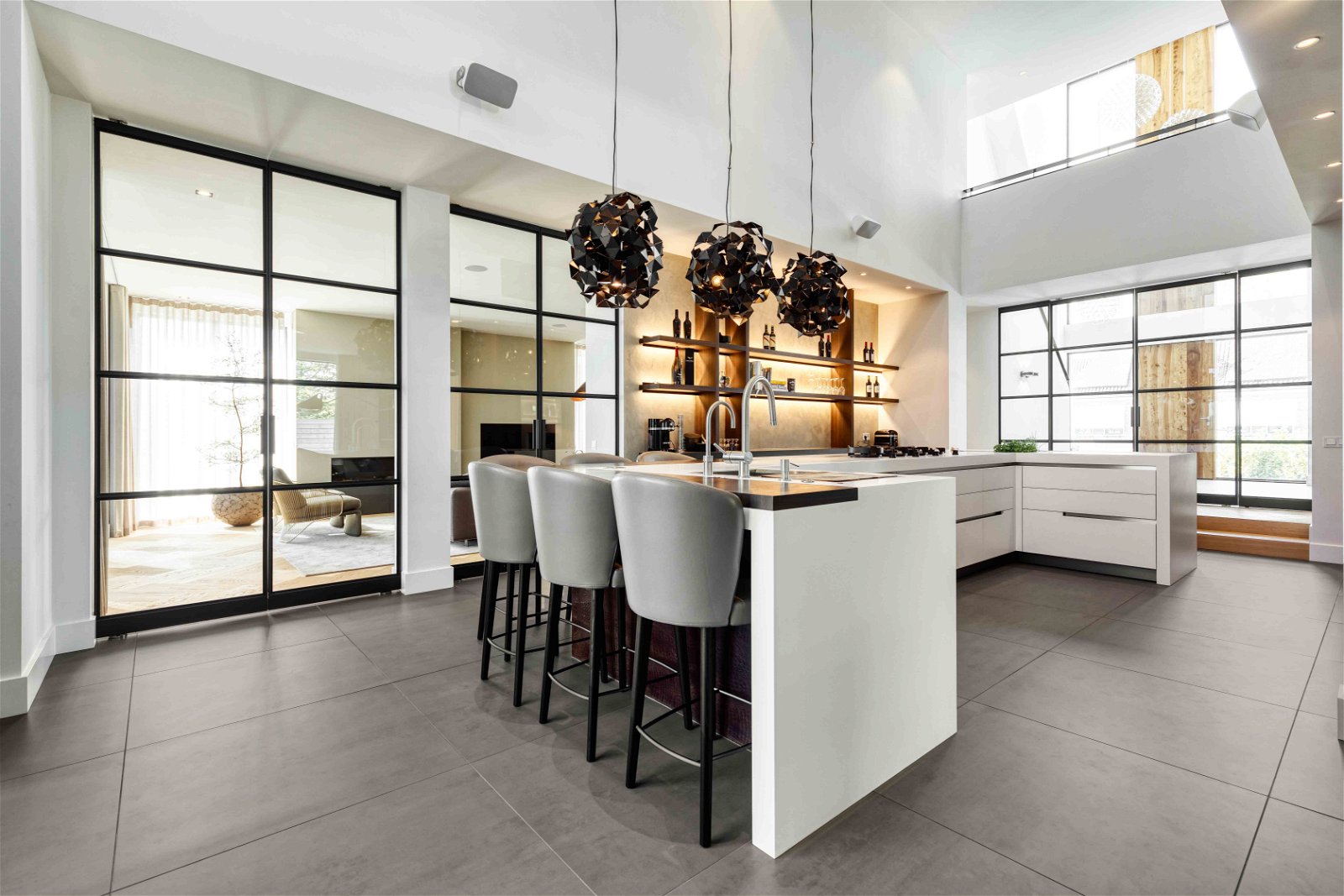
Open-plan living, a kitchen surrounded by steel and glass interior pivot doors | NOMAA, Jurrit van der Waal
Flexible project management
Interior pivot doors offer project management flexibility too, and this is where the choice of hinge system decides how flexible your project really is.
Nothing in your floor
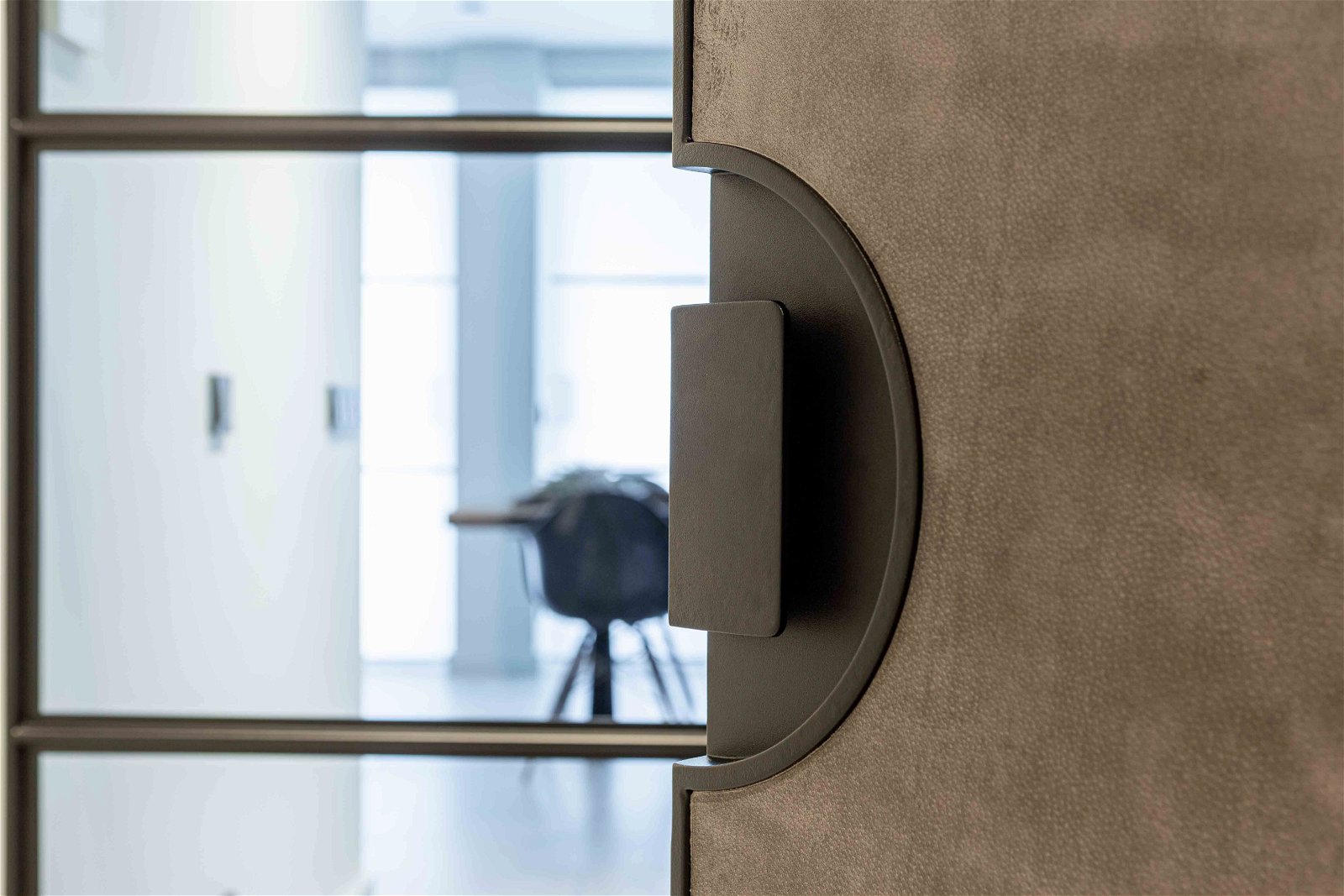
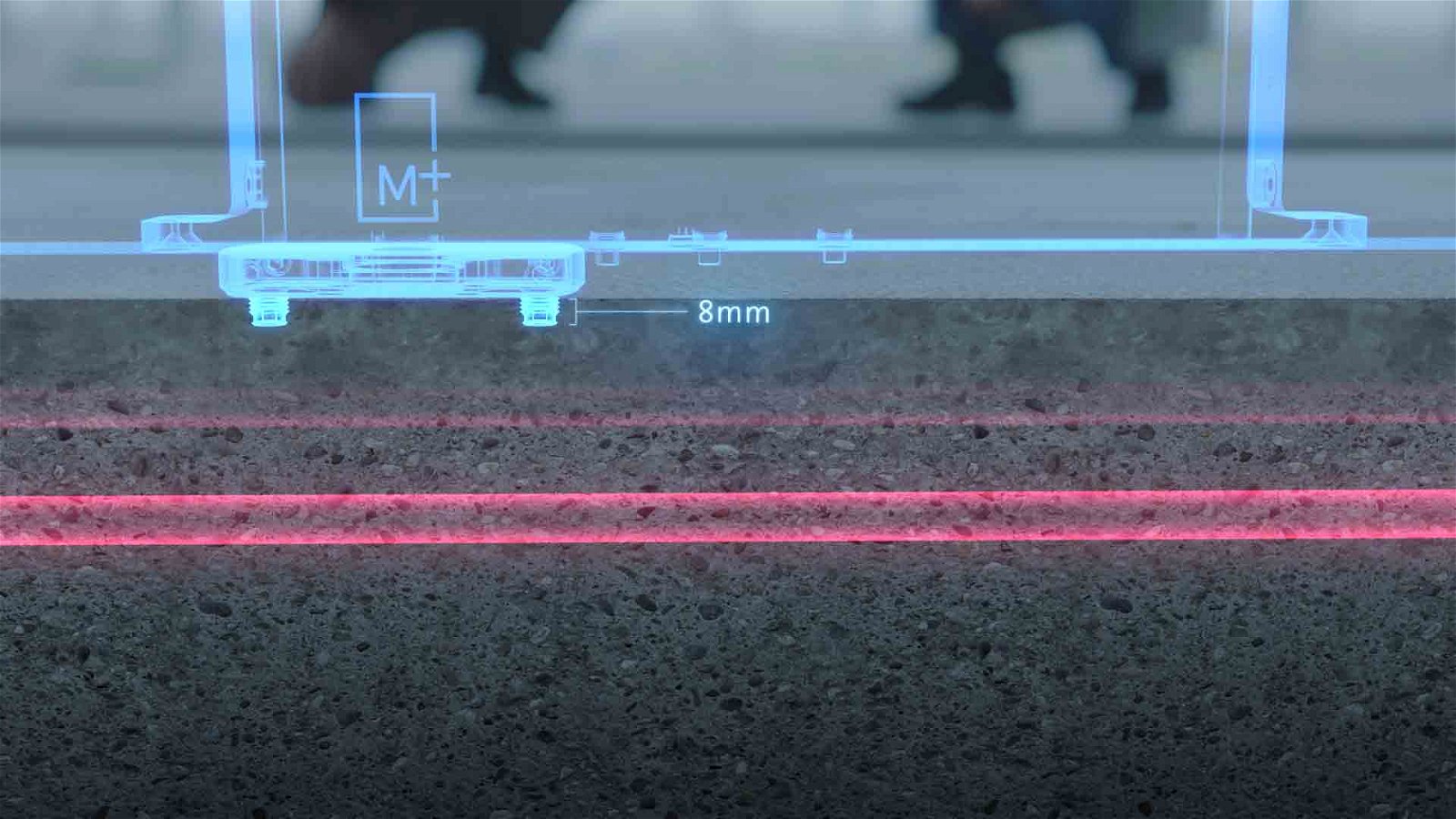
Traditional pivot hinges go into the floor. FritsJurgens pivot hinge systems go inside the door instead. The top pivot is mortised into the top of the door and the hinge system into the bottom. Only the two 8 mm pins that hold the floor plate go into the floor itself.
That means no breaking open a finished floor, and no conflict with underfloor heating: the pins stay far above any pipes or wiring.
FritsJurgens' in-door hinges can be combined with underfloor heating
Flexible installation
On-site work is minimal. The floor plate and ceiling plate are mounted, the door is lifted into place, and the door's position and movement can be fine-tuned at any moment afterwards. The whole process takes about thirty minutes per door. Converting an existing opening to a pivot door follows the same steps, which makes the retrofit case as strong as the new-build one.
Improve the project management
Placing the doors can be one of the last things you do on site. Final decisions about handles, door thickness or even the handing of the door can wait until every finished surface is in. If the design changes along the way, the door simply follows.
Decisions on handing, handles, door thickness and more can be taken at the last moment | pivot door by Breitenthaler
Cost-effective
The fast installation and the absence of frames, in-floor constructions and maintenance make an interior pivot door a cost-effective alternative to a comparable swing door. And no other hardware matches the aesthetics: all of it stays hidden, even with the door open, and the movement of a high-performance pivot hinge is unmatched.
Frame independent
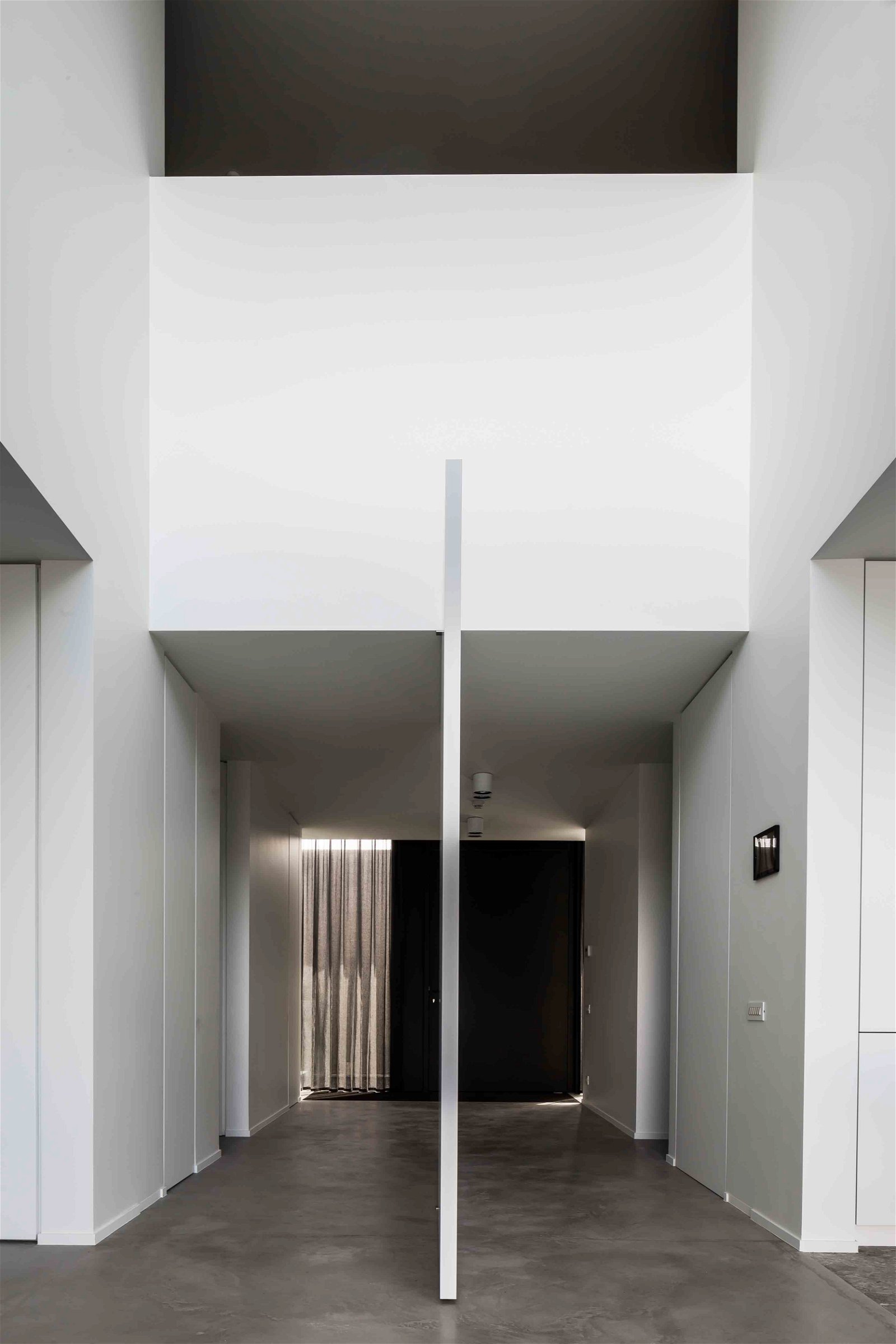
An interior pivot door needs no door frame. The only 'frames' are the ceiling and the floor. Omitting the frame emphasises the minimal, undisturbed character of the design, and it removes an entire coordination step from the project.
Where a traditional hinged door is single-acting, limited by its hardware and its frame, a pivot door can be double-acting: it opens both ways. And because the door thickness is flexible from 40 mm (1.57") upwards, a frameless pivot door can sit flush with the adjacent wall, match its thickness, or disappear into it entirely.
Frame-independent steel and glass pivot door | Linox by Jens Lammers, Bert Demasure
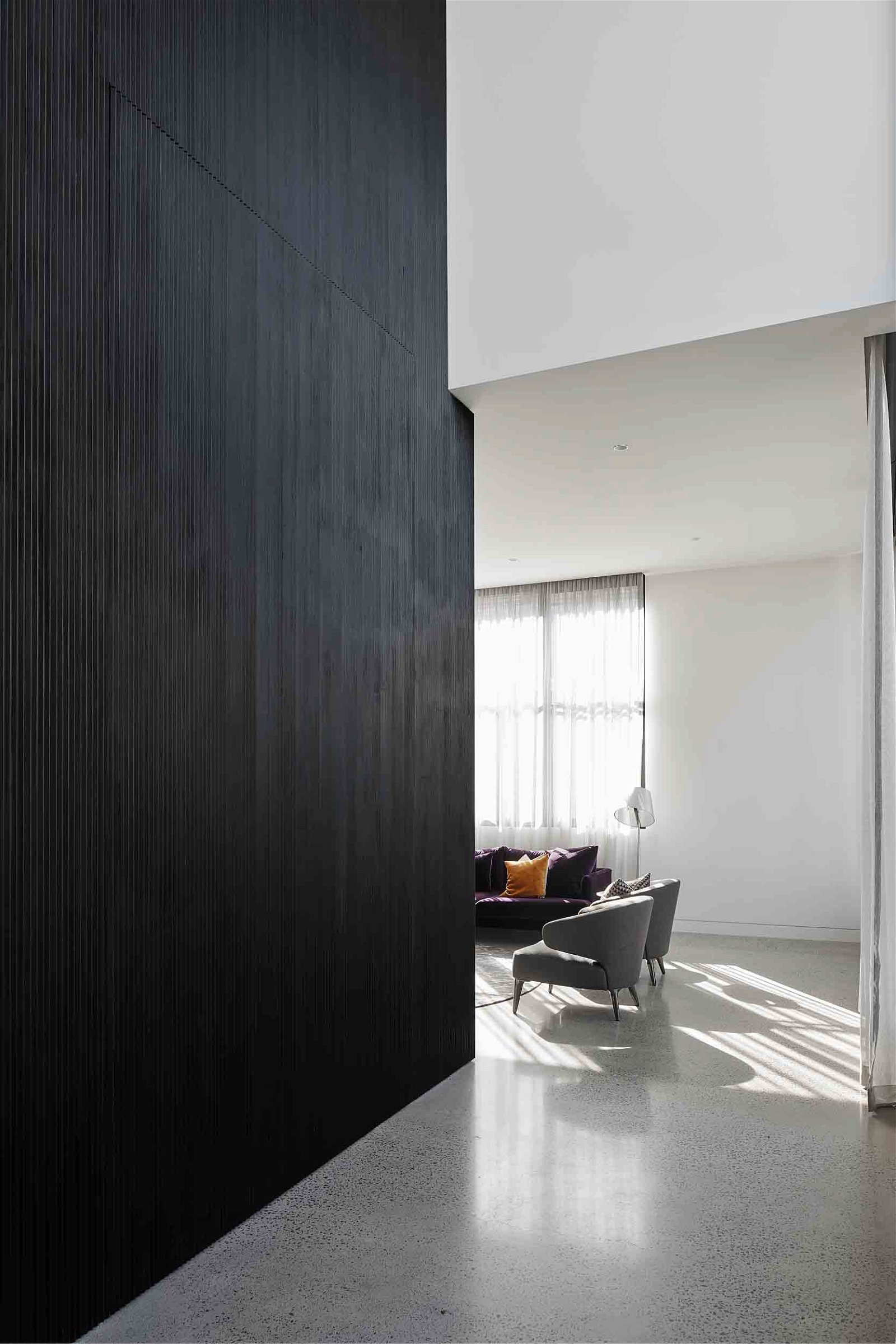
A pivot door flush in the wall, merged into the wall's finish | Taouk Architects
Want to learn more?
If you are designing or specifying a pivot door, our technical documentation explains the details in depth, from door weights to the gaps around the door.











.jpg)