


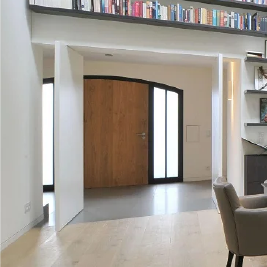









Hidden bookcase doors
A bookcase that opens is one of the oldest ideas in architecture. It no longer has to look like a trick. The hinge sits inside the door, out of sight, and the leaf can carry three hundred kilograms of oak and books and still move under one hand.
Below are the bookcase doors we have documented, the pivot position that decides whether the door disappears, and what happens to a bookcase door once the shelves fill up.
Bookcase doors that have been built
Seven projects, in Amsterdam, Edinburgh, Jakarta, Milan, Singapore and central Switzerland. The lightest leaf weighs eighty kilograms and the heaviest three hundred; the tallest stands three metres. In all of them the shelves carry the load and the hardware stays invisible.
Where we hold the technical detail it is listed under the project. Where we do not, we have left it out rather than estimating it.
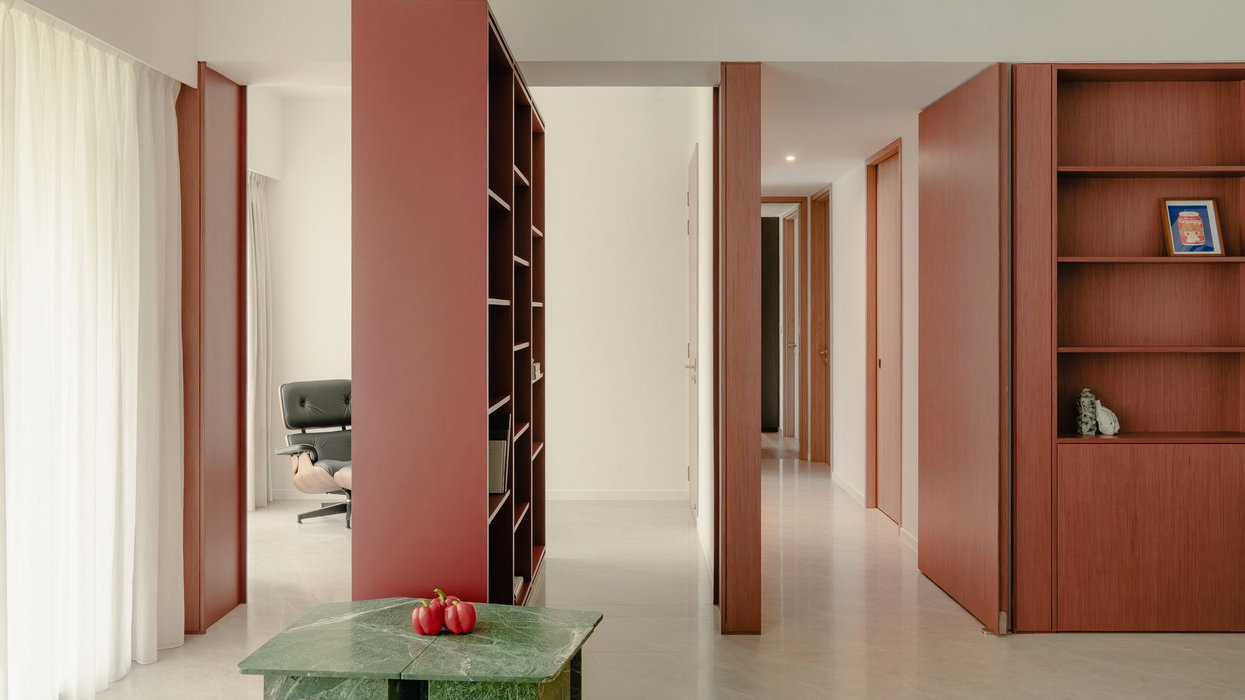
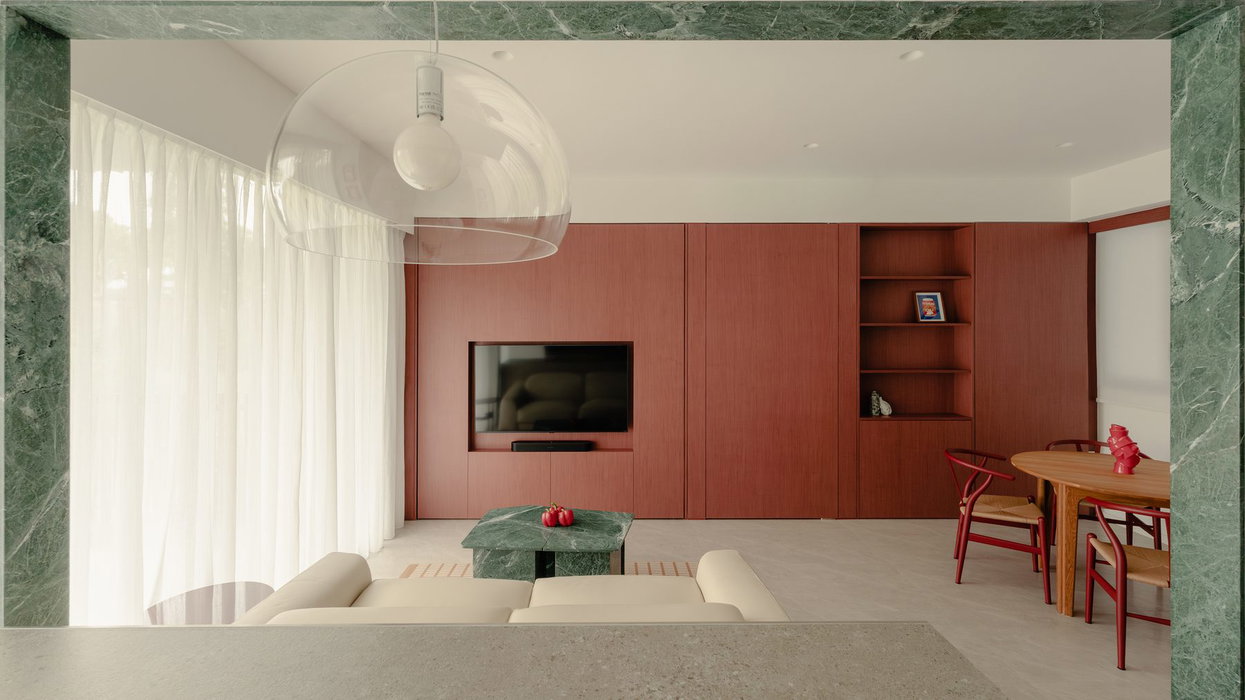
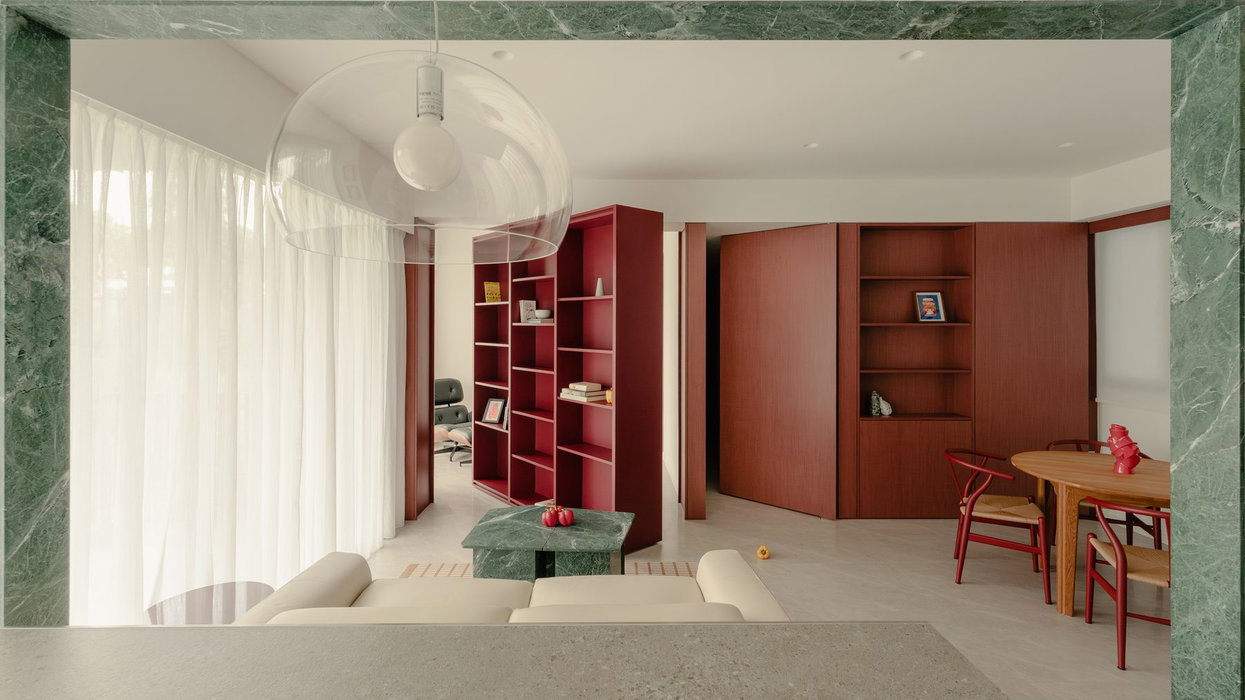
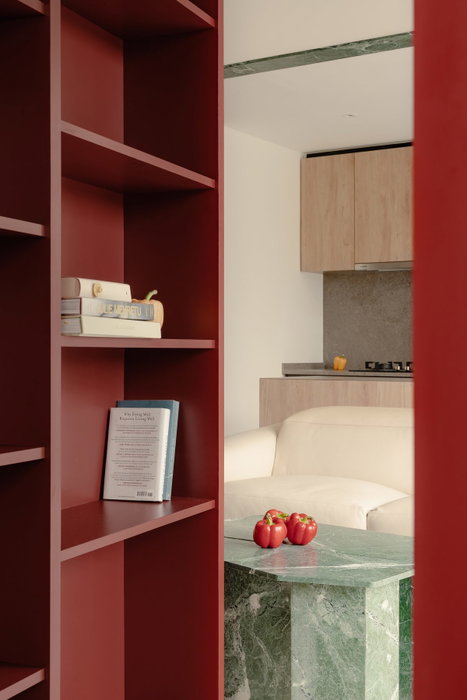
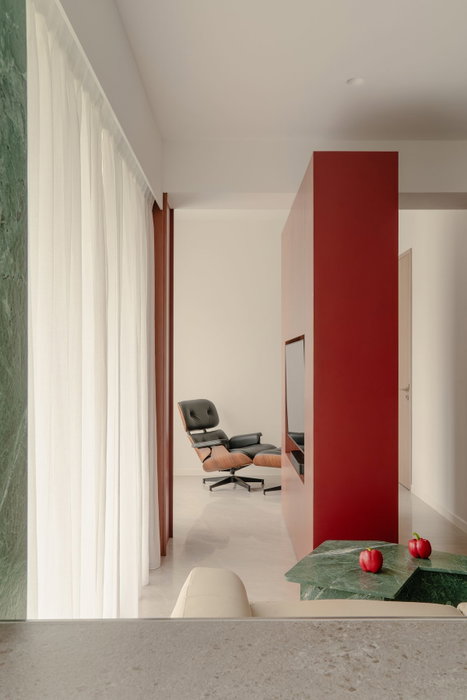
Ki In Motion
Singapore
Studio Sanshou did not hide a door in a wall. They rebuilt the wall as a piece of furniture and let it rotate. One face keeps books and belongings, the other performs in the room. The shelves cantilever from the middle segment. That only works because the pivot carries the load, so the structure does not have to reach the floor at its edges.
| Ki In Motion, Singapore | |
|---|---|
| System | FritsJurgens System One |
| Pivot position | Top pivot Cable Grommet |
| Door size | 2400 × 2470 mm |
| Door weight | 200 kg |
| Material | Painted, wood |
| Architect | Studio Sanshou, Shaeron Santosa |
| Photography | Ong Chan Hao |
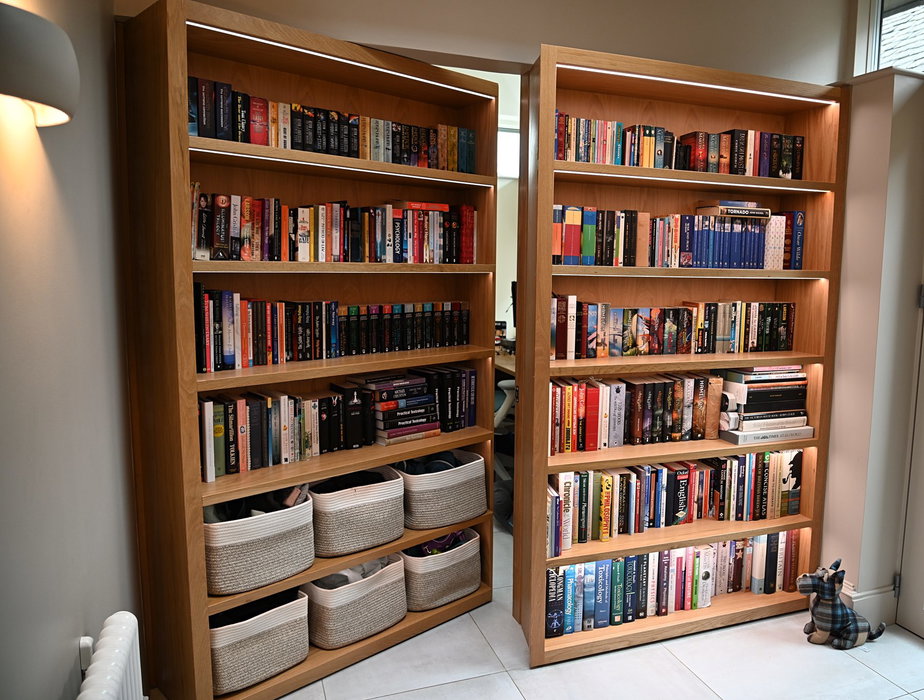
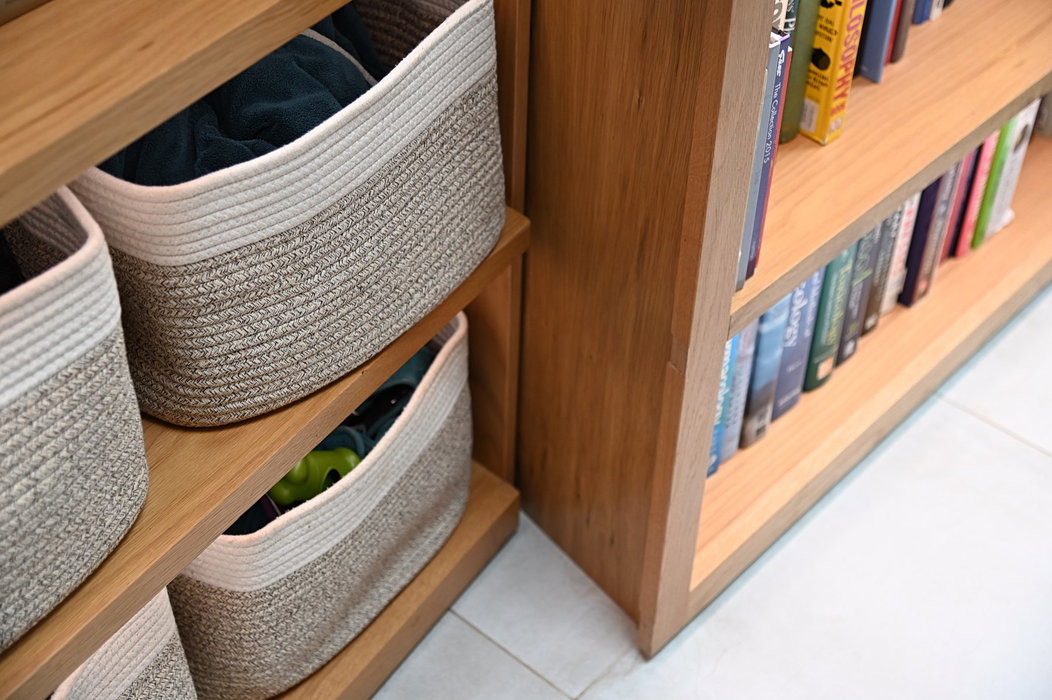
Scottish Secret Door
Edinburgh, United Kingdom
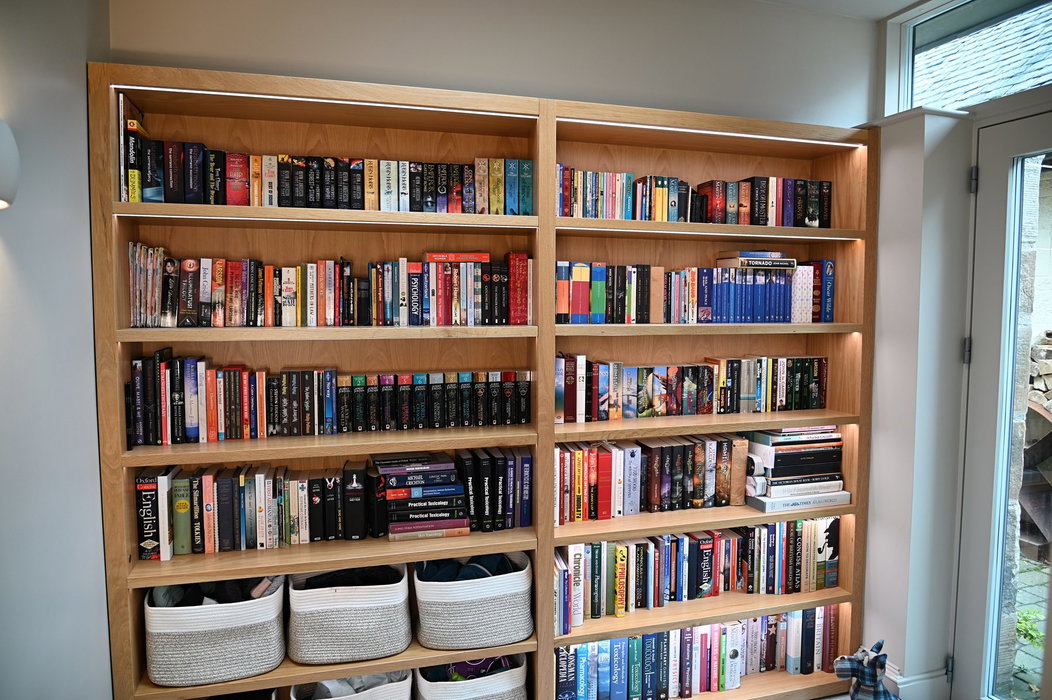
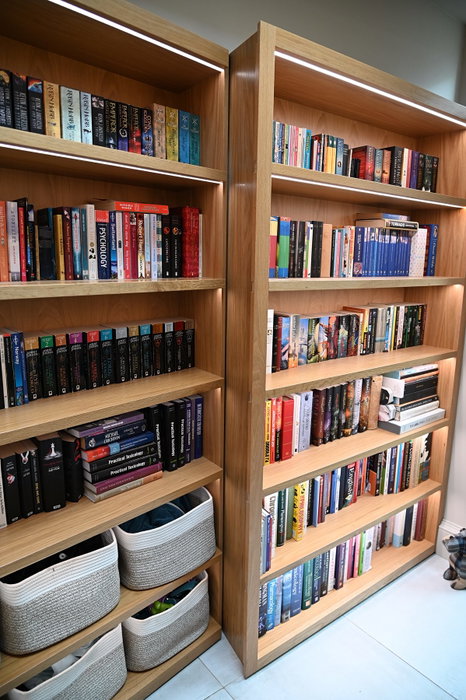
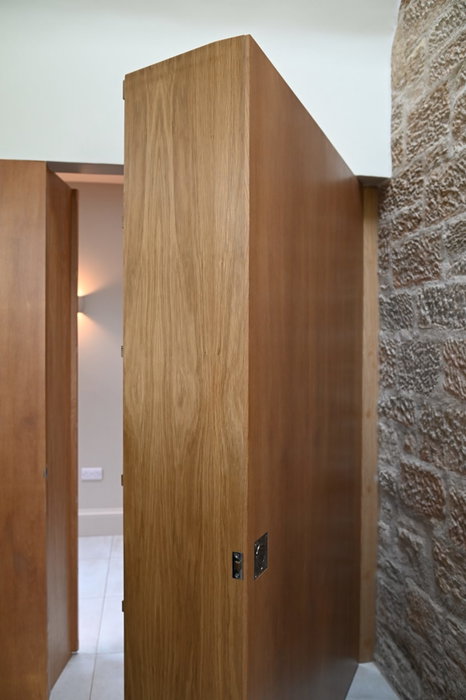
The brief was that the door had to work and stay completely concealed, in that order. Gopherwood had three millimetres of tolerance all around and a leaf deep enough to hold a dressed bookcase. The side gable was angled so the door could open at all, because a square one would have forced a much heavier centre section. At three hundred kilograms this is the heaviest bookcase we have documented, and it still opens with one hand.
| Scottish Secret Door, Edinburgh | |
|---|---|
| System | FritsJurgens System One |
| Pivot position | Top pivot 70 mm |
| Door size | 2060 × 1300 mm |
| Door weight | 300 kg |
| Material | Oak veneered ply, solid oak |
| Manufacturer | Gopherwood Ltd, Jonny Kane |
Patio House
Amsterdam, Netherlands
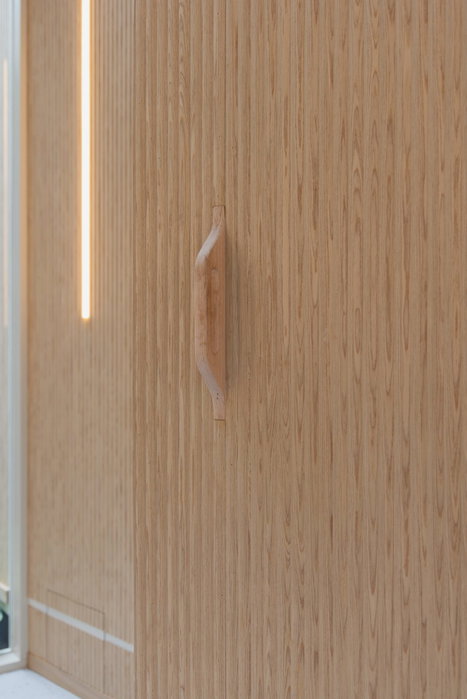
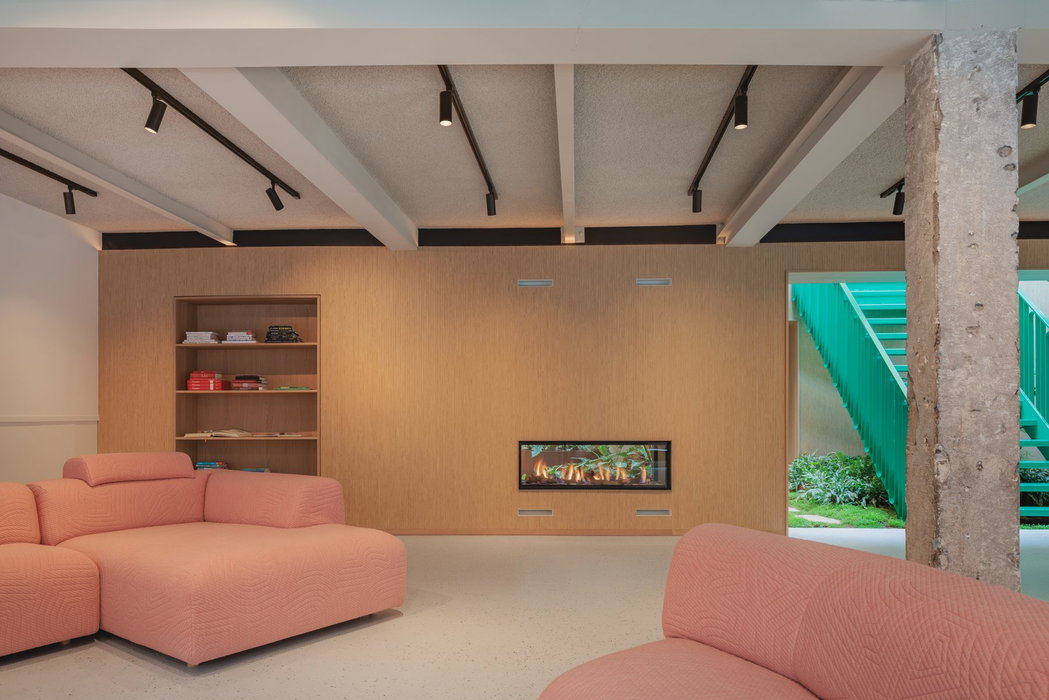
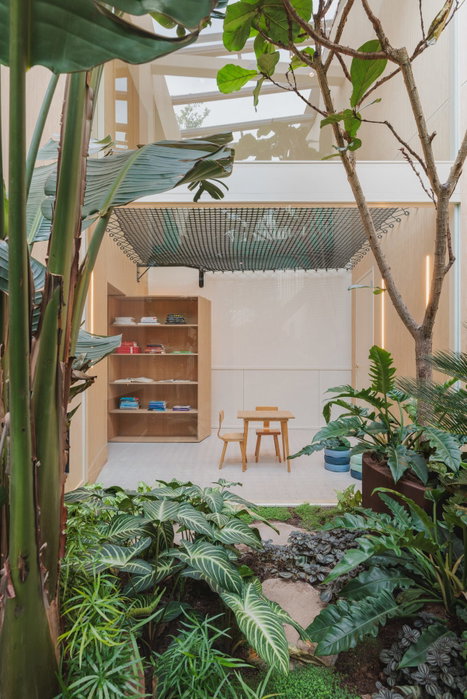
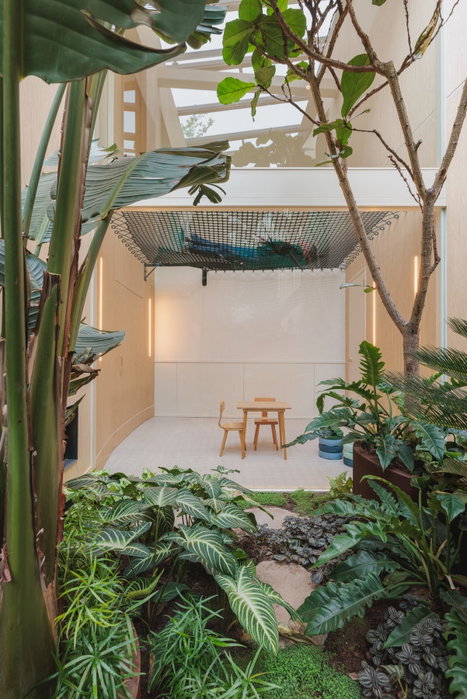
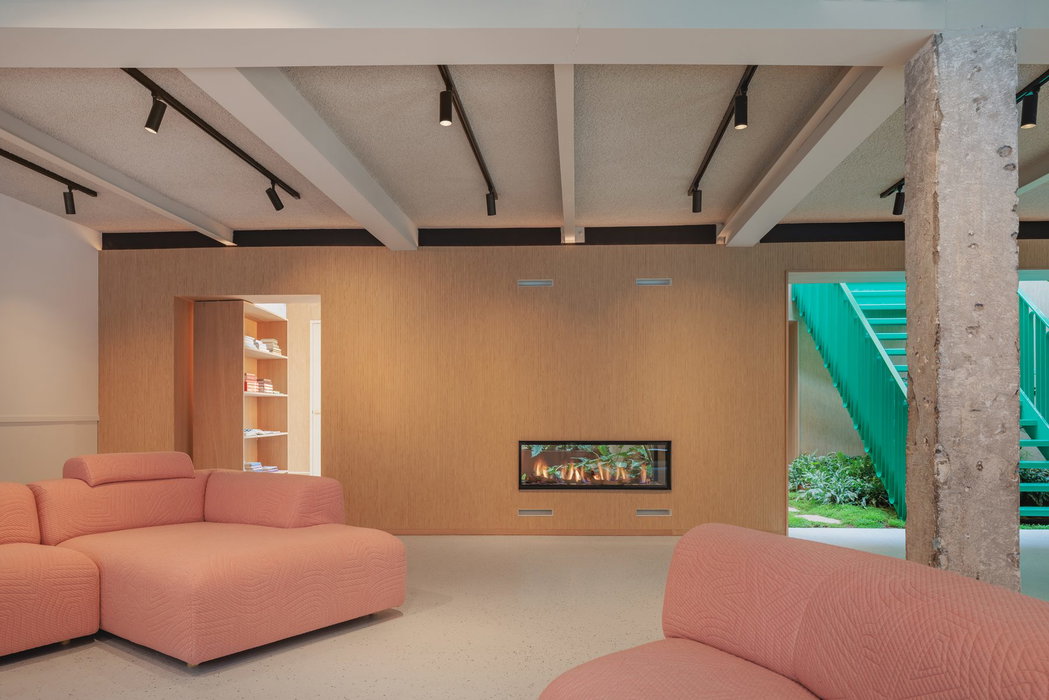
The lightest door here, and the most domestic. A ribbed oak bookcase closes off the playroom at the end of the day, and the floor runs unbroken underneath it. The only part of the hardware that reaches the floor is the floor plate.
| Patio House, Amsterdam | |
|---|---|
| System | FritsJurgens System One |
| Pivot position | Top pivot 70 mm |
| Door size | 2100 × 1400 mm |
| Door weight | 80 kg |
| Material | Ribbed oak |
| Architect | Positive Space, Marc Brummelhuis |
| Manufacturer | Roord Binnenbouw |
| Photography | Wouter van der Sar |
JP Residence
Jakarta, Indonesia
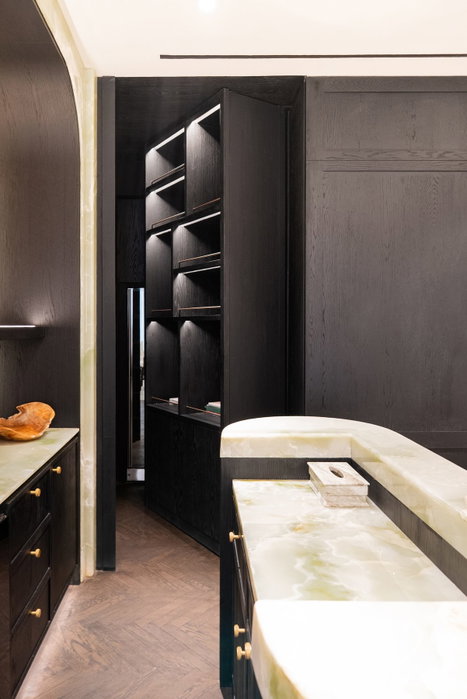
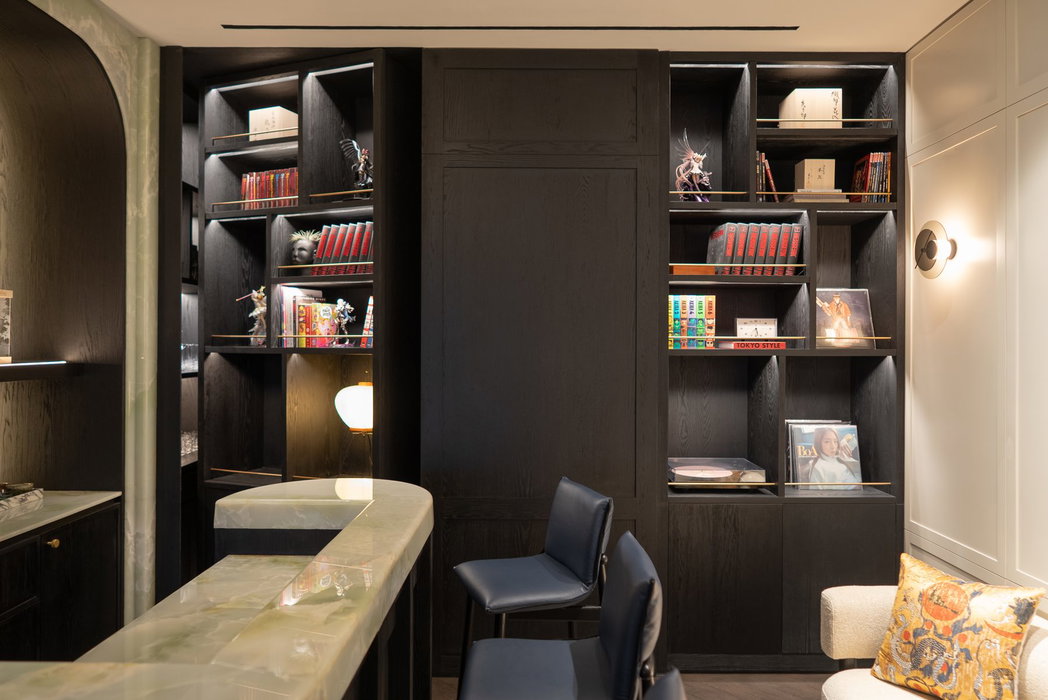
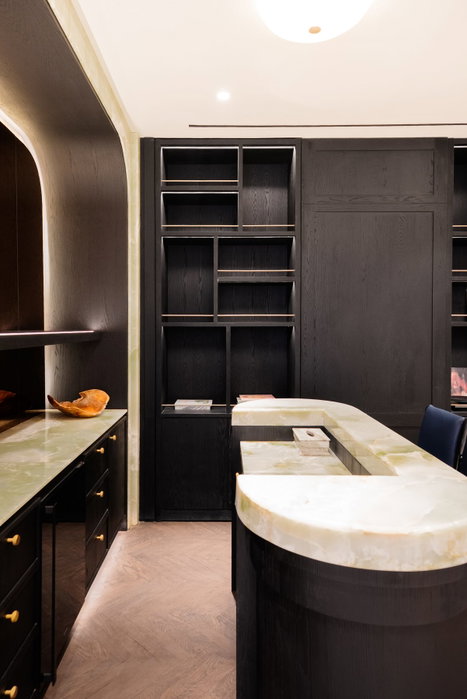
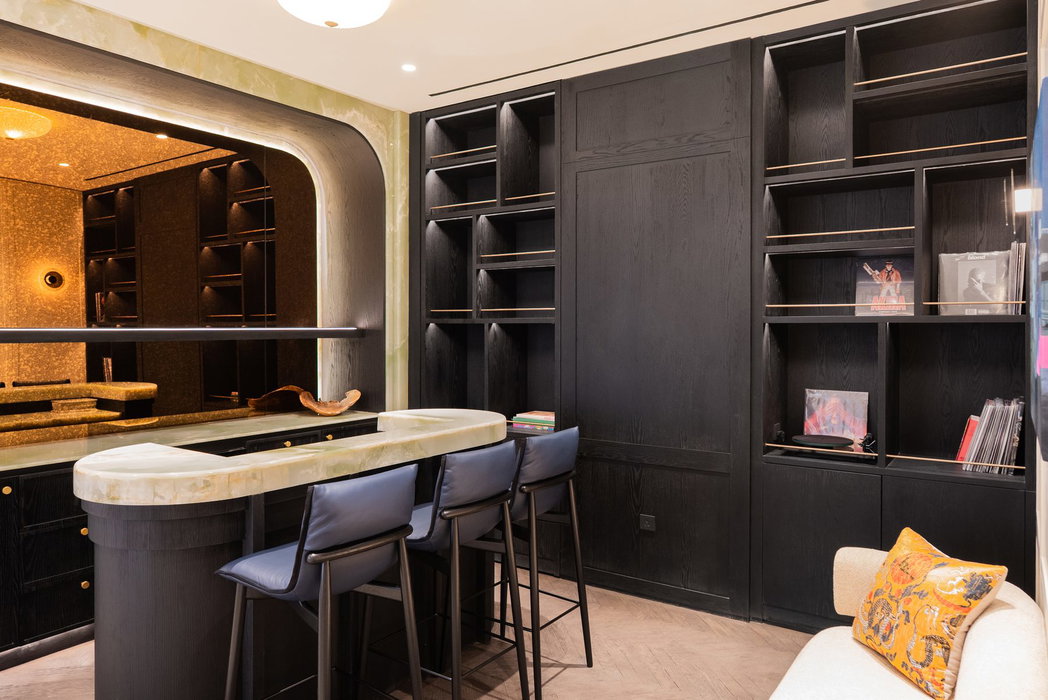
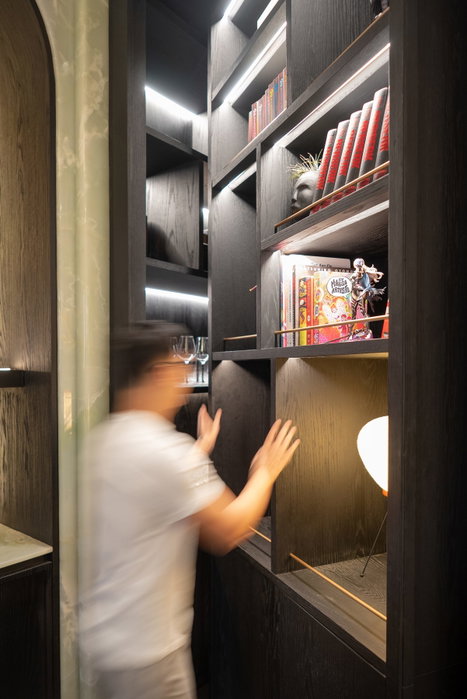
This one does two jobs. Closed, it is a bookshelf. Open, it is a wine cabinet, and behind it is a room most visitors never learn about. It holds at 0°, 90° and 180°, so it stays where you leave it while you stand in front of it with both hands full.
| JP Residence, Jakarta | |
|---|---|
| System | FritsJurgens System 3 (now System Fx) |
| Pivot position | Top pivot 70 mm |
| Door size | 3000 × 1235 mm |
| Door weight | 200 kg |
| Material | Engineered wood |
| Architect | A+A Architecture Interior, Anggraito Suhartono |
| Manufacturer | Bally William, Picasso Home |
| Photography | Habitus Concept, Merwin Adenan |
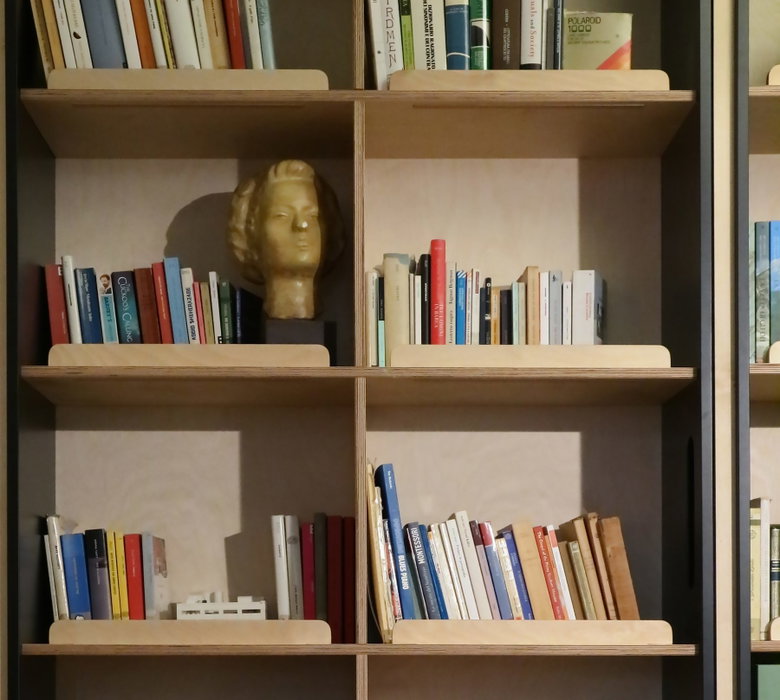
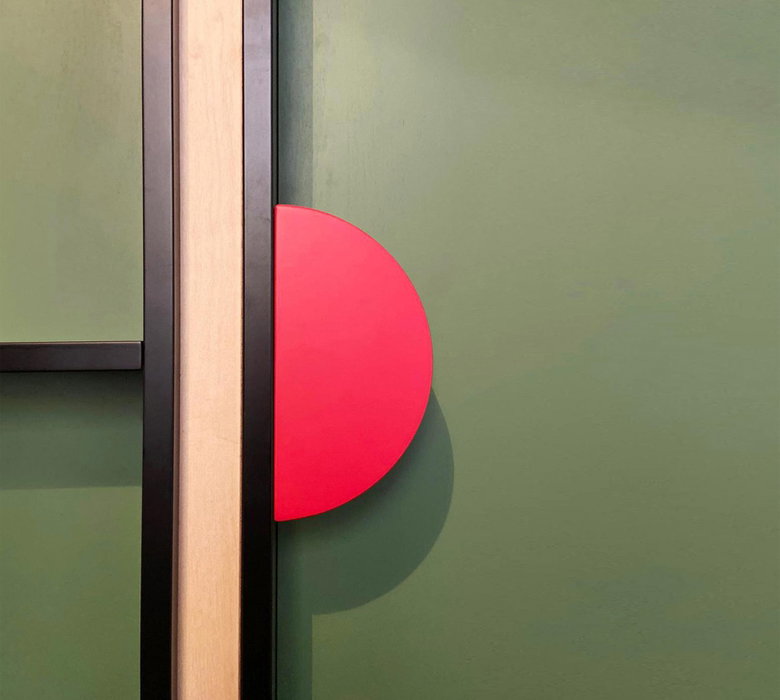
CM9 Architects bookcase wall
Milan, Italy
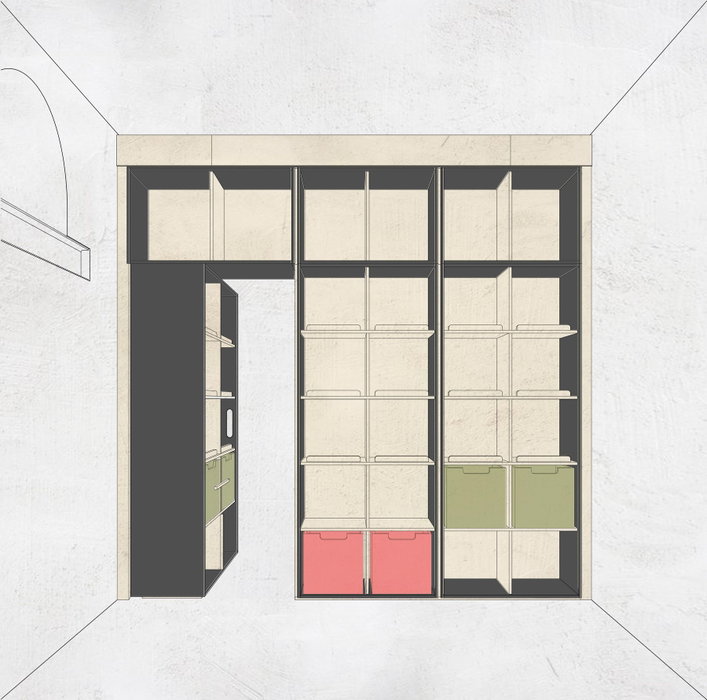
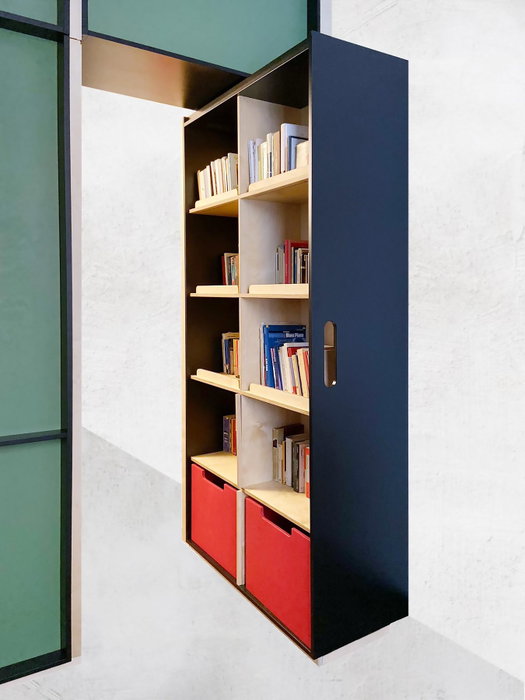
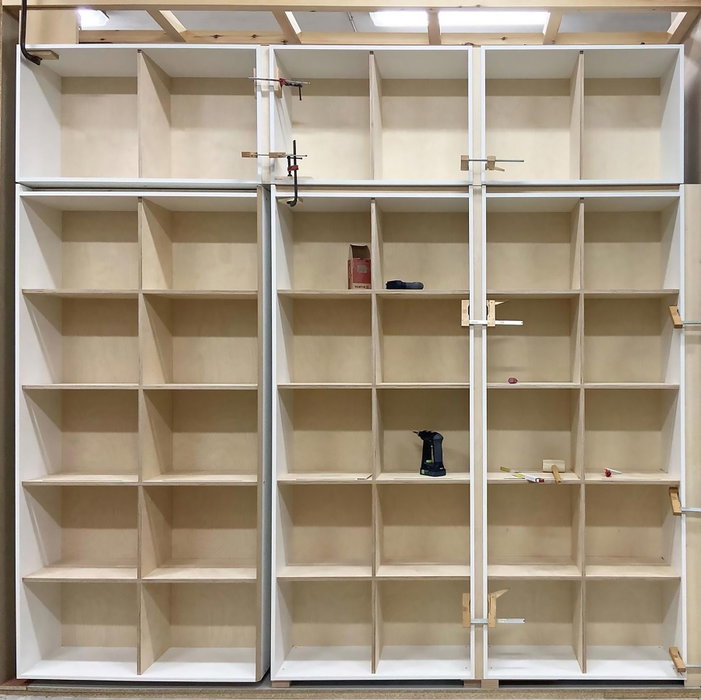
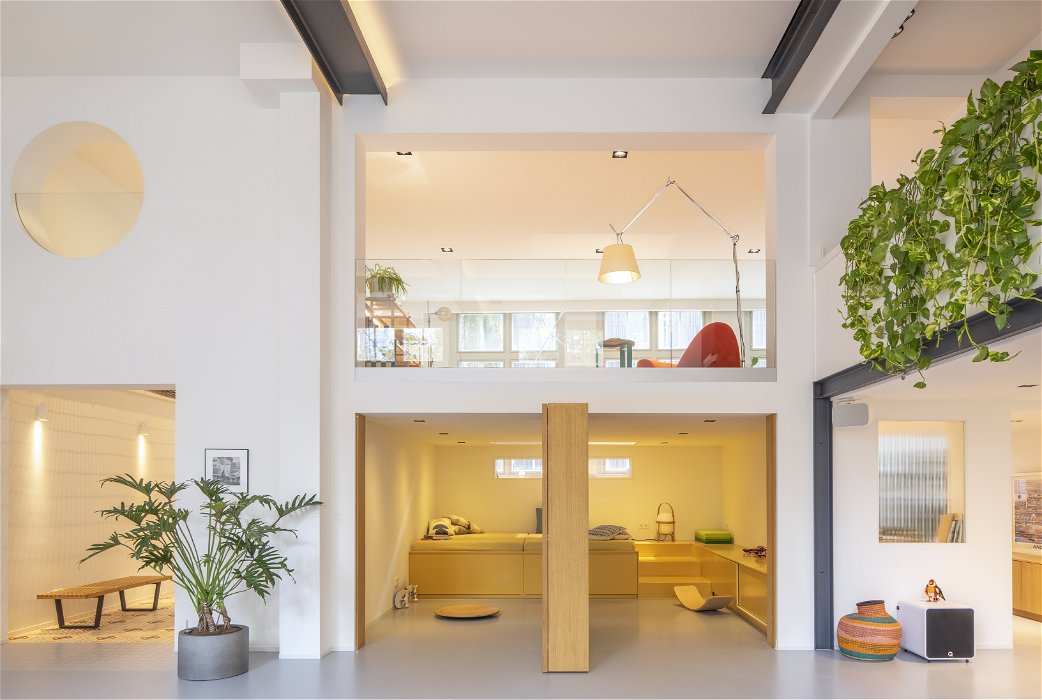
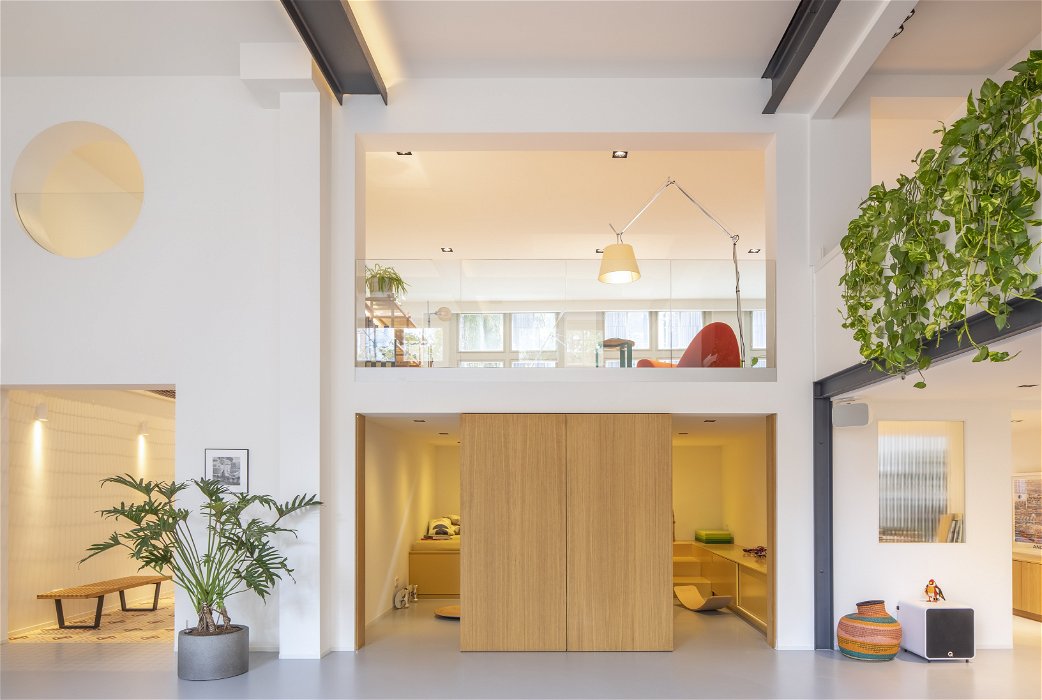
For some a childhood fantasy, for others a practical solution to a small flat. CM9 Architects built a full height plywood bookcase wall and put a pivot inside it, with an acoustic quilt laminated into the leaf so the room behind stays quiet as well as hidden. The hinge carries the leaf with the cabinets loaded. That is the figure an idea like this lives or dies on.
| CM9 Architects bookcase wall, Milan | |
|---|---|
| System | FritsJurgens System One |
| Material | Wood, painted, MDF, birch ply, acoustic quilt |
| Architect | CM9 Architects |
| Manufacturer | ConcilioCucine |
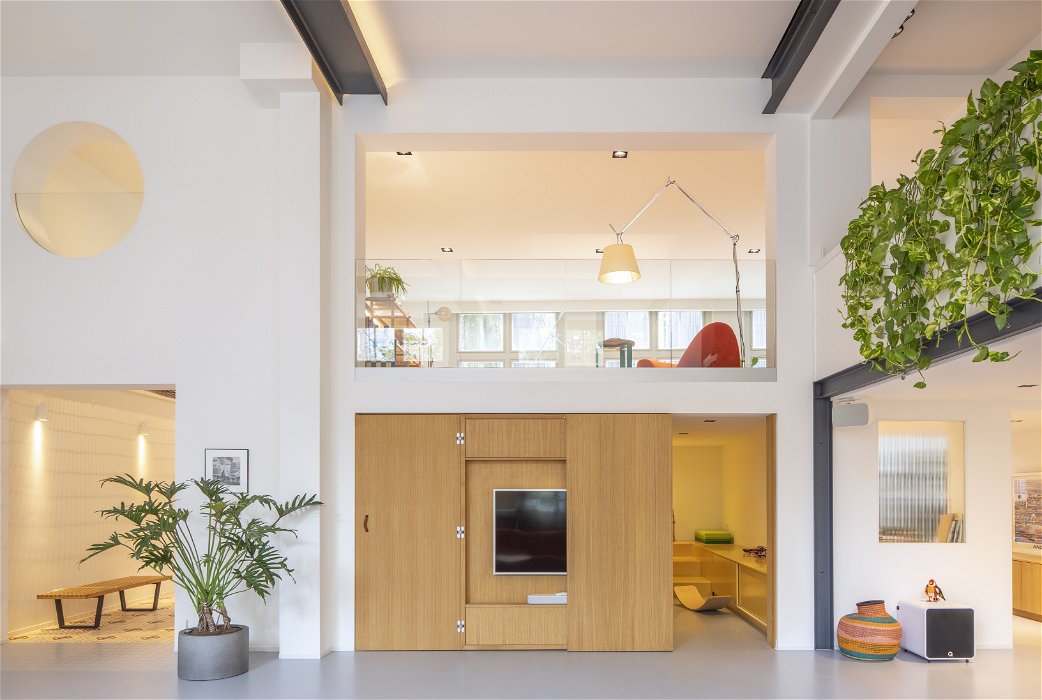
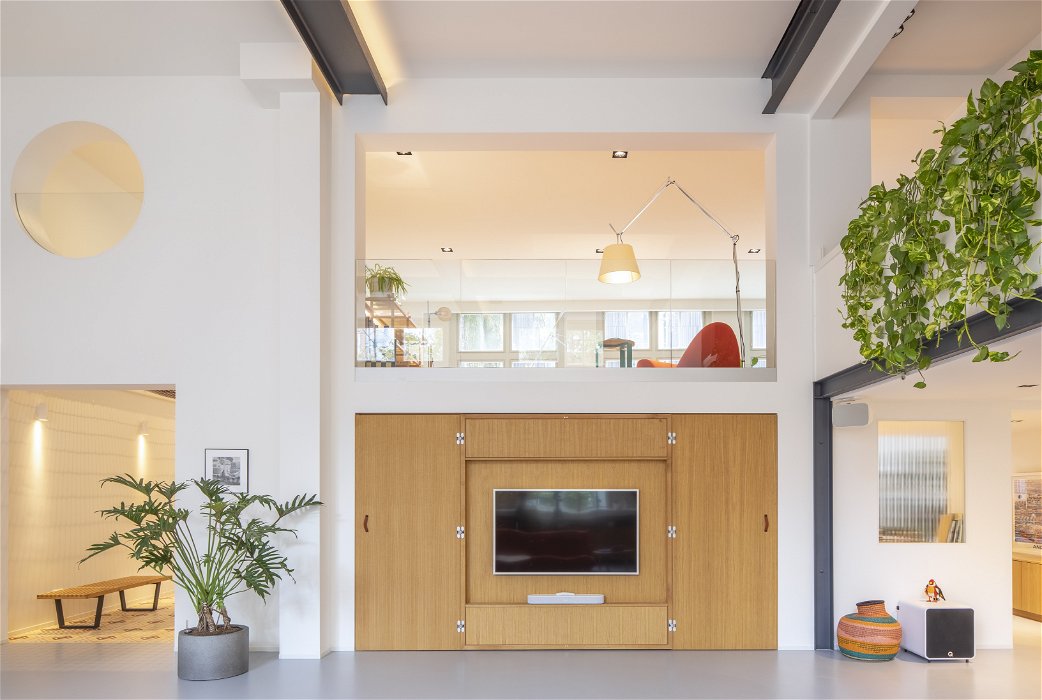
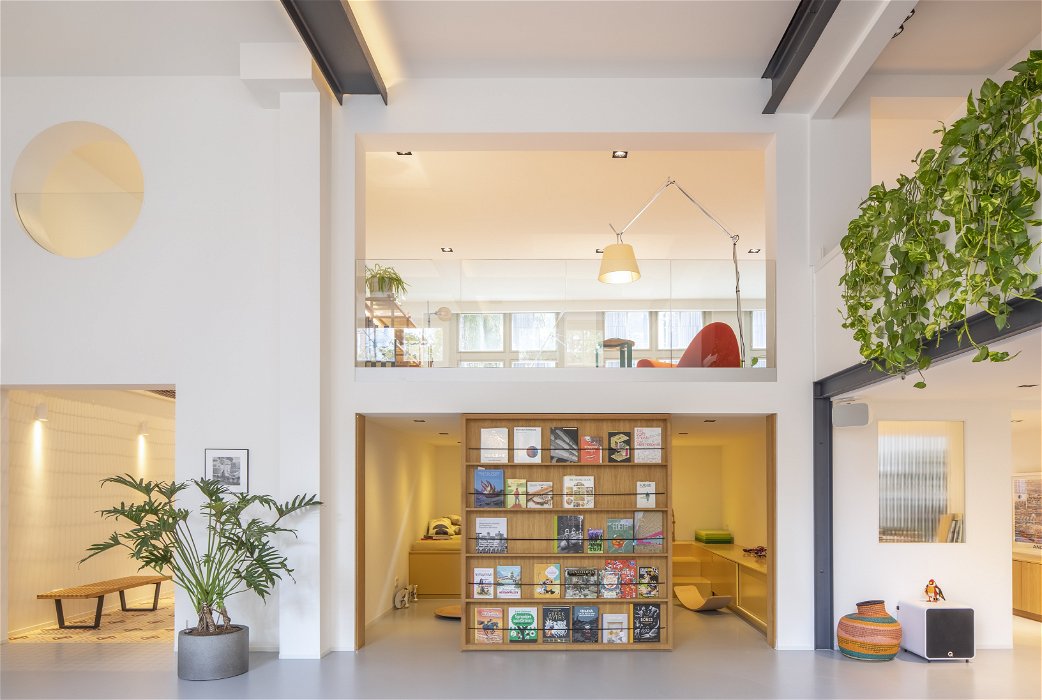
Pivoting bookcase and TV cabinet
Amsterdam, Netherlands
Standard Studio and Brandsing Meubelmakers built a solid wood bookcase with a television cabinet on its back. It rotates on its own axis, so both faces of the unit stay in use.
| Pivoting bookcase and TV cabinet, Amsterdam | |
|---|---|
| System | FritsJurgens System 3 (now System Fx) |
| Material | Solid wood |
| Architect | Standard Studio |
| Manufacturer | Brandsing Meubelmakers |
| Photography | Wouter van der Sar |
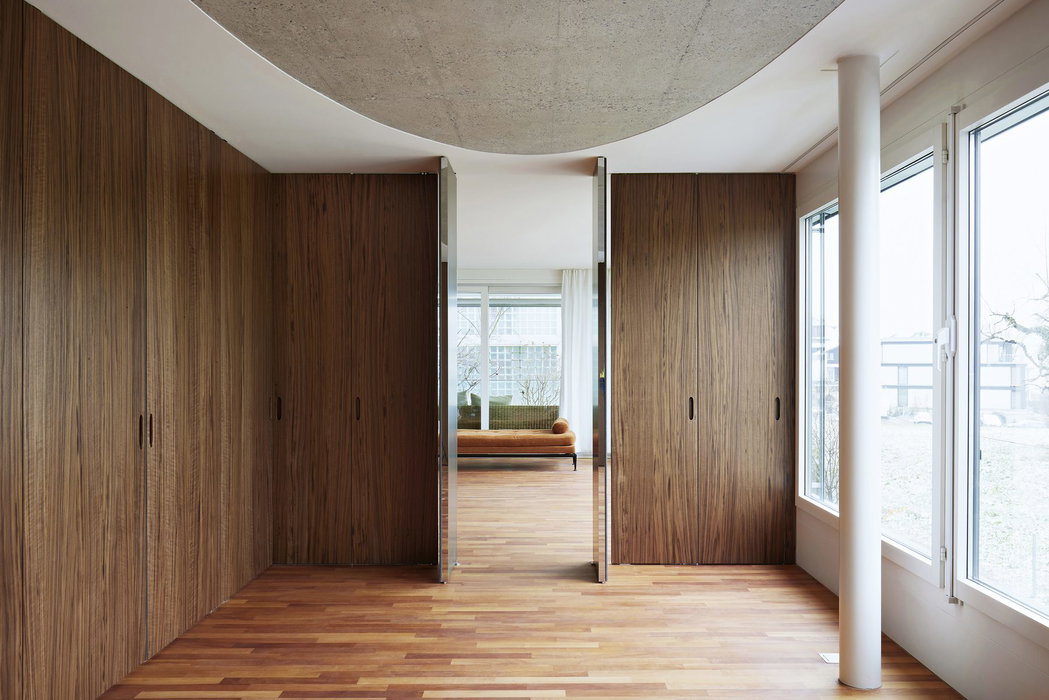
Atelier M.H.
Central Switzerland
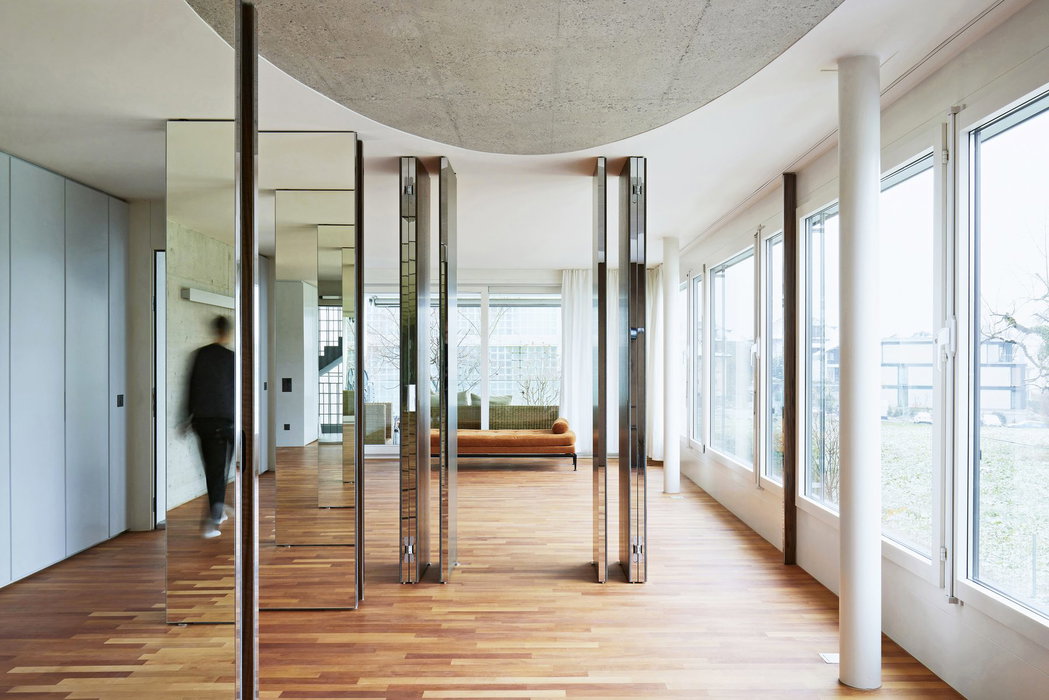
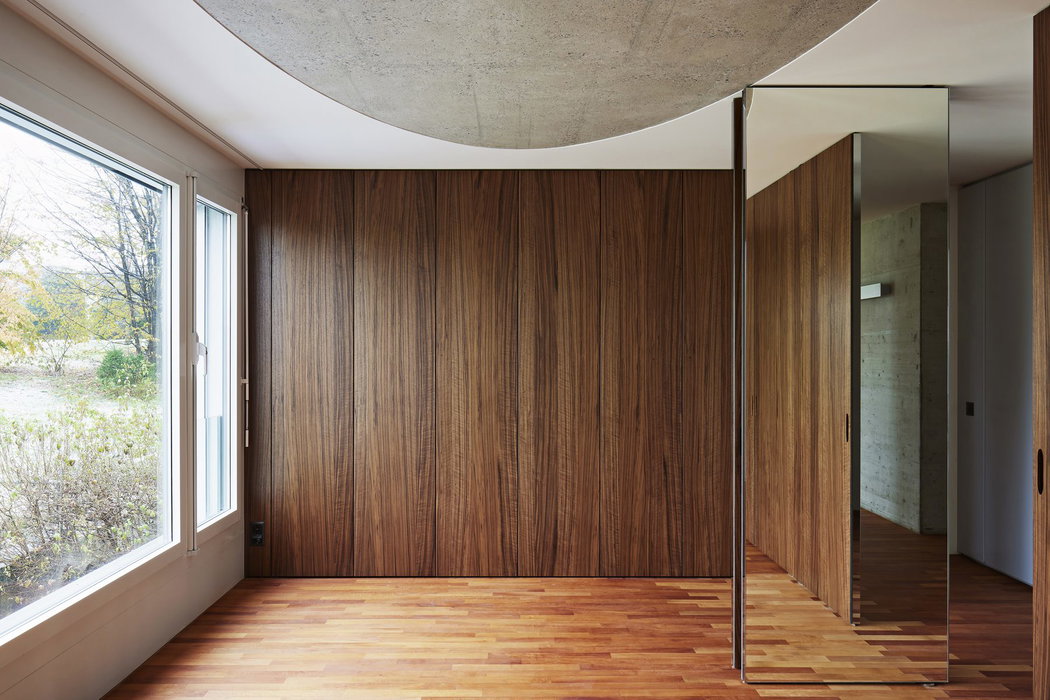
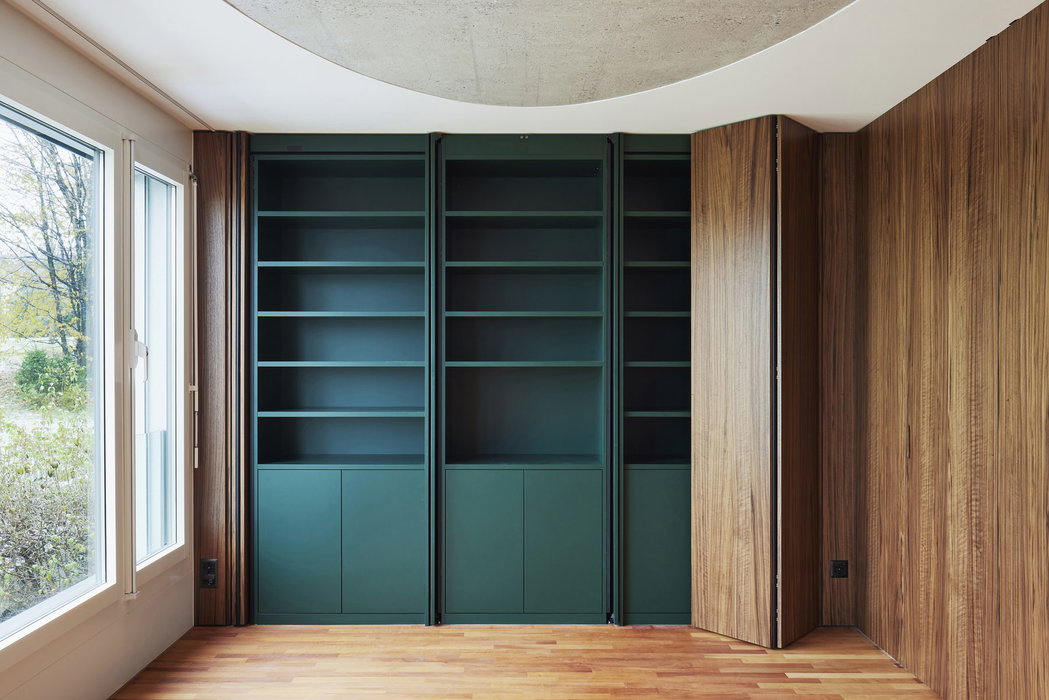
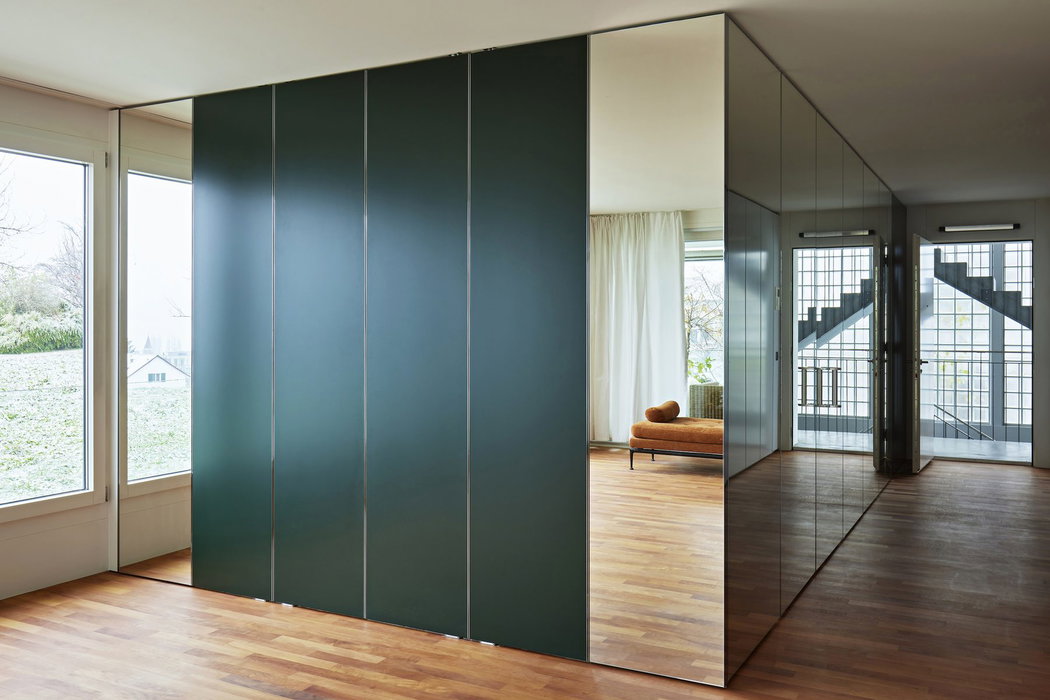
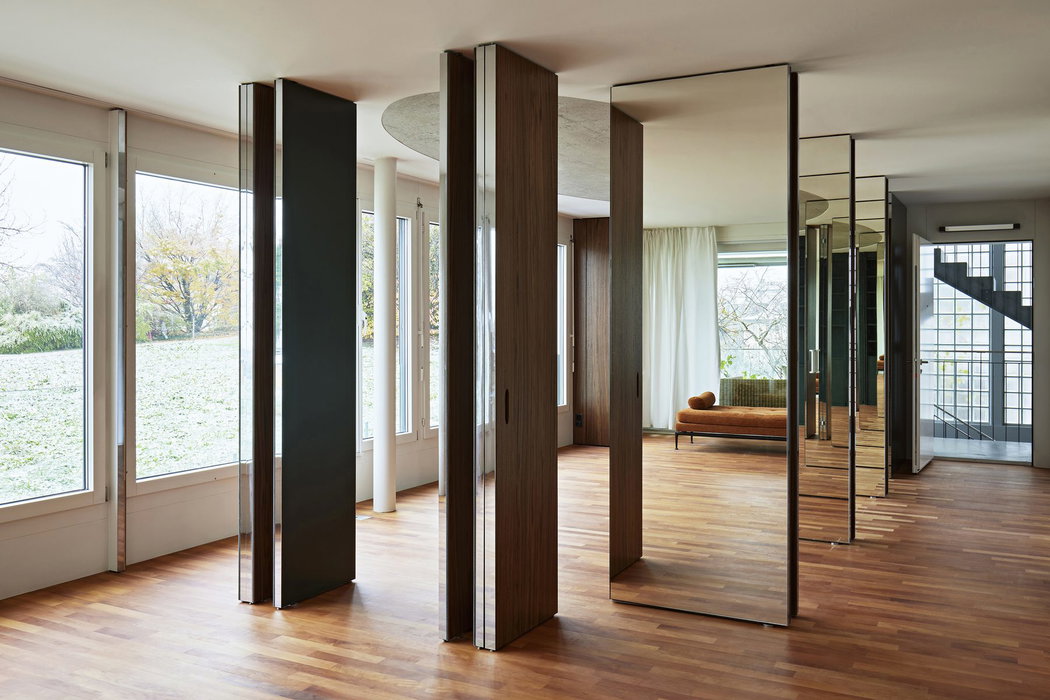
The bookshelf here is clad in six movable walnut panels that can be folded away entirely. It is one element in a larger set of pivoting leaves, some mirrored, some painted, and it shows the other way to solve this problem: instead of disguising the door as a bookcase, disguise the bookcase as a wall.
| Atelier M.H., Central Switzerland | |
|---|---|
| System | FritsJurgens System M (now System M+) |
| Pivot position | 70 mm |
| Material | Walnut, mirror, paint |
| Architect | Lukas Imhof |
| Manufacturer | Hechelmann Schreinerei |
| Photography | Hannes Heinzer Photography |
Why a bookcase is harder than a door
An interior door leaf is around forty millimetres thick. A bookcase is closer to three hundred. Everything difficult about a hidden bookcase follows from that.
A pivot turns the leaf about an axis instead of swinging it off a frame, and the leaf sweeps an arc on both sides of that axis. On a thin door the arc is small enough that nobody thinks about it. On a leaf deep enough to hold books, the arc is the whole design question: put the axis in the middle of the depth, and the front face has to stand clear of the opening far enough for the back of the bookcase to pass. That clearance is a gap, and a gap you can see into is a bookcase that has told you it is a door.
Moving the axis towards the corner that swings into the room closes that gap, and the bookcase reads as a wall again. You pay for it behind the leaf: the arc back there grows, the door needs more room to open into, and the load on the hardware changes.
How close you can get
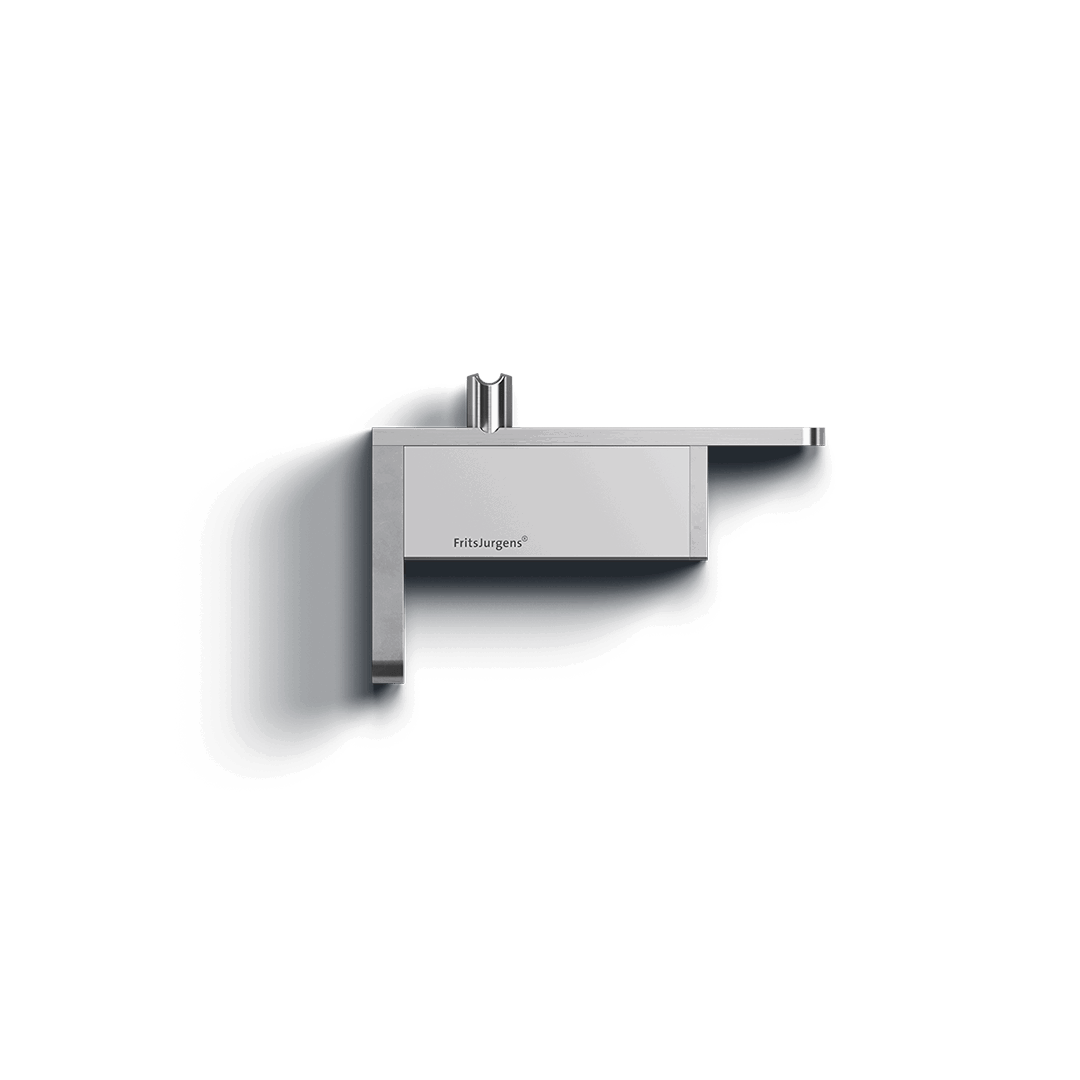
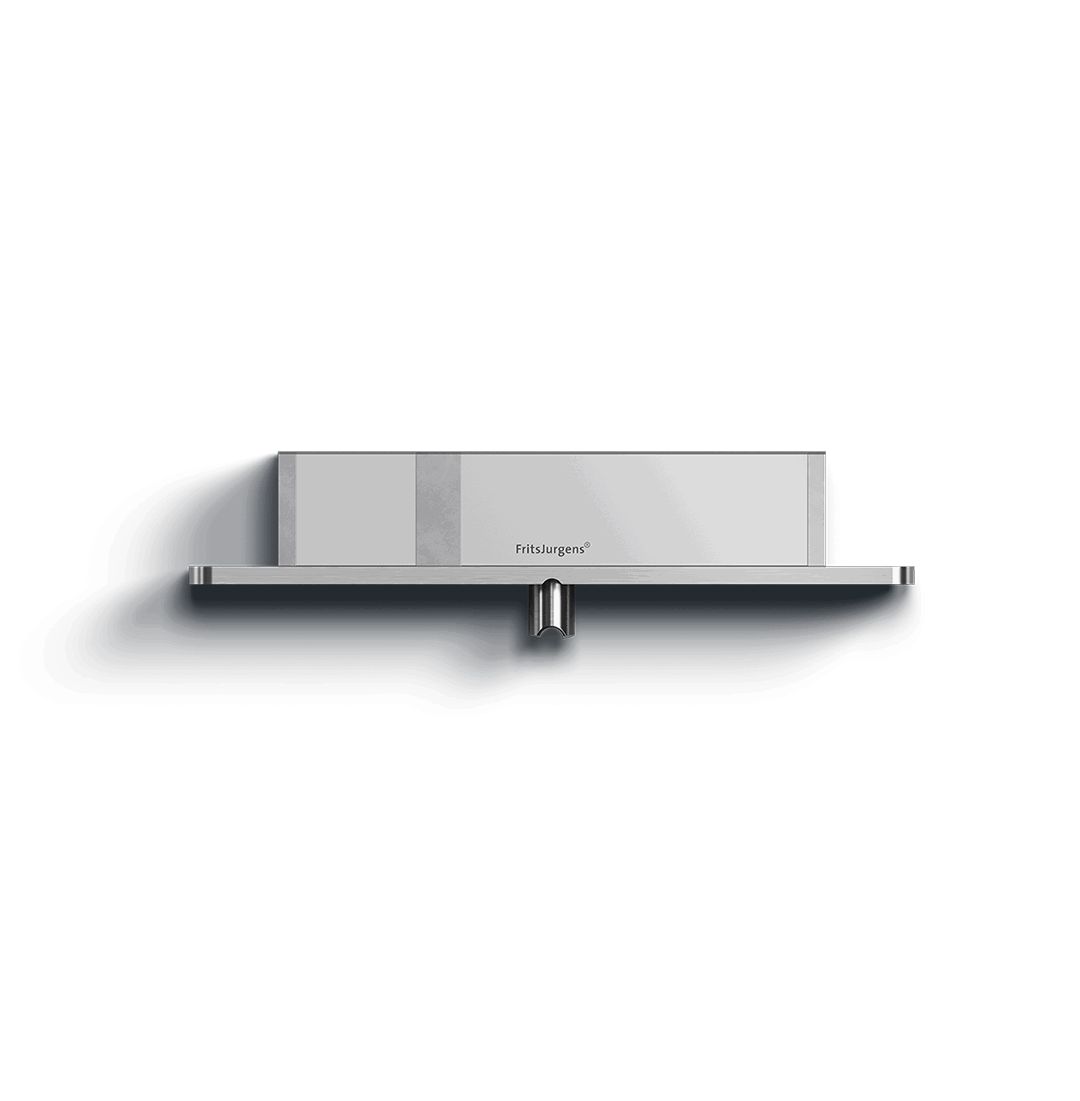
How far the axis can move is set by the top pivot you specify and by the construction of the leaf. That makes the top pivot a design decision on a bookcase, where on an ordinary door it is only a detail.
The Scottish Secret Door in Edinburgh was built to three millimetres all around. That is the tolerance a concealed bookcase asks for, and it is achievable, but it has to be designed in from the first sketch; it cannot be solved on site. Two things decide whether you get there: where the axis sits, and whether the surrounding joinery was built to the same tolerance as the leaf.
Our Gap Calculator works this out for a given door. Use it before the joinery is ordered.
Seals and sound
Not every hidden bookcase needs to be quiet, but one that hides a study or a bedroom usually does. Moving the axis off centre has two consequences for sealing.
A drop seal has to run somewhere, and the position of the axis decides what it can close against. Beyond that, sound and concealment pull in the same direction for once: a leaf built to a three millimetre tolerance has fewer places for sound to get through than an ordinary door, provided the leaf itself is built for it. CM9 laminated an acoustic quilt into their bookcase for exactly this reason.
If the room behind the bookcase has to be quiet, say so at the design stage. That changes how the leaf is built, and not only which hardware goes into it.
The bookcase you hang is not the bookcase you live with
Every other door on this website is finished on the day it is installed. A bookcase is not. It arrives empty, it is dressed for the photograph, and then for ten or twenty years people put things on it. Almost nobody takes anything off.
That matters, because the hardware is not selected on the weight of the door alone. It is selected on the sideways load the leaf puts on the pivot, and that load depends on how much mass sits how far from the axis. A book at the far end of a shelf counts for more than the same book near the hinge. On a bookcase door, almost everything is at the far end.
One bookcase, three moments
On installation day the leaf is empty. It is the lightest it will ever be, and the worst possible basis for sizing the hardware. On the day of the photograph it holds styled shelves and a few books. That is the weight most people quote when they ask what their door weighs. Ten years on the shelves are full, the ones at the outer edge included. The leaf has not changed. The load on the pivot has.
That is not a reason to be cautious about a bookcase door. Three hundred kilograms sits well inside what the hardware carries, and the systems here run to five hundred. It is a reason to specify for the bookcase once it is full, and to tell your client that the shelves at the outer edge are the ones that count.
Work out the sideways load for your own door, then confirm the system and class in the Selector.
Which system for a bookcase door
The system does not follow from the door being hidden. It follows from what you want the bookcase to do when someone lets go of it.
Should it close itself every time, so the wall is whole whether or not anyone pushed it back? Should it stay exactly where it was left while somebody stands in front of it with both hands full? Or should it simply move freely and stay out of the way?

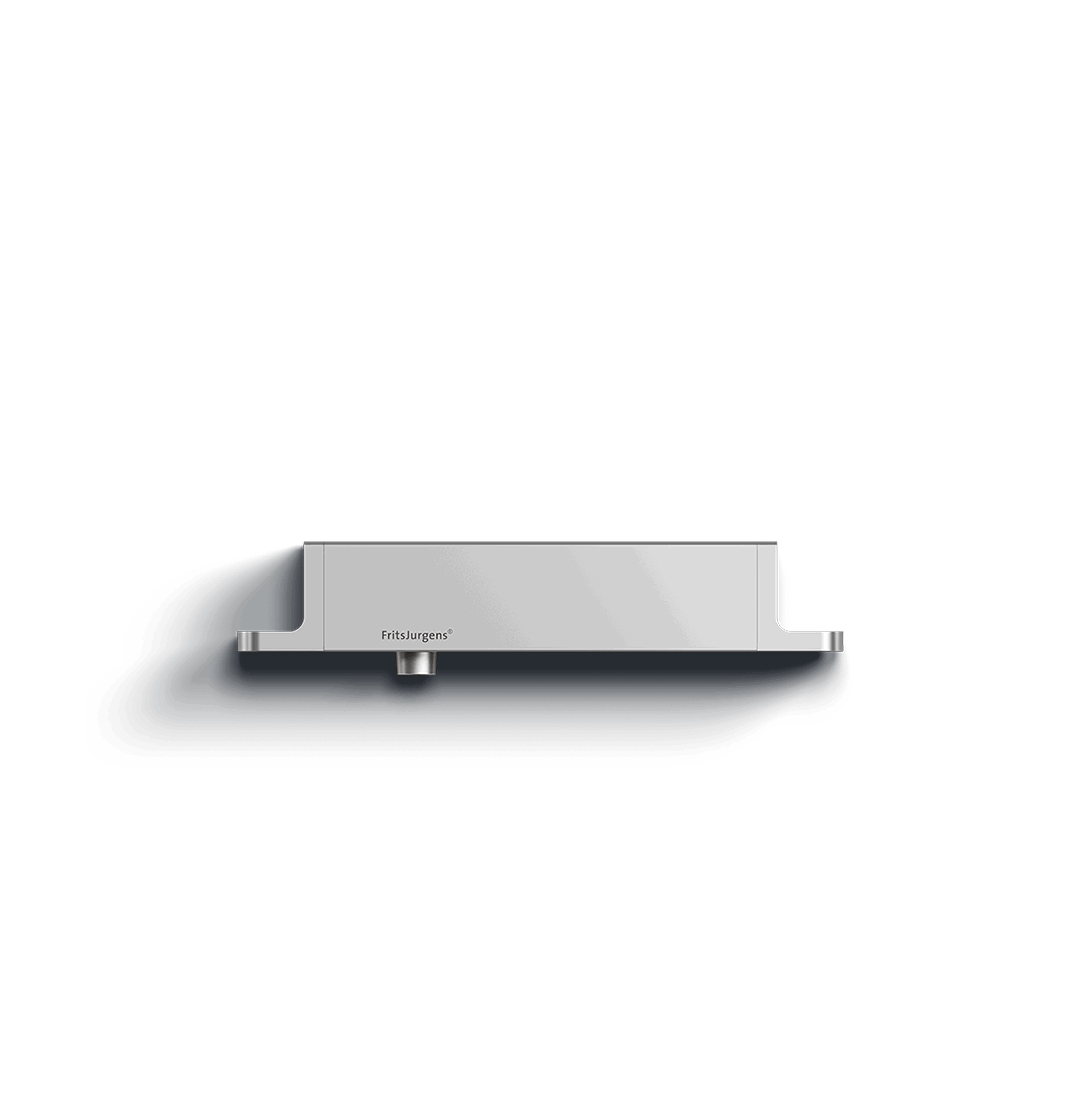
System M+
The bookcase that closes itself
Self-closing with soft-close, so the leaf returns flush and lands quietly. Damper Control and 30° Speed Control set how it behaves on the way back, and Latch Control adds force in the last 10° where a lock has to engage.
Choose it when the illusion depends on the door being closed and you cannot rely on people to close it.
System Fx
The bookcase that stays open
Hold positions at 0°, 90°, 180° and 270°, and free swing between 10° and 80°, so the leaf stays where it was left. The JP Residence bookshelf works this way.
Choose it when the bookcase is furniture as much as it is a door, and people will stand in front of it with it open.
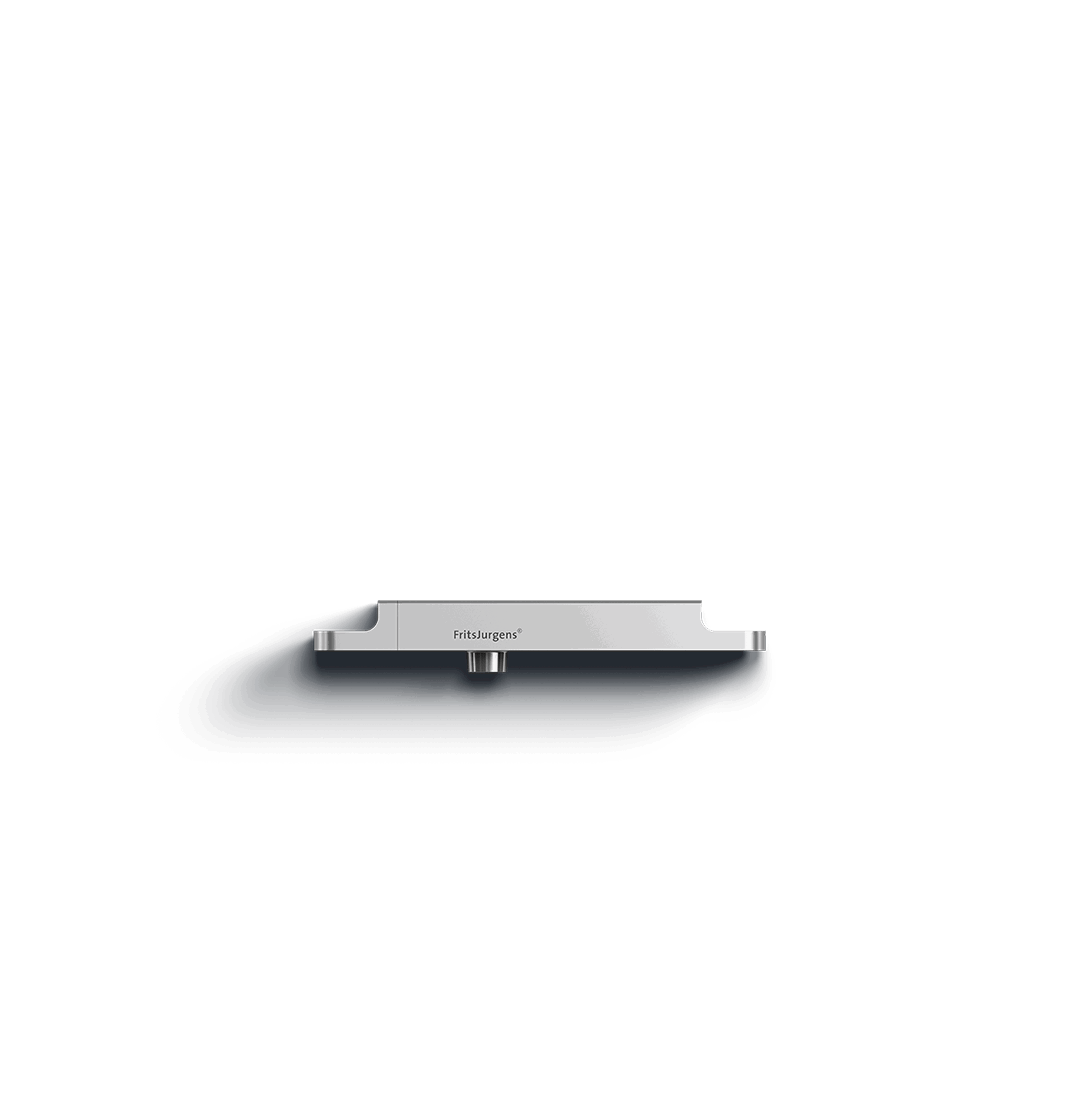
System One
The bookcase that simply moves
Free swing, the smallest footprint inside the leaf, and the only system that starts at zero kilograms. It carries most of the projects here, including the three hundred kilogram door in Edinburgh.
Choose it when the bookcase should simply move and nothing should push back.
Top pivots, and why they matter here
The top pivot sets how far the axis can move towards the corner, and that decides whether your reveal reads as a shadow line or as a gap.
Lighting inside a hidden bookcase is common enough that the Cable Grommet is worth knowing about before the joinery is drawn. Ki In Motion uses it.
| Top pivots and what they give you | |
|---|---|
| Top pivot 40 mm | Fixed position, the most compact, maximum clear width. |
| Top pivot 70 mm | Adjustable, the standard choice, and the one most of the projects here use. |
| Top pivot Cable Grommet | Takes a cable into the leaf, for a bookcase with light in it. |
| Top pivot Reversed | Mounted in the ceiling, for a slim frame or none at all. |
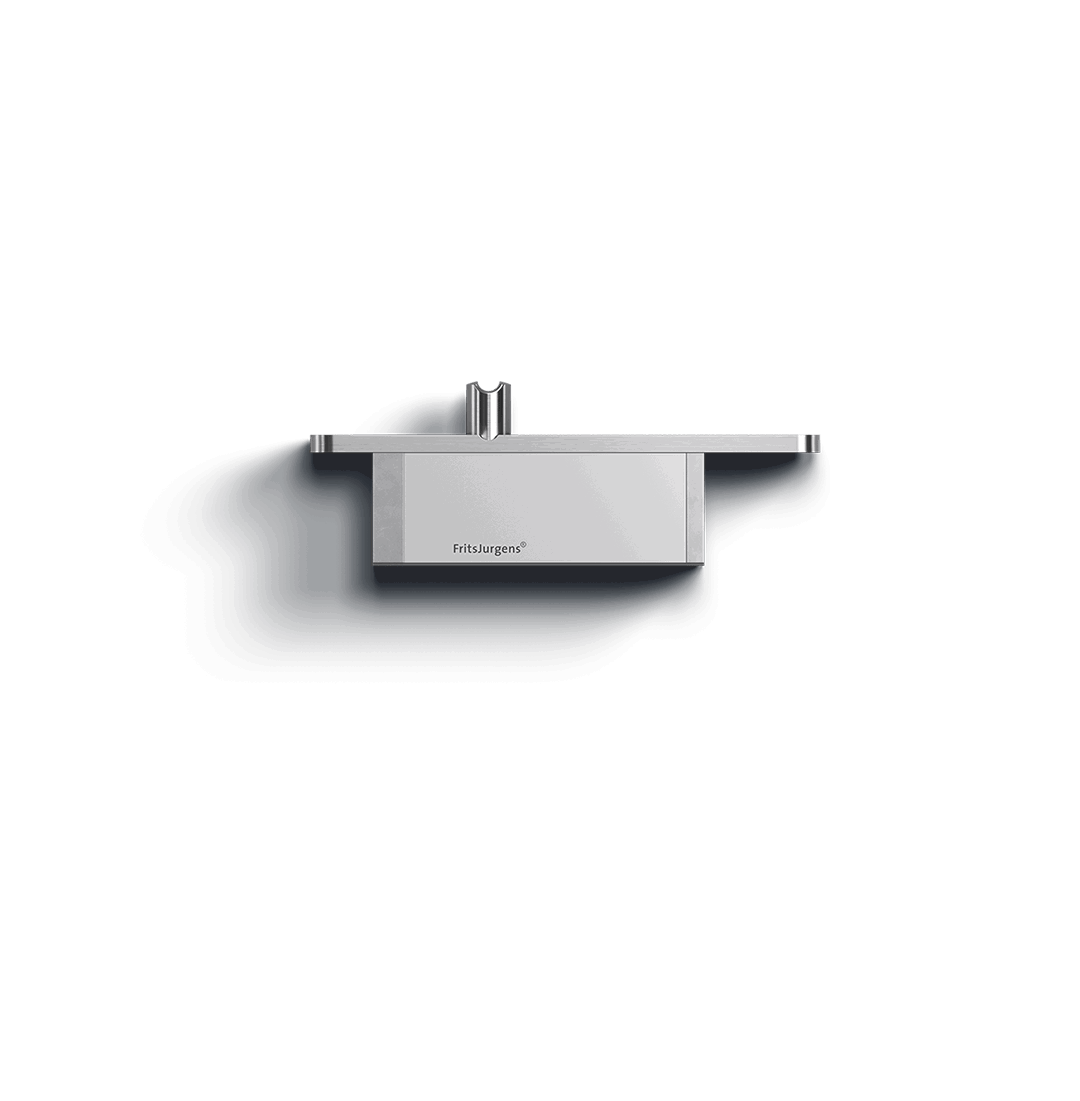
The floor plate is the one thing you will see
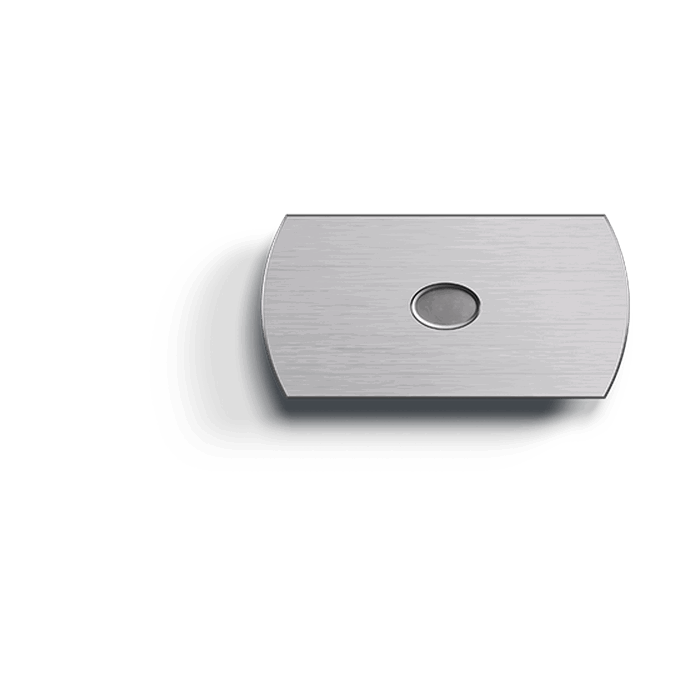
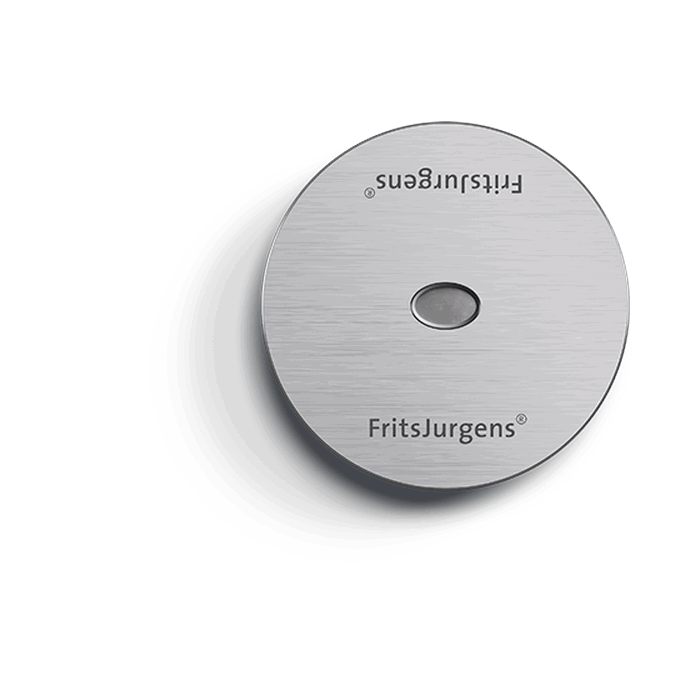
Everything else sits inside the door. The floor plate does not, and on a door whose whole purpose is to not look like a door, it either holds the illusion or breaks it.
It sits eight millimetres into the floor. It comes squared or round, in stainless steel or PVD black, and in flush variants. Match it to the floor rather than to the bookcase, and look at it from where people will be standing.
Frequently asked questions
How heavy can a bookcase door be?
The systems here carry up to five hundred kilograms, and the heaviest bookcase we have documented is three hundred. Weight alone does not settle it, because the class follows the sideways load on the pivot. Put your door into the Selector and it will tell you.
Does the bookcase have to be empty when it is hung?
No, but it has to be specified for the loaded weight. Fill it afterwards and the hardware will not mind, as long as it was selected for the bookcase you intend to end up with.
How small can the gap be?
Small enough to read as a shadow line. It depends on the depth of the leaf, the position of the axis and the tolerance of the surrounding joinery. The Gap Calculator works it out for your door.
Will it stay open, or does it close itself?
Either, and you choose which. System M+ closes it, System Fx holds it at fixed positions, System One lets it swing freely.
What is visible when the door is closed?
The floor plate, and the ceiling plate where one is used. The hinge itself is inside the leaf.
Can a bookcase door be soundproofed?
Yes, though that is settled by how the leaf is built more than by the hardware. Raise it at the design stage.
Next step
If you are designing one, start with the Selector. It asks about the door instead of asking for a product code, and it will tell you which system and class the leaf needs. If you are specifying for a client in North America, our team there works in your time zone and knows the tolerances your joiners build to.