


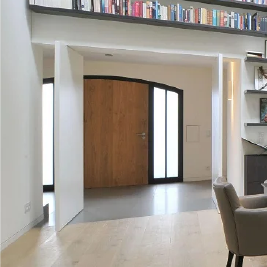









Pivot doors for hospitality
In hotels, resorts, restaurants and spas a door has two jobs at once: carry the design and take the traffic. Every guest touches it, someone cleans it every morning, and it can never be out of service. What it has to do beyond that depends on where it sits. Some doors close quietly and latch behind a guest. Others stay open through service.
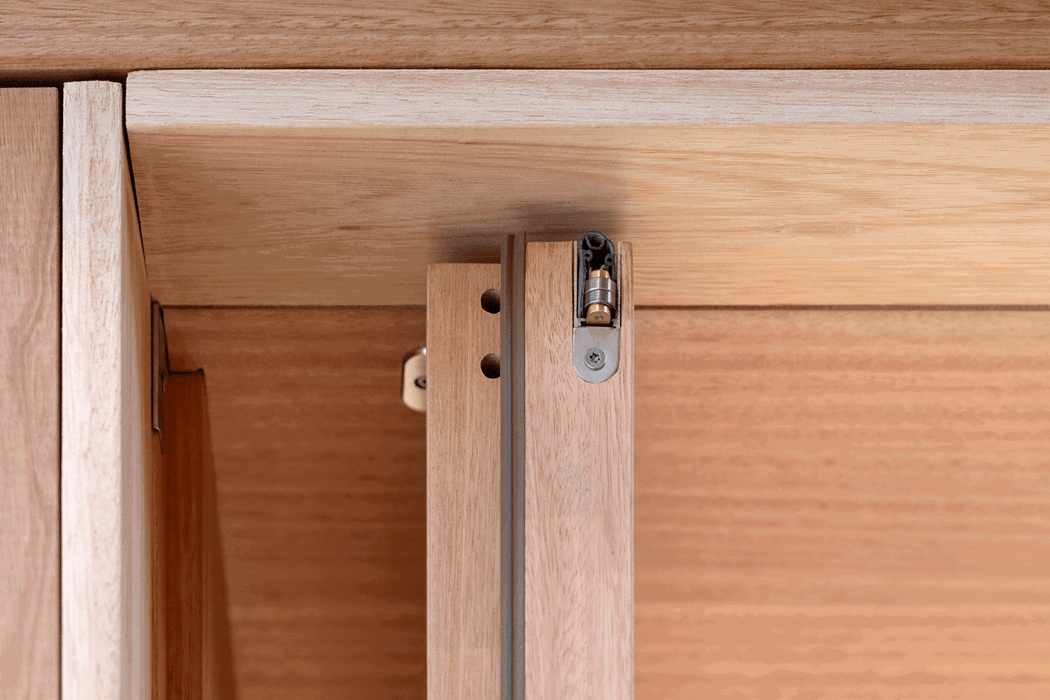
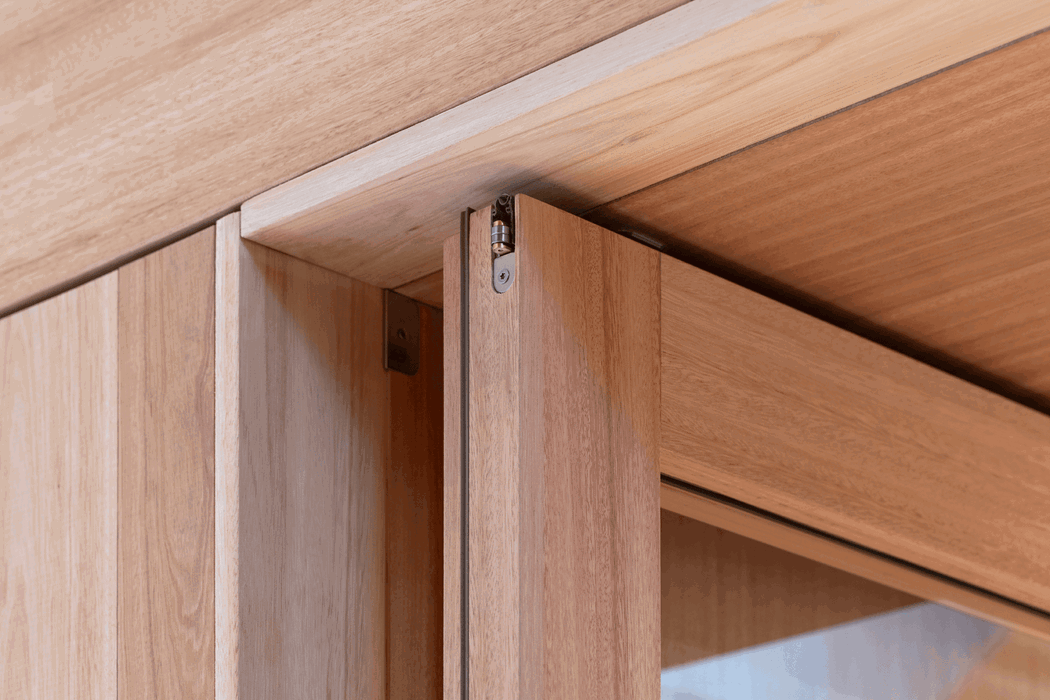
A FritsJurgens pivot hinge system is built for that kind of use. The hinge is hidden inside the door, so only the floor plate and the ceiling plate stay visible. There is no hardware on the face of the door, so there is nothing to clean around and nothing to maintain. It carries doors in any material, from a light guest room door to the heaviest entrance in the building, and the movement follows the application: closing softly and latching, holding open at set positions, or swinging freely.
Where a pivot door earns its place
What a door has to do depends on where it is. In a public space a pivot door does what a hinged door cannot: it runs full height, spans wide and carries the same finish as the wall beside it. In a guest room the demand is different. The door has to close itself, quietly, and latch every time. Between two event rooms, or on a service route, it is the opposite again: it has to stay open where it is put and close when the space changes use.
Arrival: the entrance and the lobby
The entrance is the busiest door in the building, and it sets the tone for everything behind it. It can be large: full height, wide enough for two people and a suitcase, and still light enough to move with one hand. As an exterior door it opens inward, because wind turns an outward-opening leaf into a sail, and it takes a Flush floor plate that finishes level with the sill.
Self-closing matters here for a less glamorous reason. A door that returns to closed on its own keeps the lobby at temperature without anyone having to think about it, and it does so without a closer mounted on the frame. FritsJurgens System M+ is self-closing, and Damper Control brings the movement to a soft, quiet close.
Inside the lobby that constraint falls away. A door between the lobby and a lounge or restaurant can swing both ways, so it is always a push and never a pull, whichever side you approach from. Resort properties carry the same detail outdoors, to terraces and pool decks, where the two entrance rules apply again: the door opens inward and sits on a Flush floor plate.
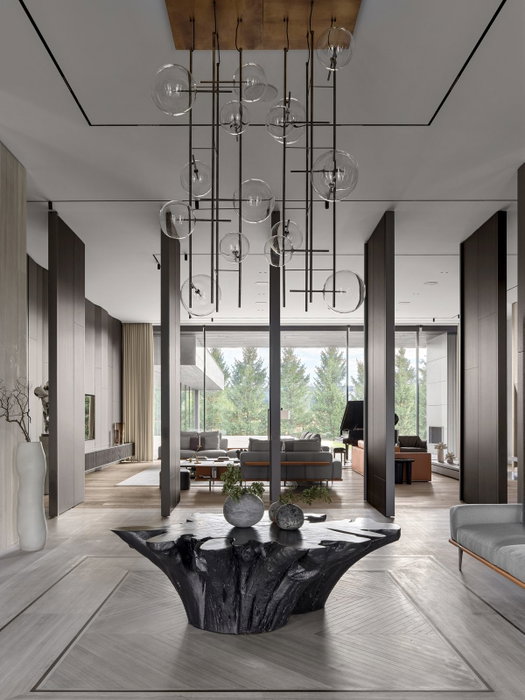
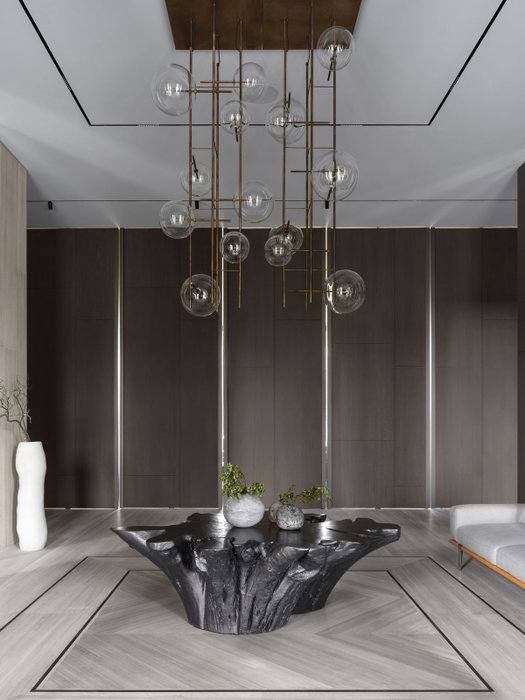
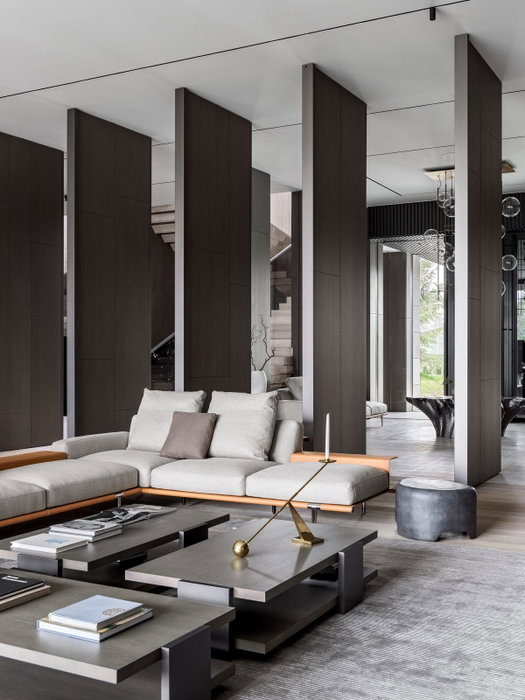
Guest rooms and suites
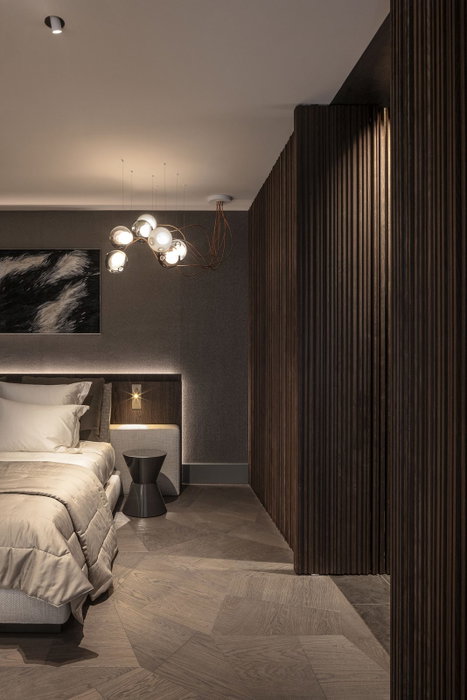
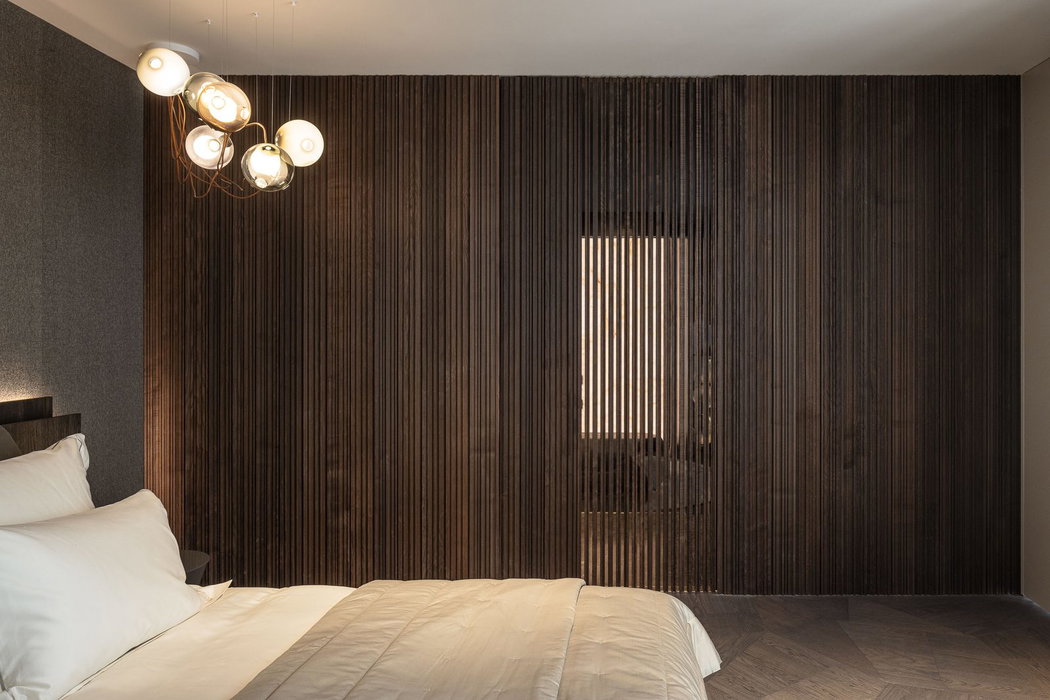
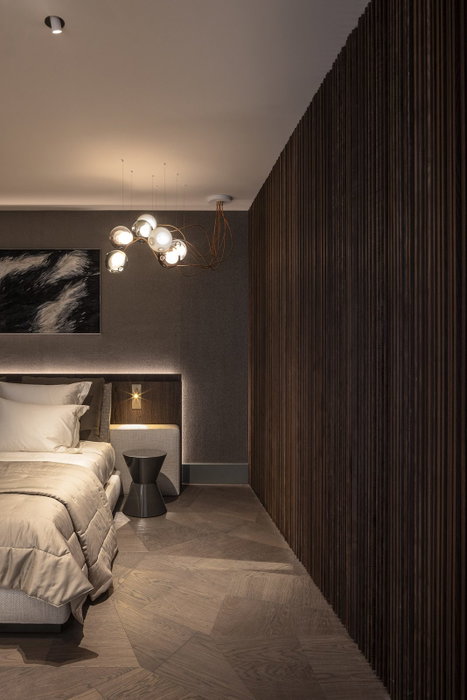
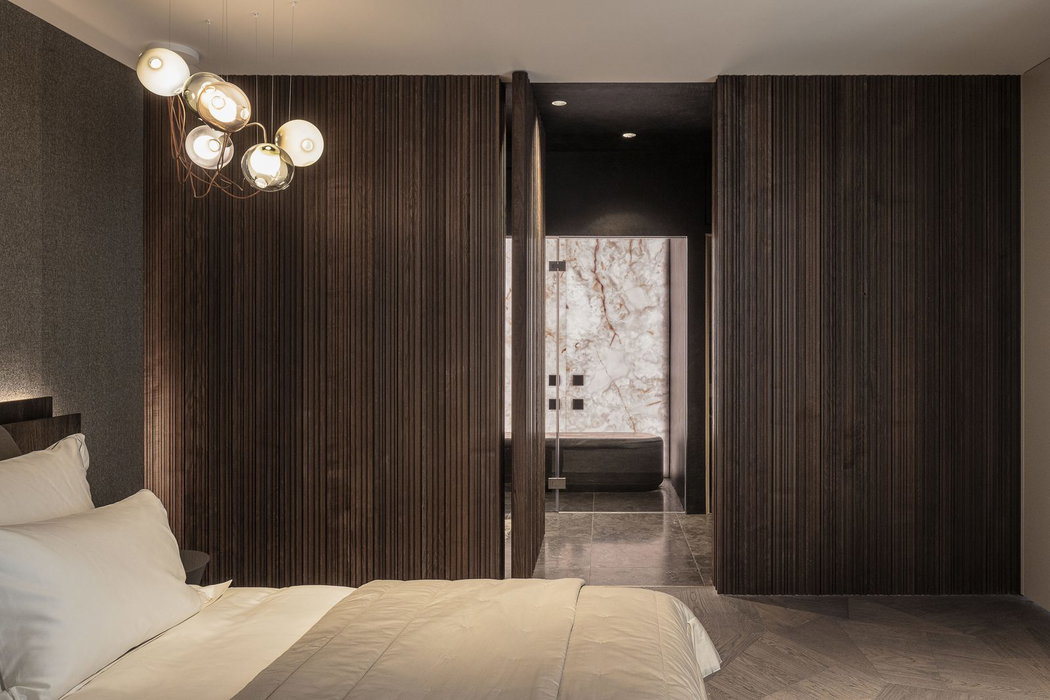
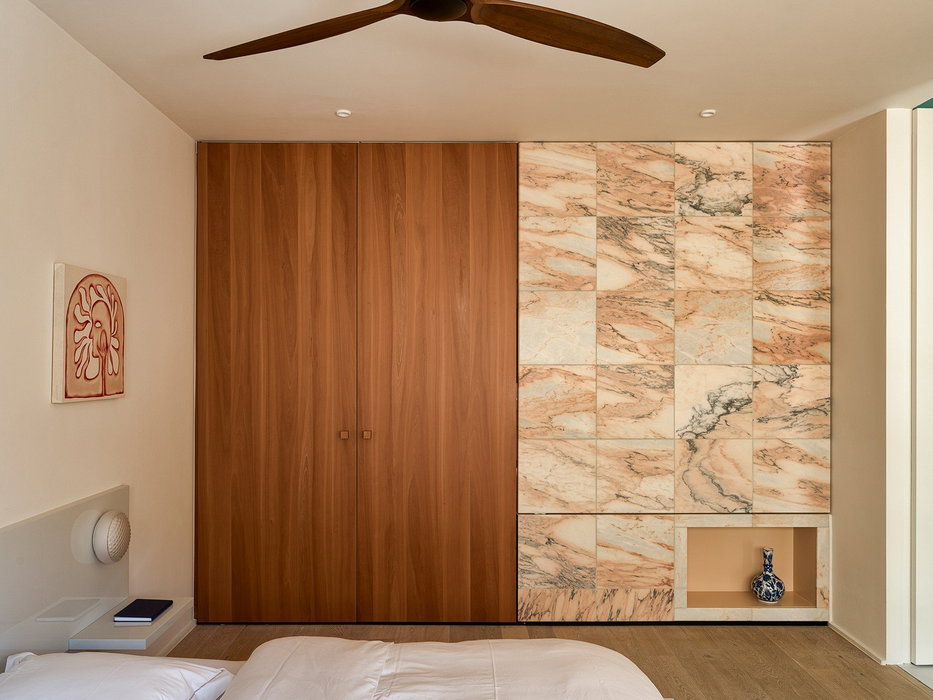
Inside the room the requirement changes from door to door. A connecting door has to end up closed again, quietly, every time. A panel dividing a suite has to do the opposite: let two spaces flow into one, then separate them again when the rooms are let apart. Bathroom and dressing room doors can go either way, closing on their own or standing where they are left. That is a project decision.
A dividing panel calls for hold positions, and System Fx holds at every 90°. A door that has to return to closed calls for the opposite, and that is where System M+ NHO comes in. NHO stands for non-hold open: the door has one hold position, closed, and returns to it from up to 125° in either direction.
With System M+ NHO the only hold position is at 0°, so the closing movement can be tuned for that alone. Damper Control governs the long part of the swing and damps the door on opening, so it does not swing hard into the wall behind it. 30° Speed Control takes the final 30°, and Latch Control the few degrees a lock needs. In a room at night, that is the difference between a door closing and a door being heard.
In the United States, ICC A117.1-2017 sets both limits: at least 5 seconds to travel from 90° to 12°, under chapter 404.2.7, and an opening force of no more than 22.2 N (5.0 lbs), under chapter 404.2.8. The same tuning is what lets a door meet them.
One door in the room falls outside this. The door onto the corridor is a fire door in most markets, and a fire rating applies to the tested assembly as a whole rather than to any one component in it, so that door goes through your door manufacturer.
Bathrooms and ensuites
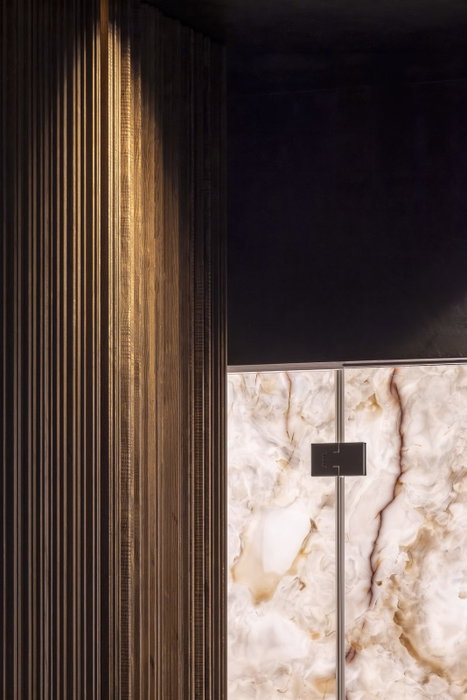
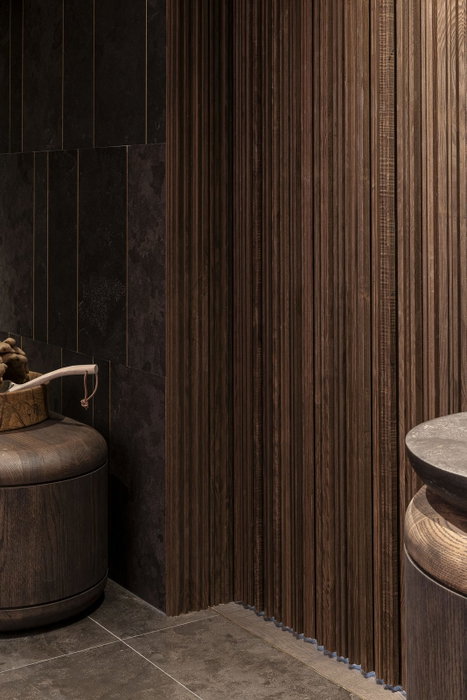
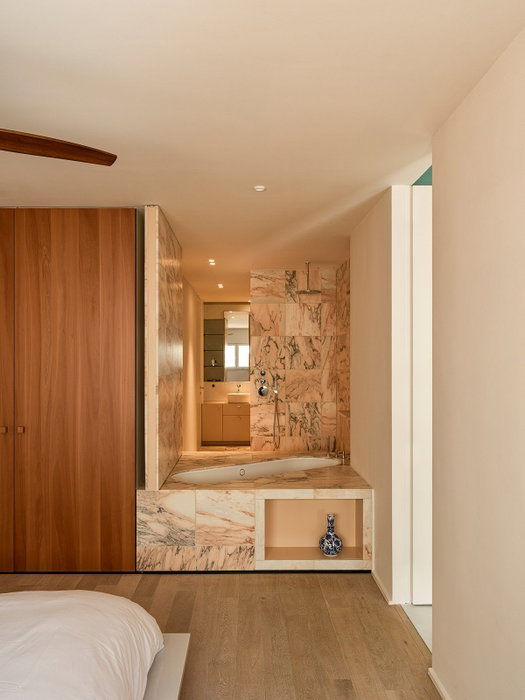
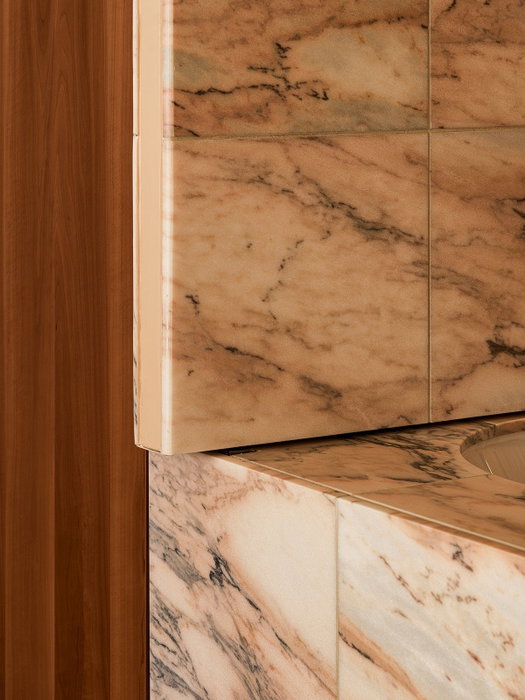
Inside the bathroom the door changes character. A shower or wet room door is mostly glass and the lightest door in the building, and how the room ages comes down to the detail at floor level. A shower enclosure usually brings a rail at the bottom and a raised threshold to hold the water in. A pivot door has neither, only the floor plate set into the floor.
Restaurants, bars and lounges
A service door to the kitchen, a private dining room, a door out to the terrace: these should be closed unless somebody is walking through, for noise, for smell and for how the room looks. That is the same requirement as in the guest room, and the same answer: FritsJurgens System M+ NHO, self-closing, with no hold-open position.
Spaces that change through the day
A breakfast room becomes a meeting room by ten. A lounge closes off for a private event, and a bar opens into the lobby at six.
What makes that work is a door that can be left open and stays there, without a wedge on the floor or a hook on the wall. A pivot door with hold positions does that from inside the door itself.
System Fx free-swings through a full 360° turn and holds at 0°, 90°, 180° and 270°. The door is moved by hand and stays put once it reaches one of those positions. With centre placement the same system carries a pivoting wall, where the whole panel becomes the divider.
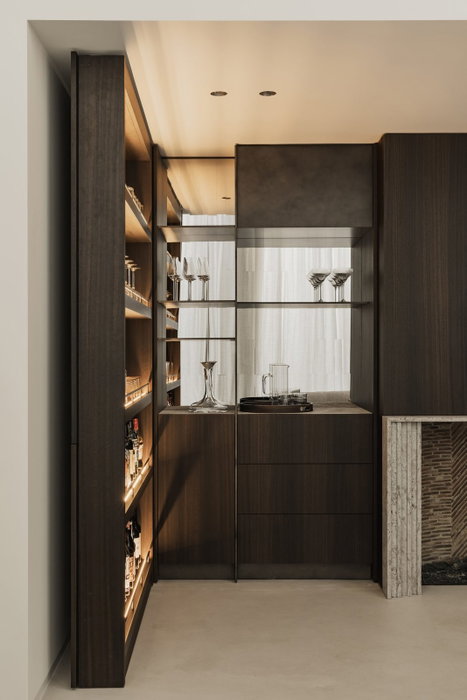
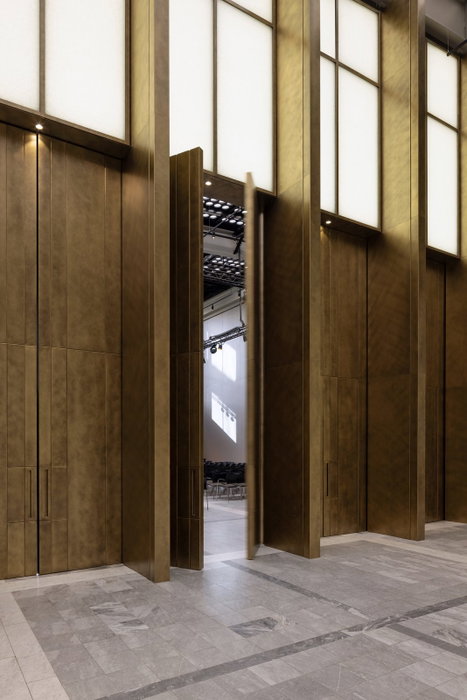
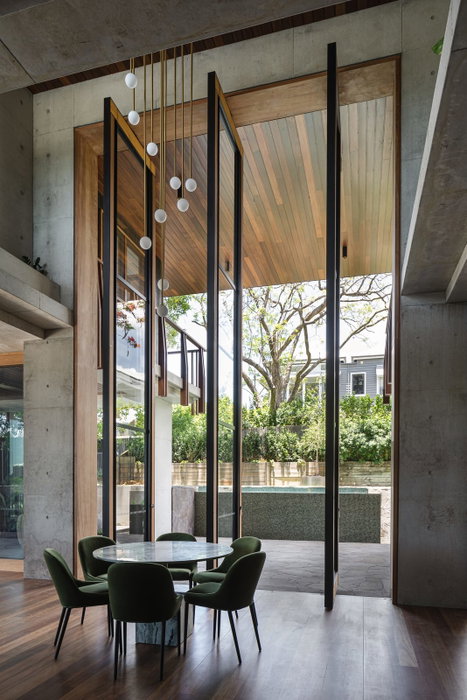
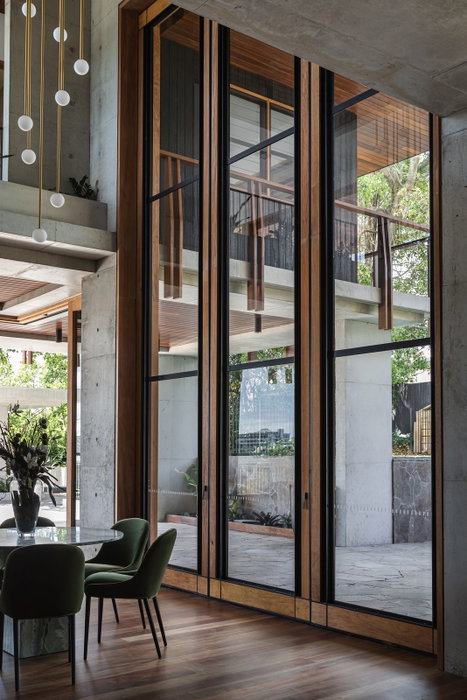
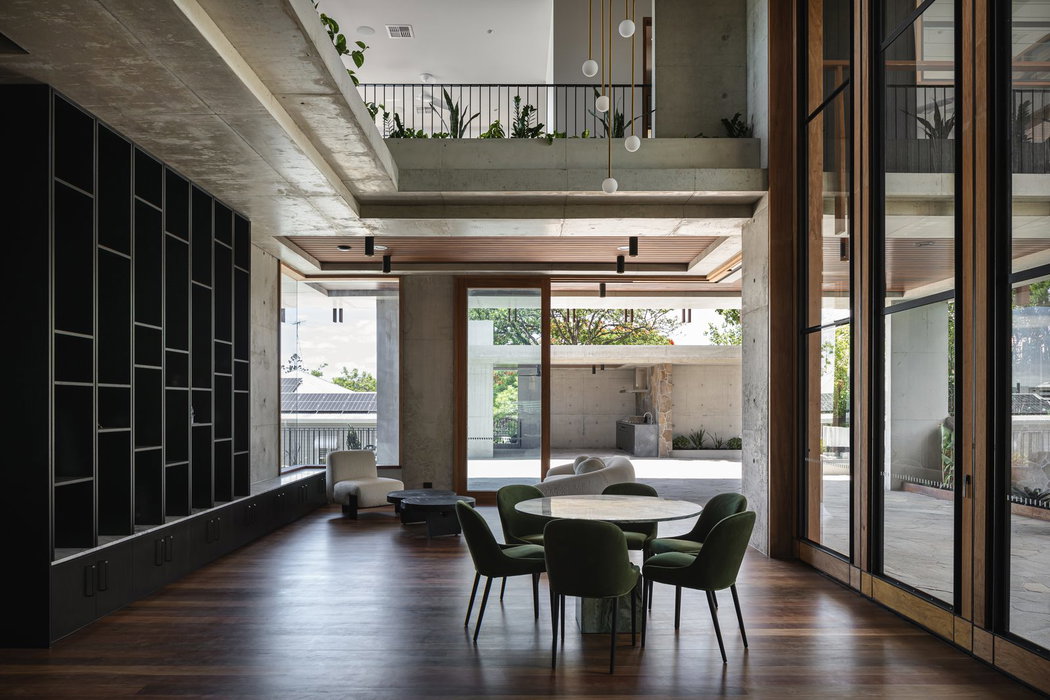
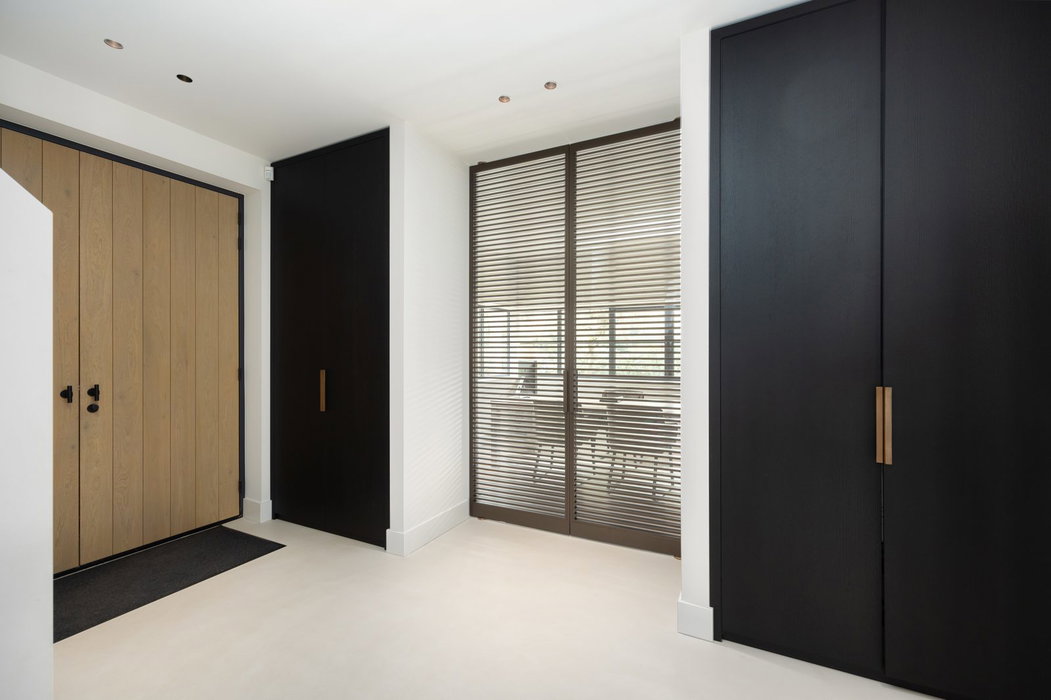
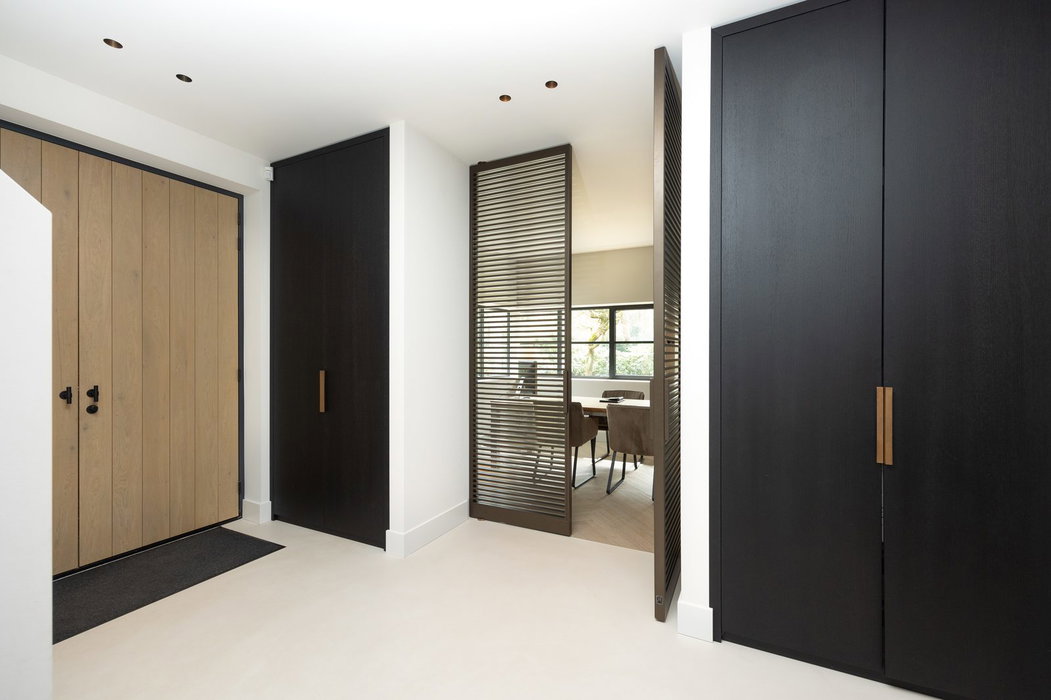
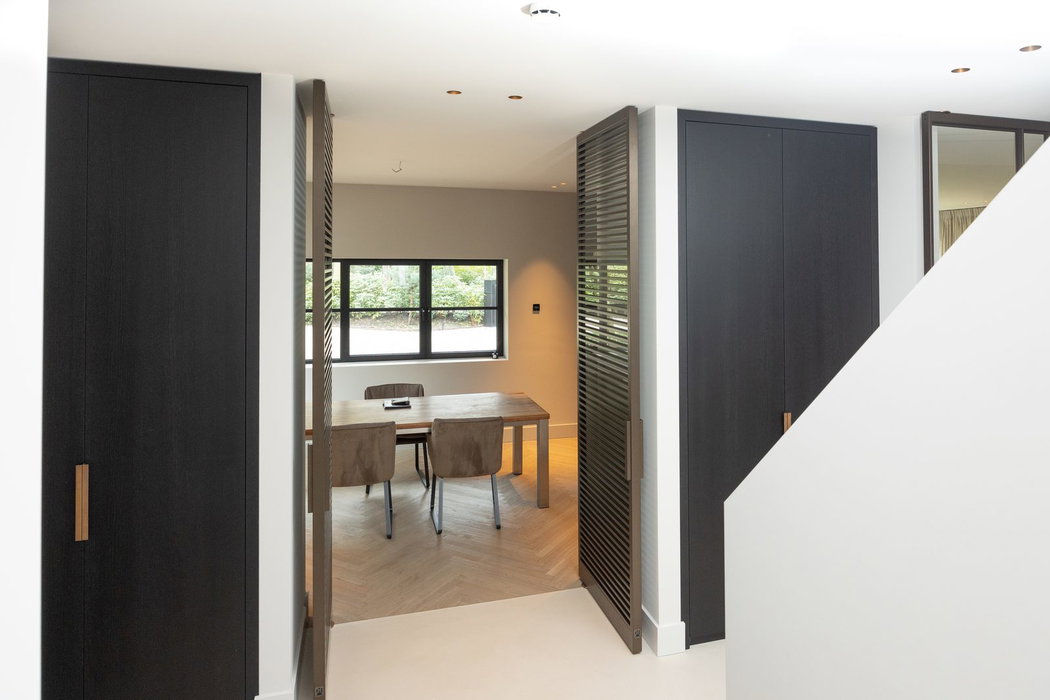
Three large steel-framed glass pivot doors, held open through service and closed when the room changes use.
Follow us
We post new pivot door projects as they are finished, with the full credit chain. Most of the hospitality work shows up there first.
Which system for which door
Hospitality is not a heavy-door market. Most doors in a hotel are light. A pivot door turns on its own axis instead of hanging from a frame, which is why weight and size stop being the limits they usually are. FritsJurgens systems carry light and heavy doors alike, and a specification starts with what the door has to do, not with what it weighs.

System M+ NHO
Self-closing, no hold-open position
One hold position, at 0°, reached from up to 125° in either direction. Three adjustable controls tune that single movement: Damper Control damps the door on opening and softens the close, 30° Speed Control governs the final 30°, and Latch Control the last few degrees a lock needs. Weight classes follow the System M+ documentation, and the minimum door thickness is 40 mm. Typical applications: connecting doors, bathroom and dressing room doors, and the door between a restaurant and a private dining room. Tuned within the limits ICC A117.1-2017 sets for accessible doors in the United States.
System M+
Self-closing, with hold-open positions
Damper Control, 30° Speed Control and Latch Control, with hold positions at 0°, 90° and -90°, so the door can also be left standing open. Classes AA to E for 20 to 349 kg, classes F and G for 350 to 500 kg.
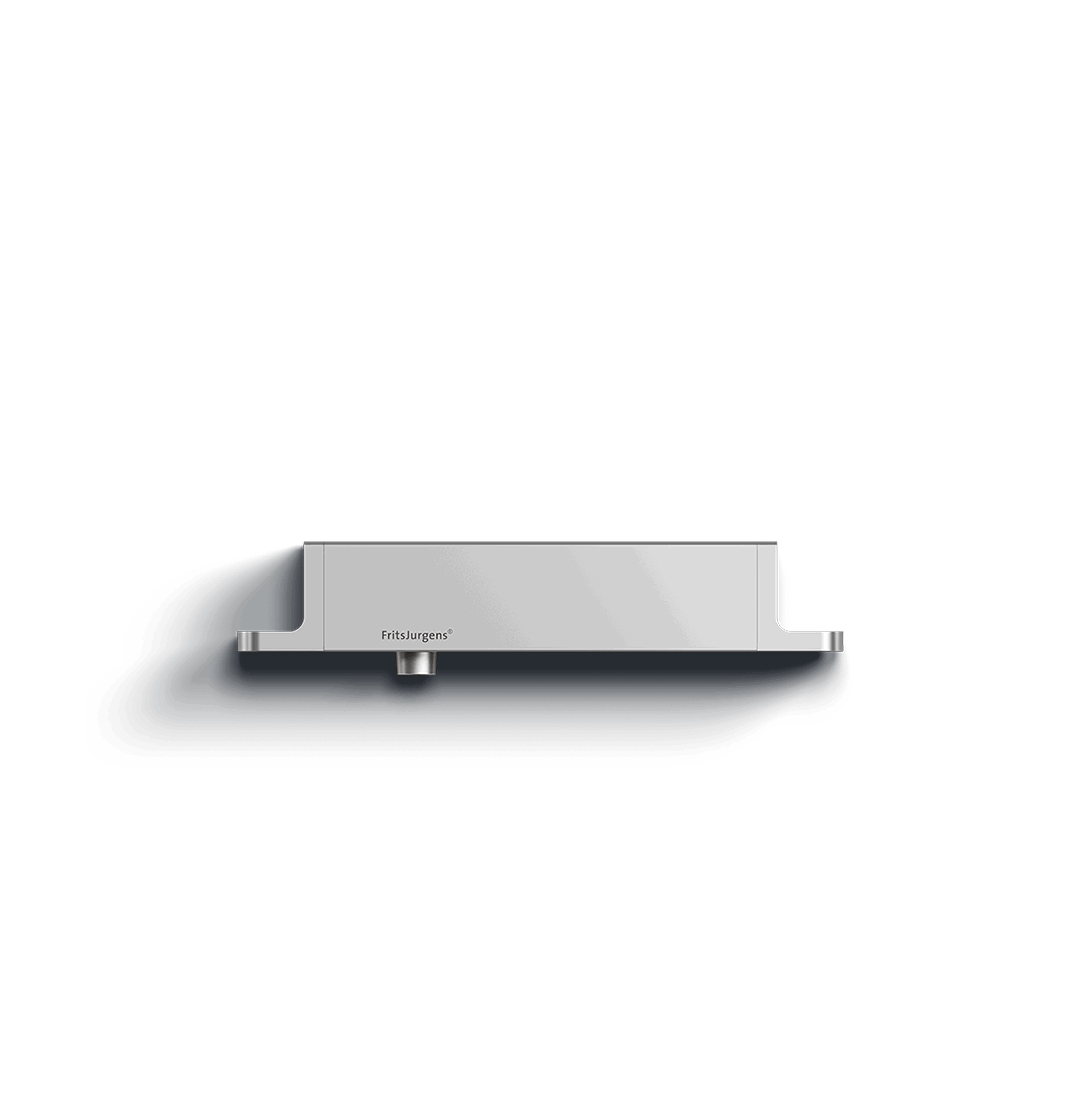
System Fx
Free swing with hold positions
Free swing through a full 360° turn, with hold positions at 0°, 90°, 180° and 270°. The door is moved by hand and stays put once it reaches one of them. The hold at 0° presses the door into the frame, which makes System Fx the system for acoustic doors. With centre placement it carries a pivoting wall. Weight classes A, C and G, 20 to 500 kg.
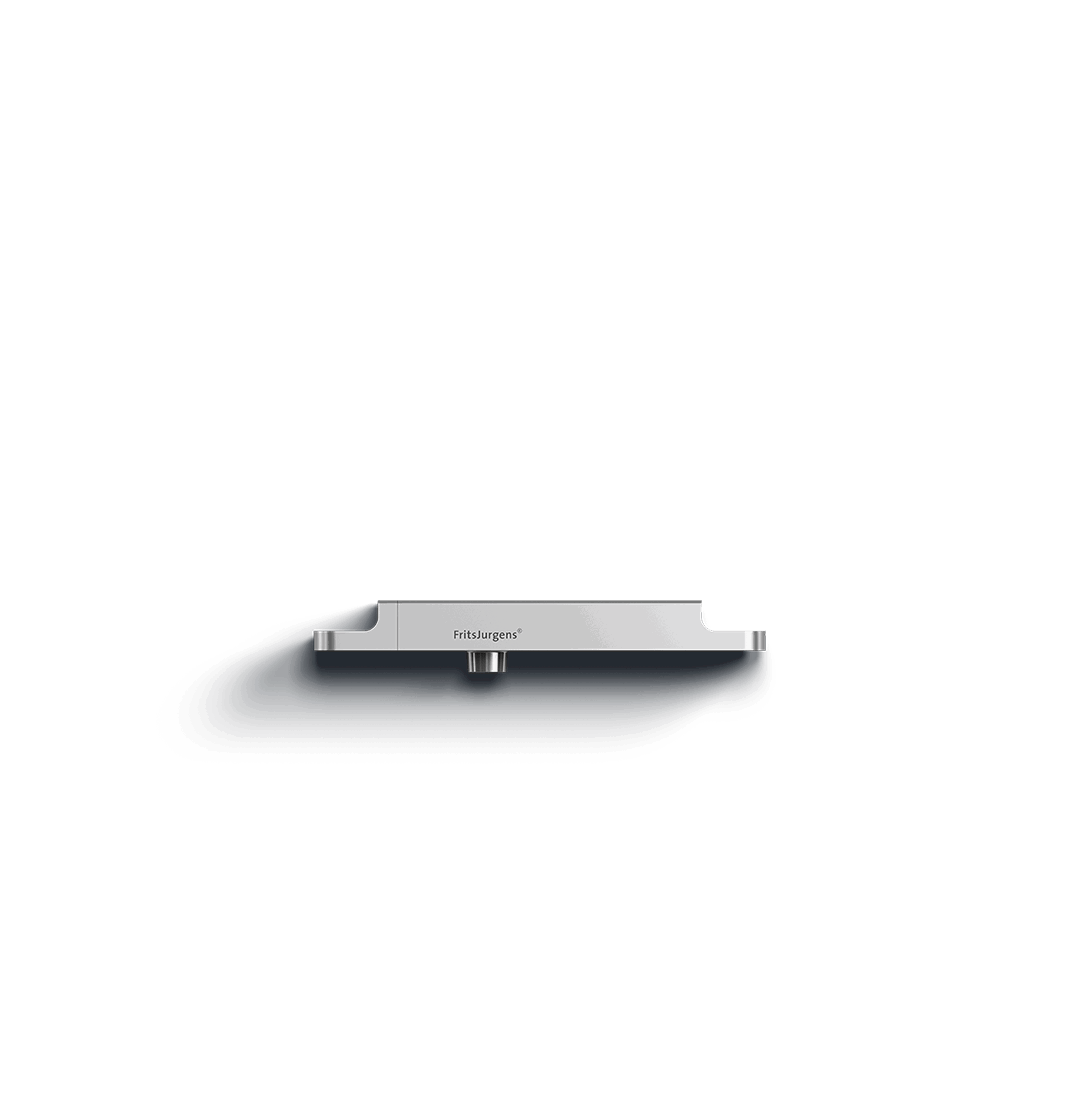
System One
Fully free swing
No resistance and no hold positions: the door is moved by hand and does not return on its own. The smallest footprint in the range, and the choice for glass. One class, G, from 0 to 500 kg.
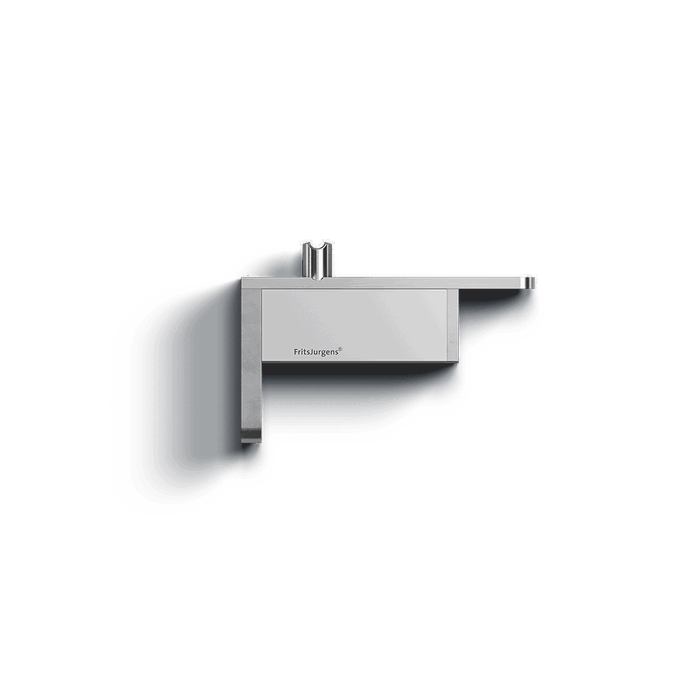
Top pivots
The connection between door and ceiling or top frame
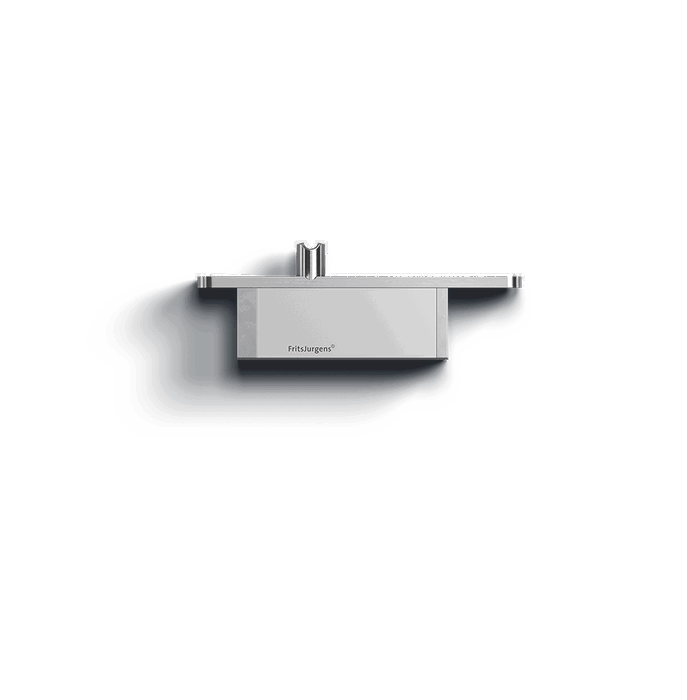
The top pivot connects the top of the door to the ceiling or the top frame.
| Top pivots and when to use them | |
|---|---|
| Top pivot 40 mm | Fixed pivot point at 40 mm. Maximum clear width, no adjustment. The Class G version takes a cable grommet with a 7.5 mm cable entry. |
| Top pivot 70 mm | Adjustable from 70 mm. The standard choice for most projects. The Class G version takes a cable grommet with a 7.5 mm cable entry. |
| Top pivot Reversed | Adjustable from 130 mm. When there is no room in the door head, mounted in the ceiling. |
Floor plates
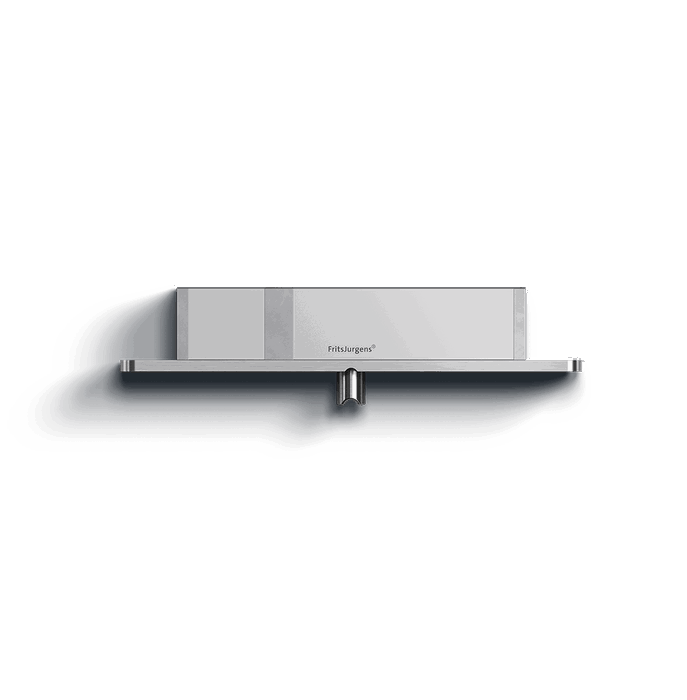
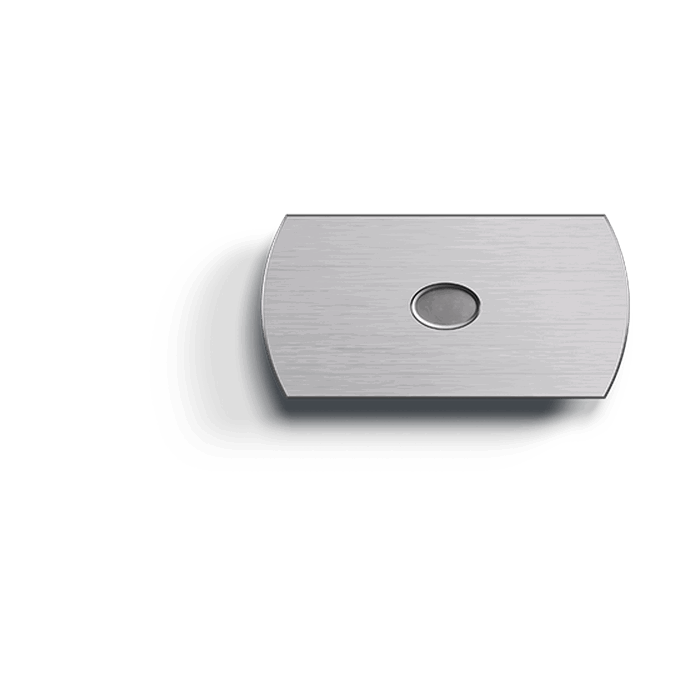
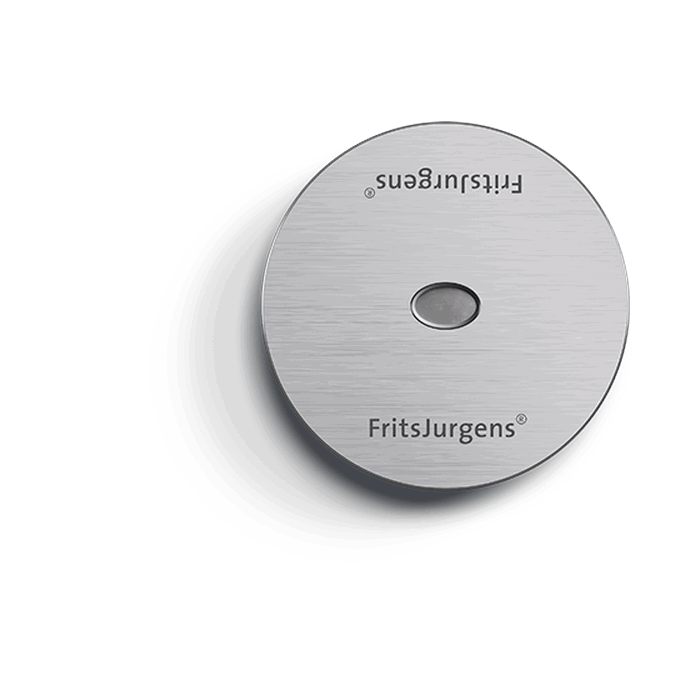
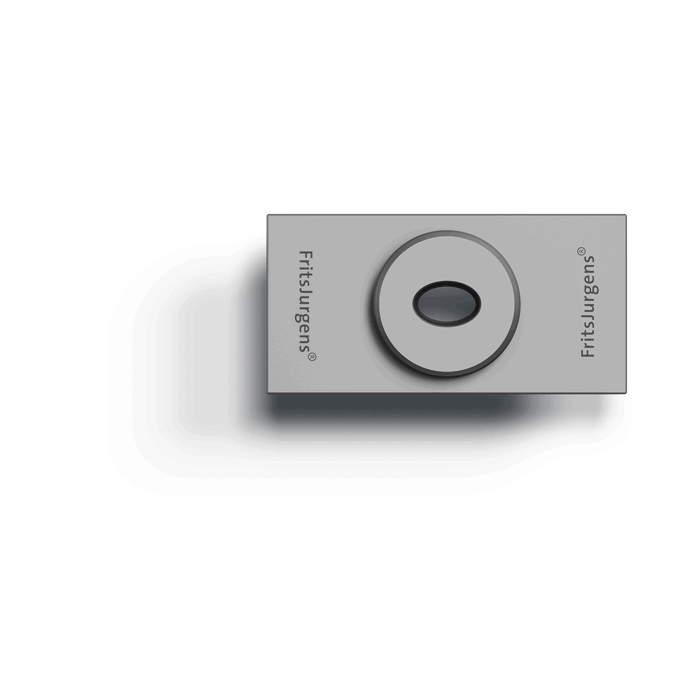
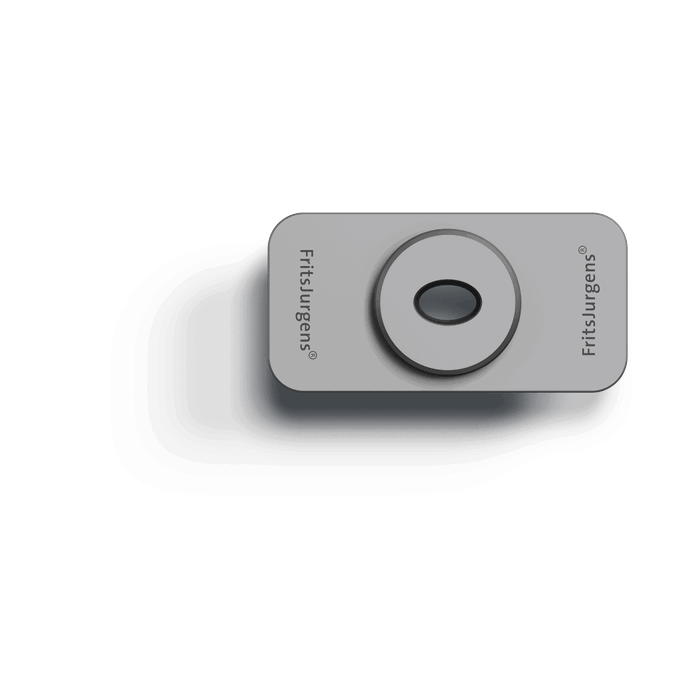
The only visible part at the bottom of the door
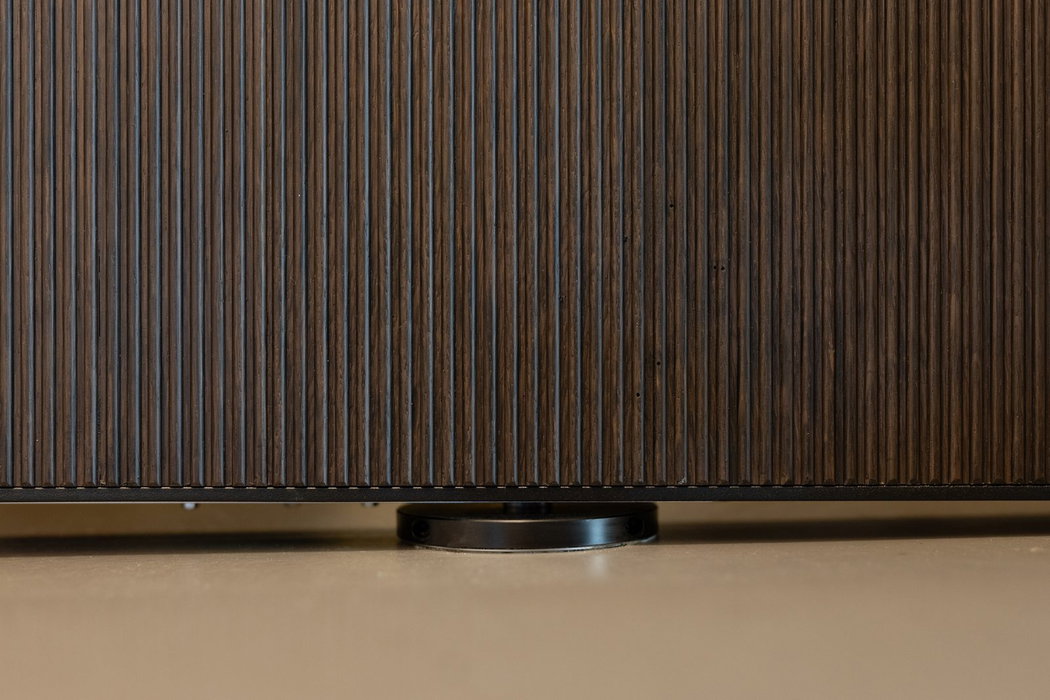
The floor plate is fixed with 8 mm mounting pins, so it works over underfloor heating.
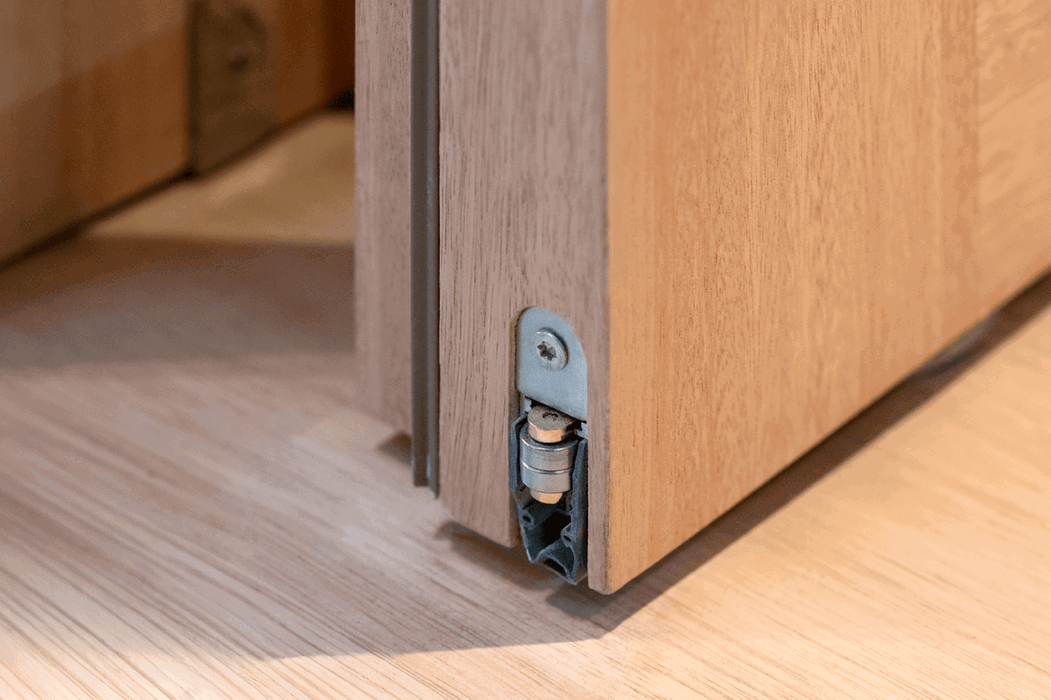
The Flush versions are recessed into the floor rather than sitting on it. Less of the plate stands proud, so there is less of an edge for dirt and water to collect against. In a hotel that is the difference between wiping over a detail and cleaning around one.
| Floor plates and when to use them | |
|---|---|
| Floor plate squared | Rectangular. The standard choice for interior applications. |
| Floor plate round | Round. For interior applications with an aesthetic preference for a round detail. |
| Floor plate Flush squared | Rectangular, recessed. For aluminium sills and exterior openings. |
| Floor plate Flush rounded | Round, recessed. For wooden and stone sills and exterior openings. |
How the weight class is decided
Weight class follows door weight and door width together, never weight alone. A wider door of the same weight needs a higher class. The FritsJurgens Selector settles it.
Not sure which hardware you need?
The product selector works out the right combination for your door.
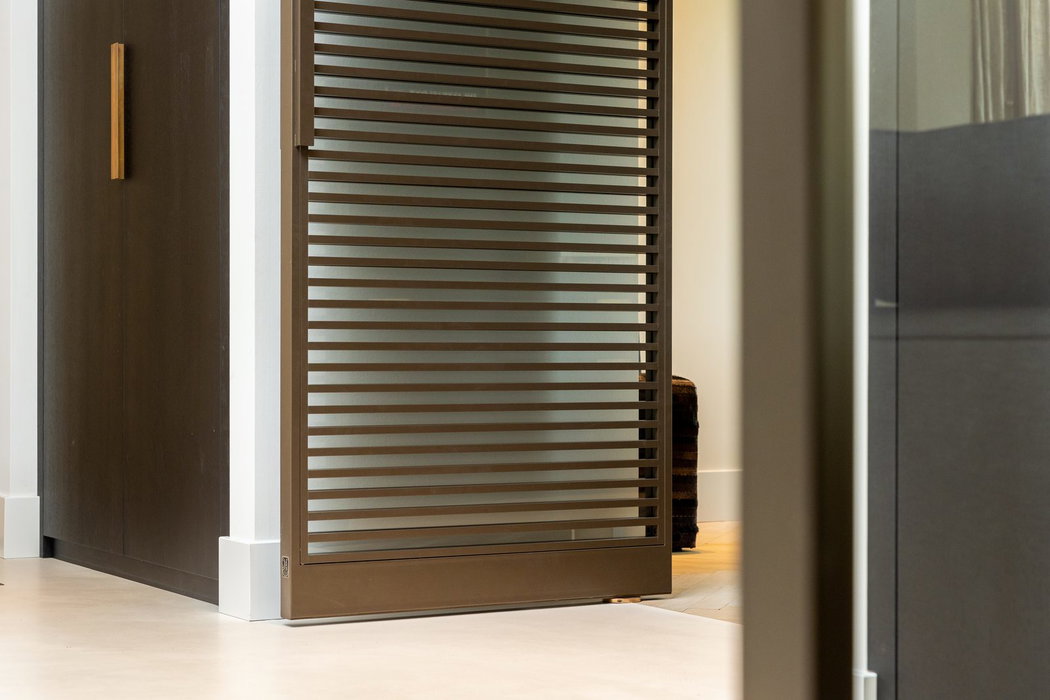
What a hospitality buyer asks first
Everything so far is about what the door has to do. What follows are the questions that come up once that is settled.
Hygiene, and a door that is easy to keep clean
Hospitality doors are cleaned every morning, so what counts is how much there is to clean.
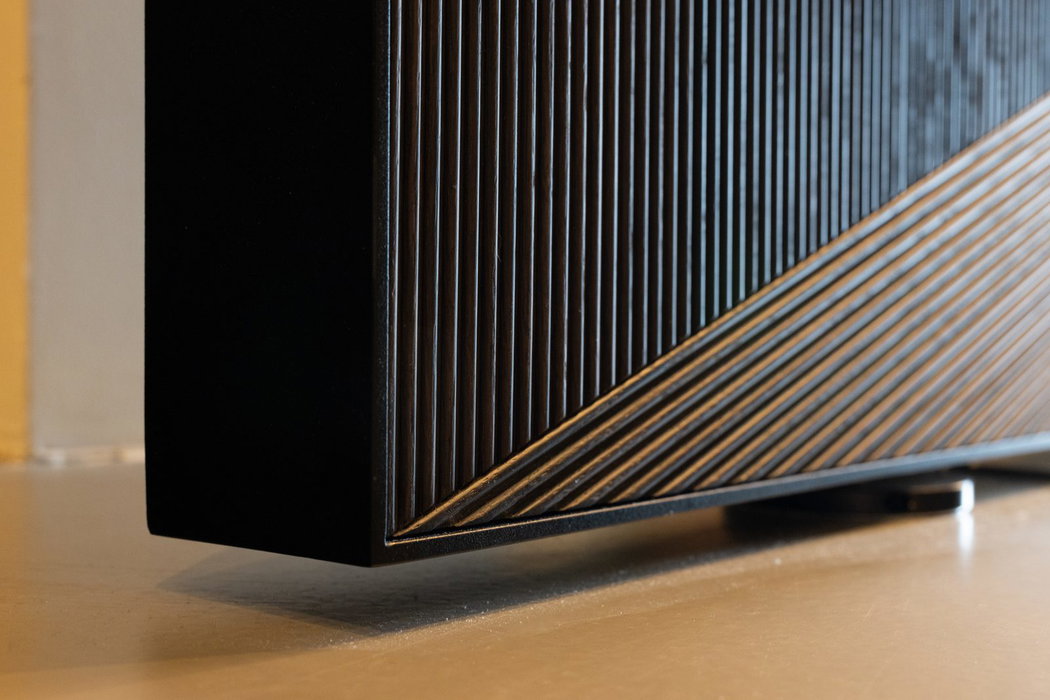
The mechanism is inside the door, so there are no knuckles, no leaves and no exposed moving parts, and no gap between hinge and frame for anything to collect in. All you see is two flat plates, one in the floor and one in the ceiling, both hardened stainless steel and both wiped clean in a single pass.
A Flush floor plate finishes level with the floor, so there is no lip to work around, no frame at floor level and no sill, and the door hangs clear of the finish.
FritsJurgens makes no antimicrobial claim and holds no hygiene certification. The advantage is geometric, not chemical.
No maintenance
Tested to 500,000 movements and maintenance-free. The mechanism is sealed inside the door, and there is nothing on the outside of it to service.
On its own that number means little to an operator. In practice it means no service contract to sign, no maintenance line in the budget, and no room out of service because of a door.
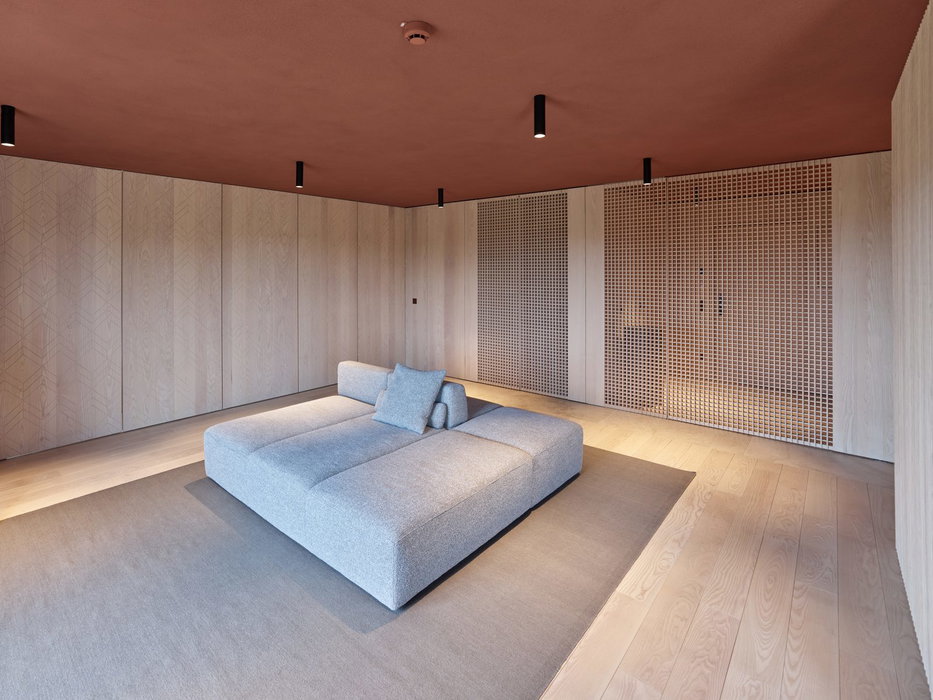
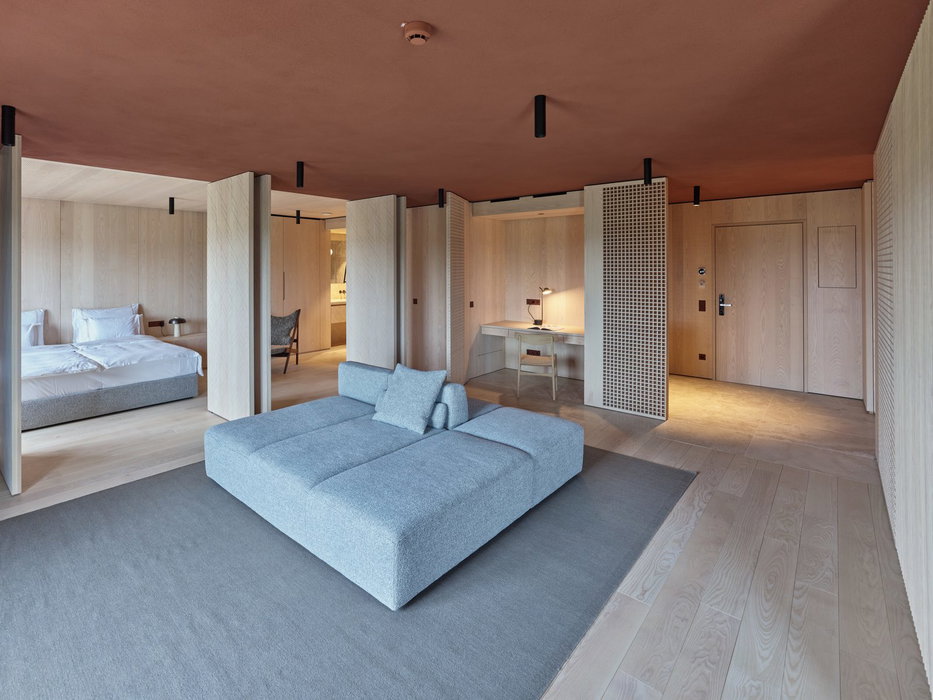
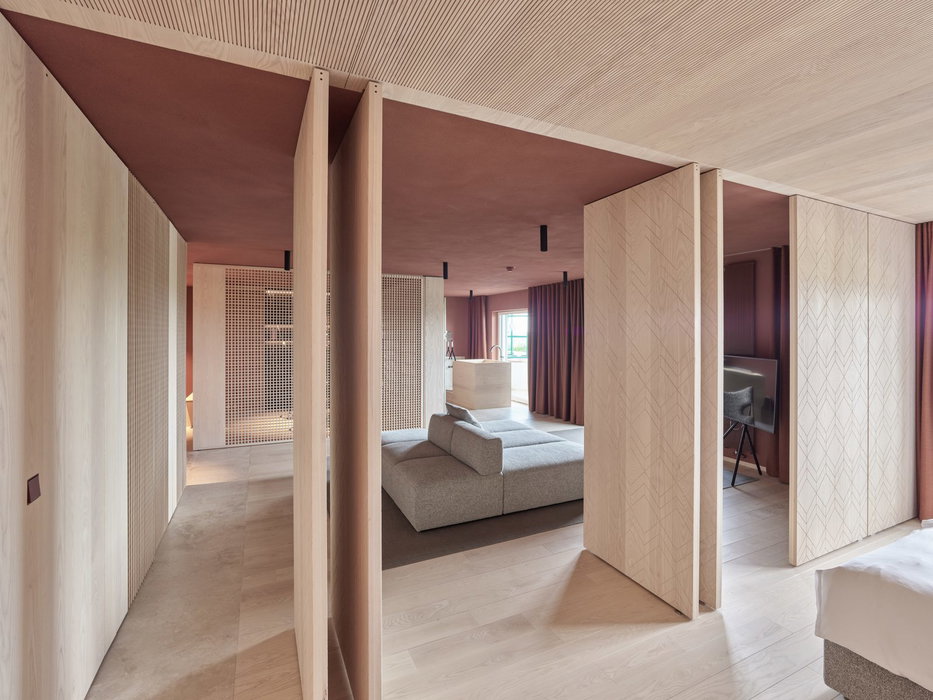
Installation, and renovation without closing the floor
Refurbishment never stops in hospitality, which suits this product rather than working against it. What follows is written for whoever has to plan the programme.
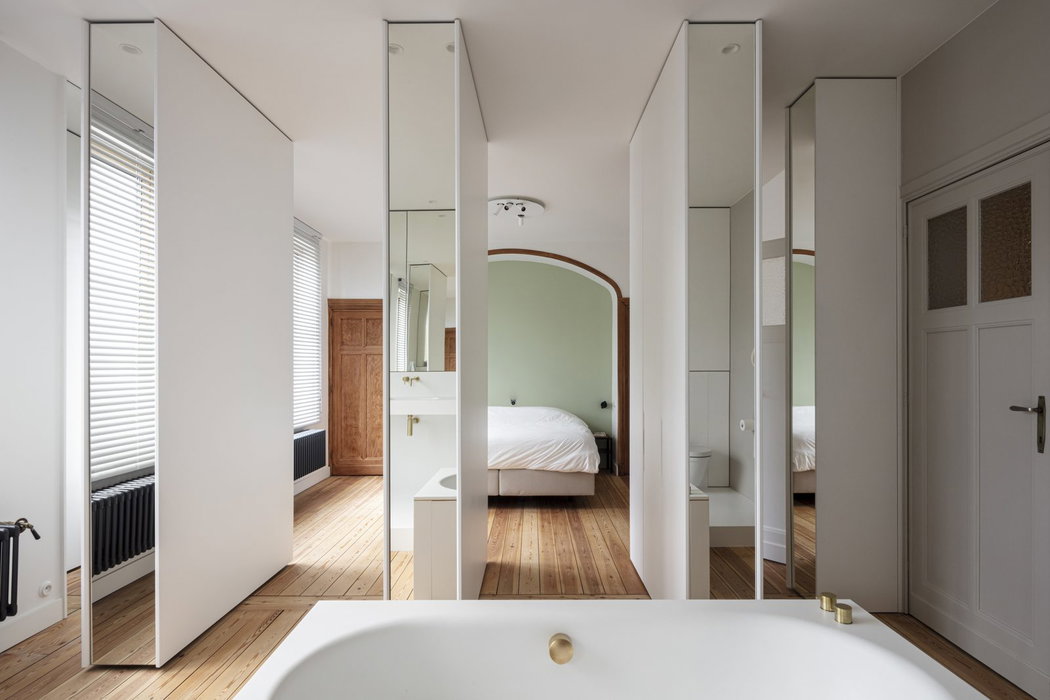
No frame is needed. The building work is two fixings, one plate in the floor and one in the ceiling, with the floor plate fasteners mortised 8 mm into the floor. Doors are made off site by a door manufacturer and arrive finished, so the time spent in the room is short.
The adhesive needs 24 hours to cure, and the door has to stay stationary for all of it. That is at least a number you can plan a programme around.
So a property can refurbish a floor at a time while the rest of the hotel keeps trading, and a Flush floor plate finishes into the existing floor without rebuilding it.
Local technical support
You get a named contact in your own market through the dealer and distribution network. Behind that sits the technical documentation, CAD, STEP and DWG files, the FritsJurgens Selector, the gap calculator and the lateral force calculator, plus specification support before the drawings freeze.
Acoustic comfort
Acoustic performance comes from the door itself, from how it is built and how it is sealed. The hardware's job is to carry a heavy, well-sealed door silently, and to keep doing it for decades. That is what makes a properly detailed acoustic door practical to build.
The full treatment, with reference values, seal types and the system advice per configuration, is on the interior pivot doors page. The hardware side is covered under Which system for which door.
Accessibility and certification
Accessible entrances are built on System M+ NHO, and the numbers matter more than the label: a minimum of 5 seconds from 90° to 12°, and no more than 5.0 lbs (22.2 N) to open. Both are ICC A117.1-2017, chapters 404.2.7 and 404.2.8, which aligns with the ADA.
Fire ratings apply to a whole door, not to a hinge. The test puts leaf, frame, seals and hardware together as one assembly, and whoever runs that test holds the certificate, which in practice means the door manufacturer. No pivot hinge is rated on its own, ours included.
In a hotel that usually matters in four places: guest room doors onto the corridor, stair enclosures, plant rooms and the kitchen separation. The doors pivot systems tend to be specified for are not rated openings, which covers bathrooms, dressing rooms, suite dividers and most lobby and bar features. If your opening is rated, talk to your door manufacturer early.
FritsJurgens does not certify burglar resistance.
Hospitality projects
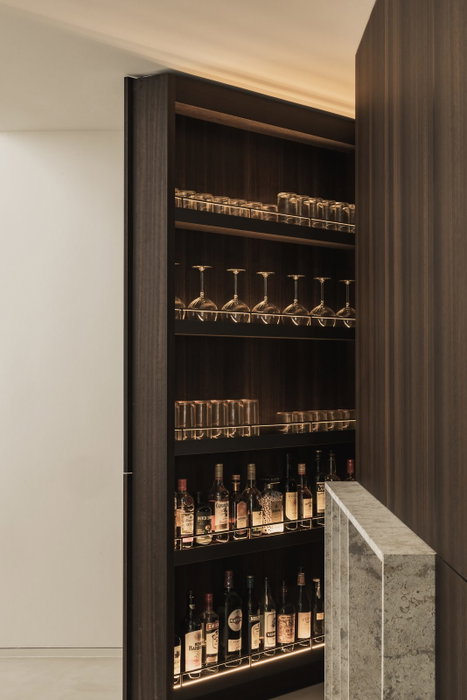
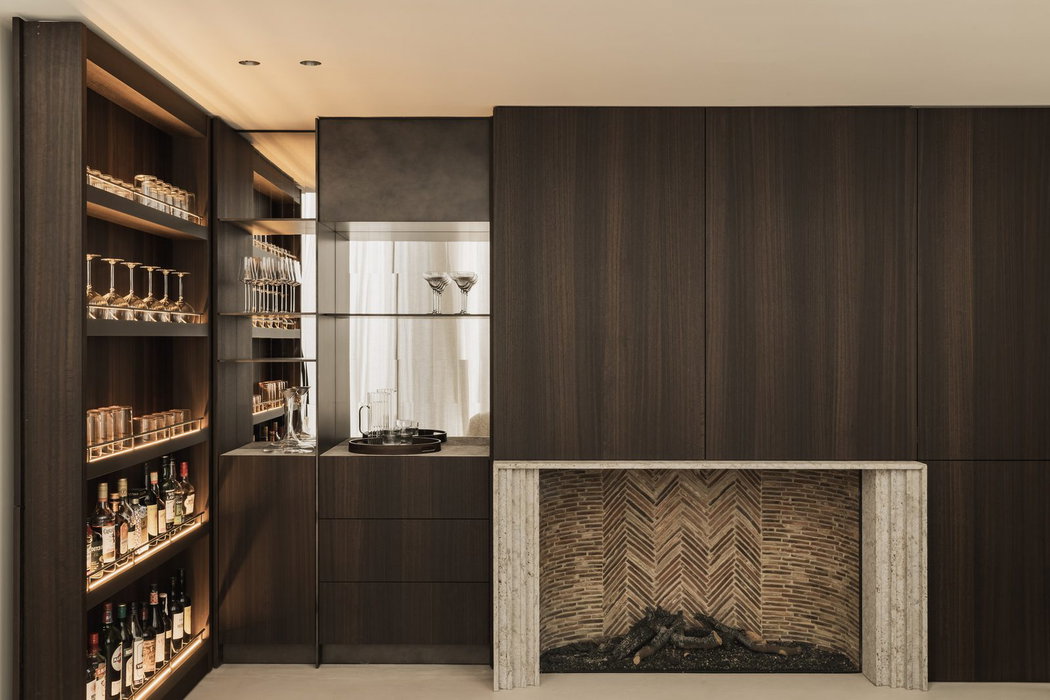
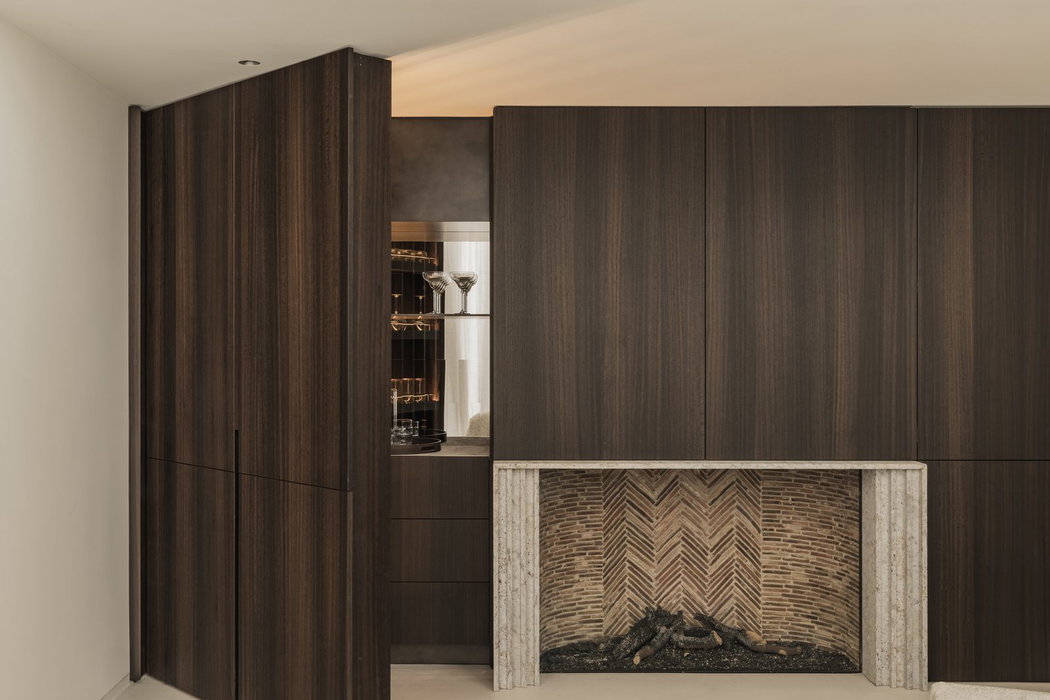
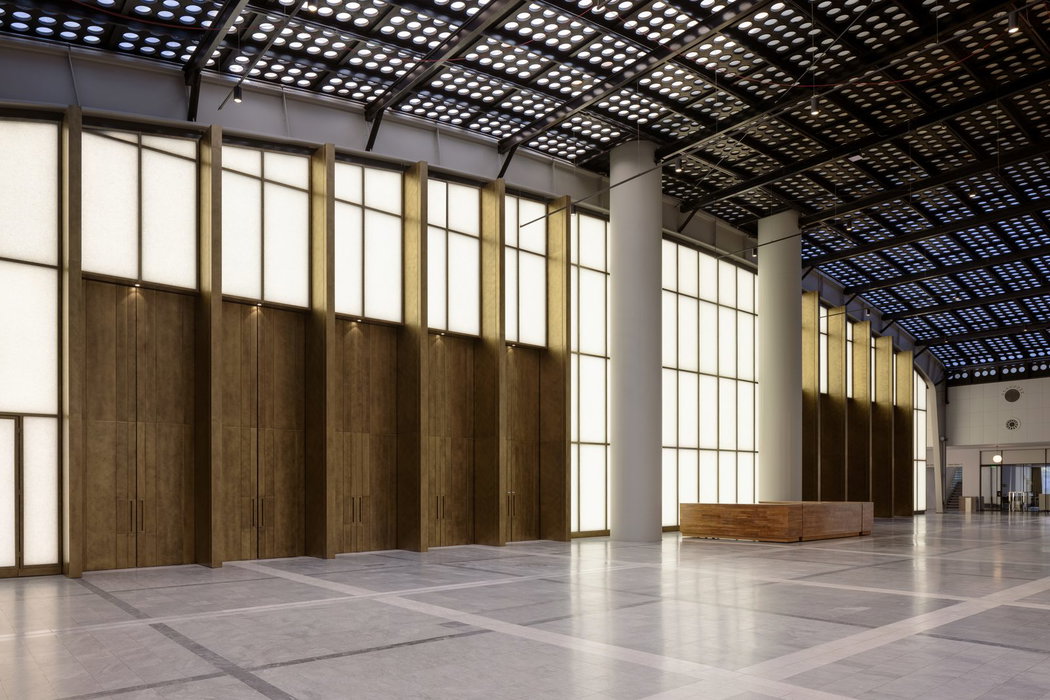
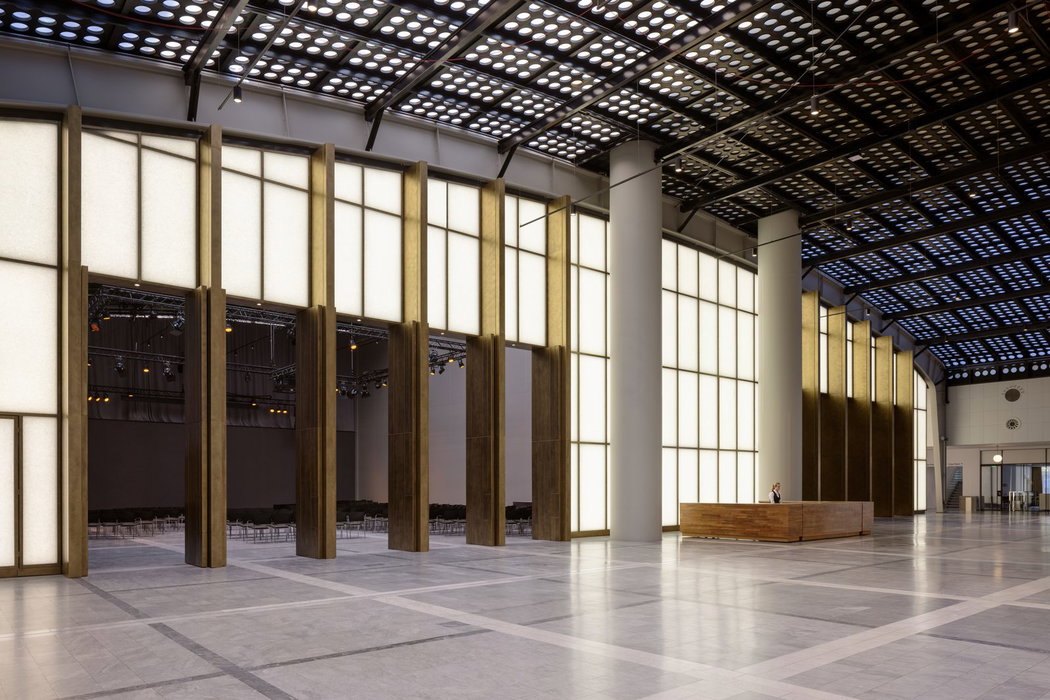
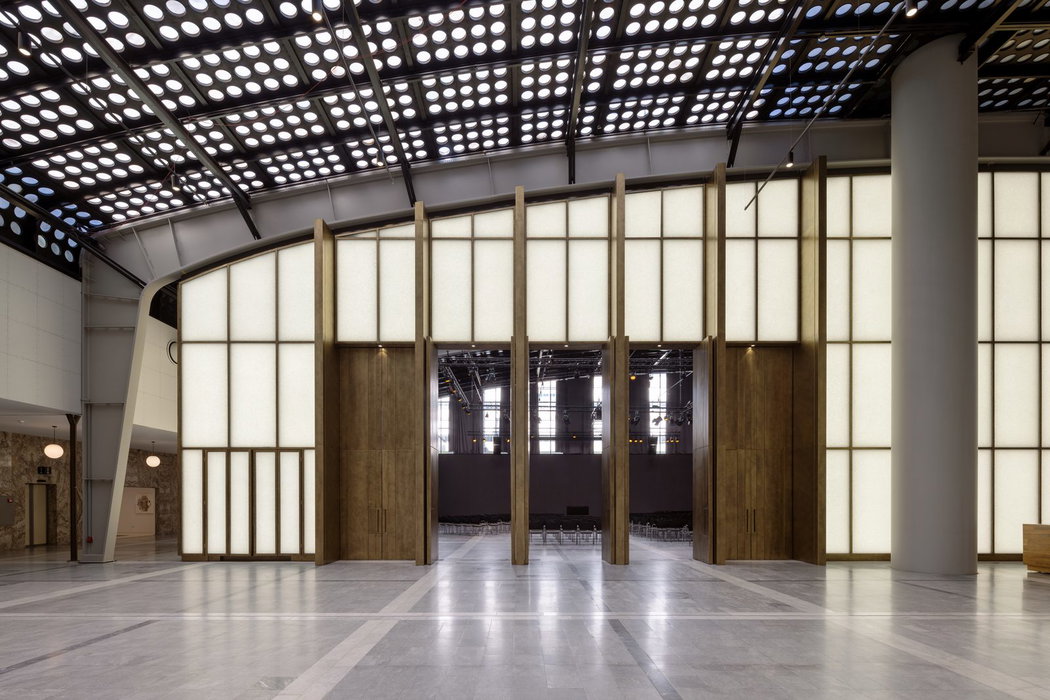
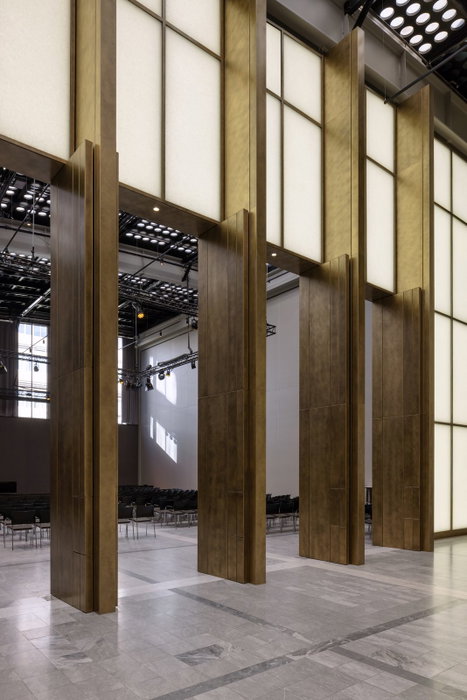
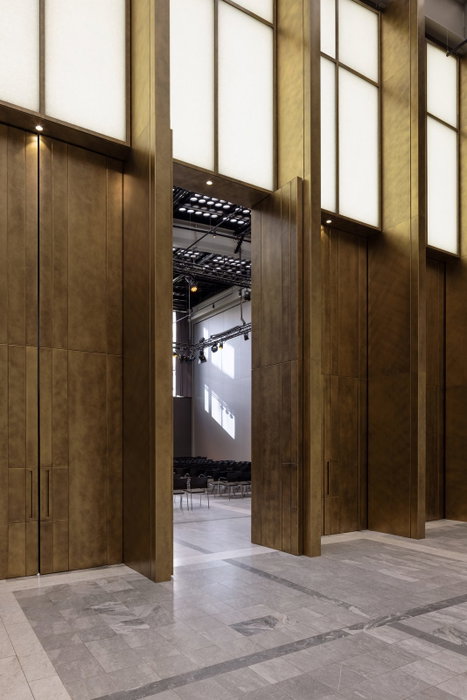
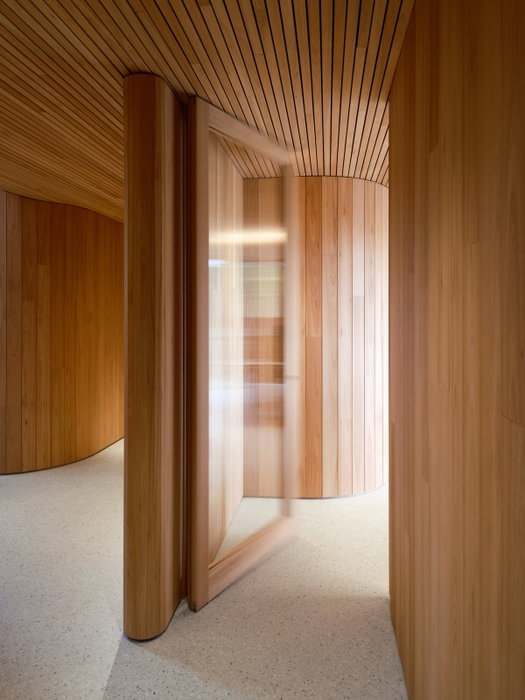
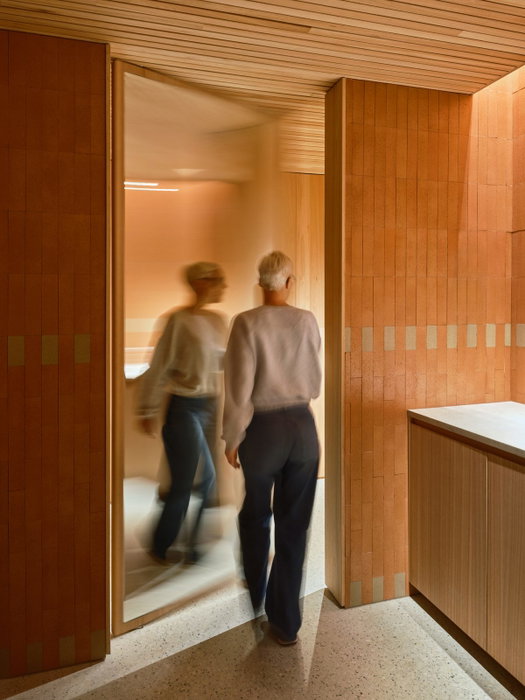
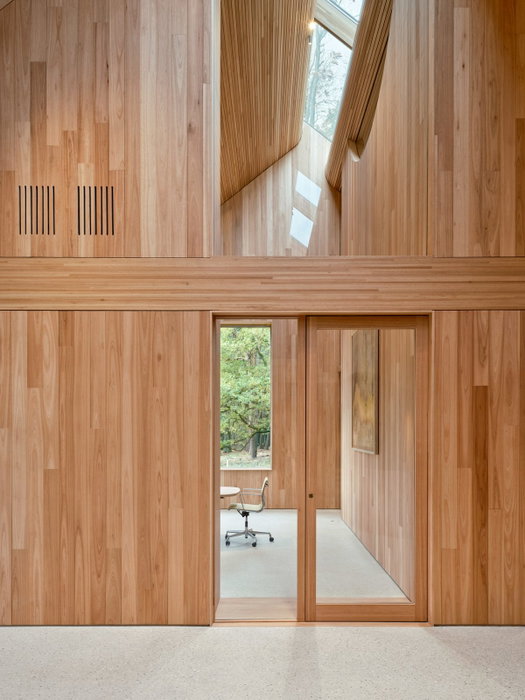
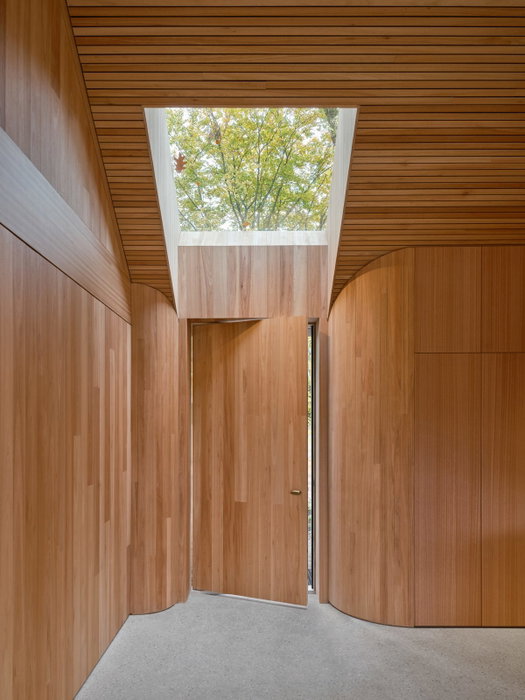
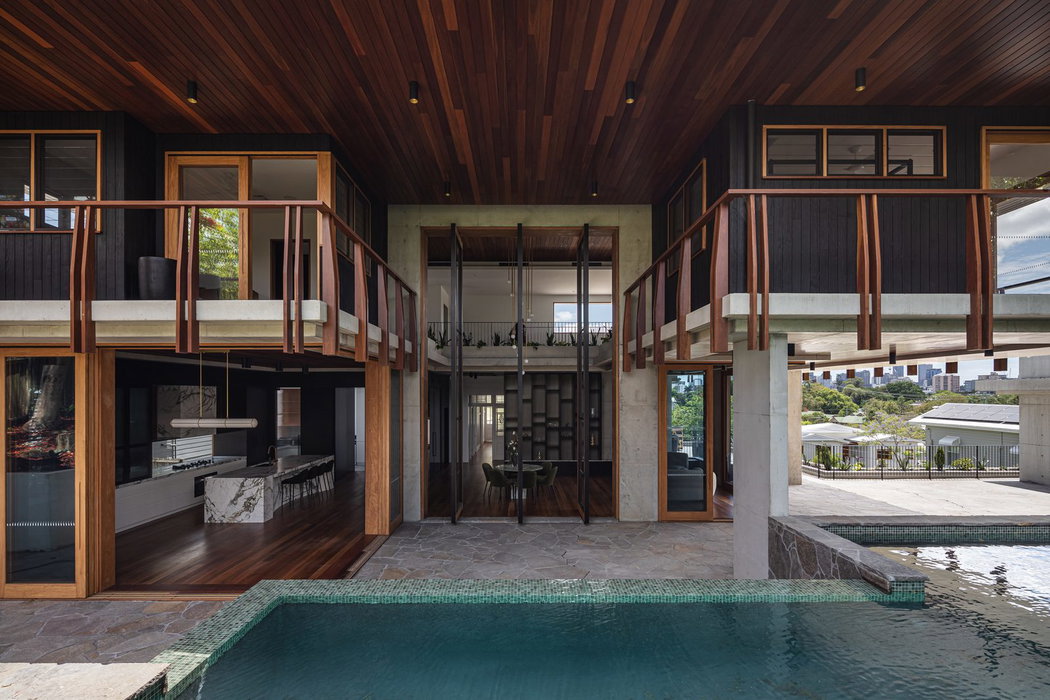
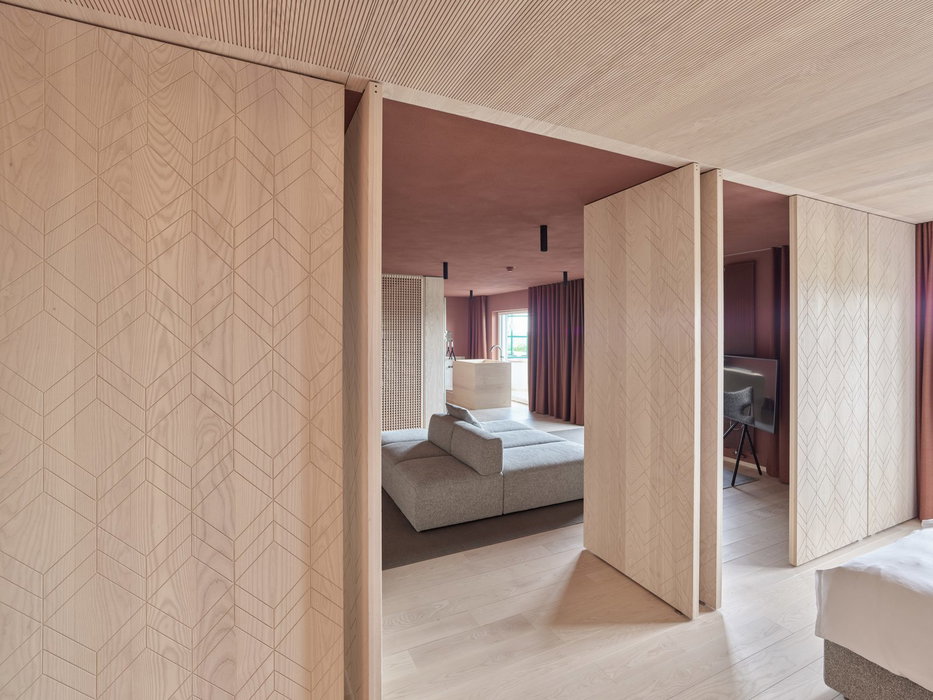
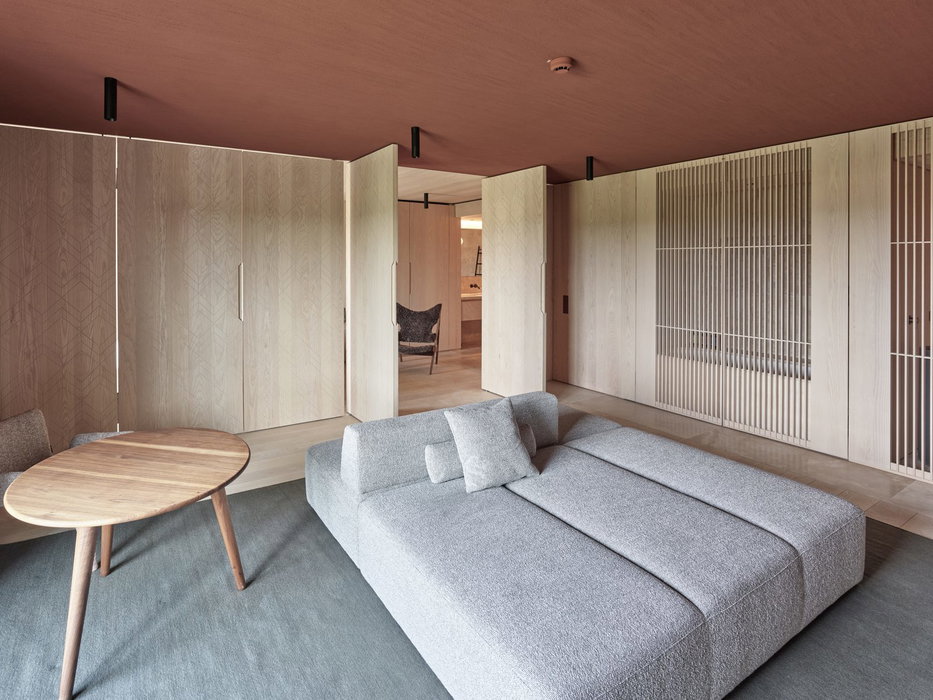
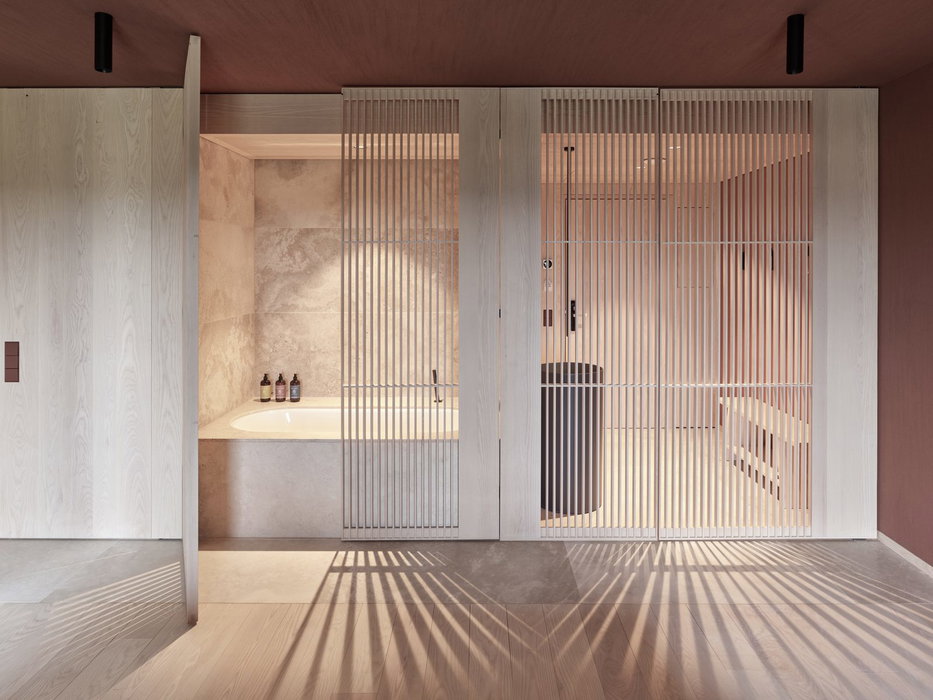
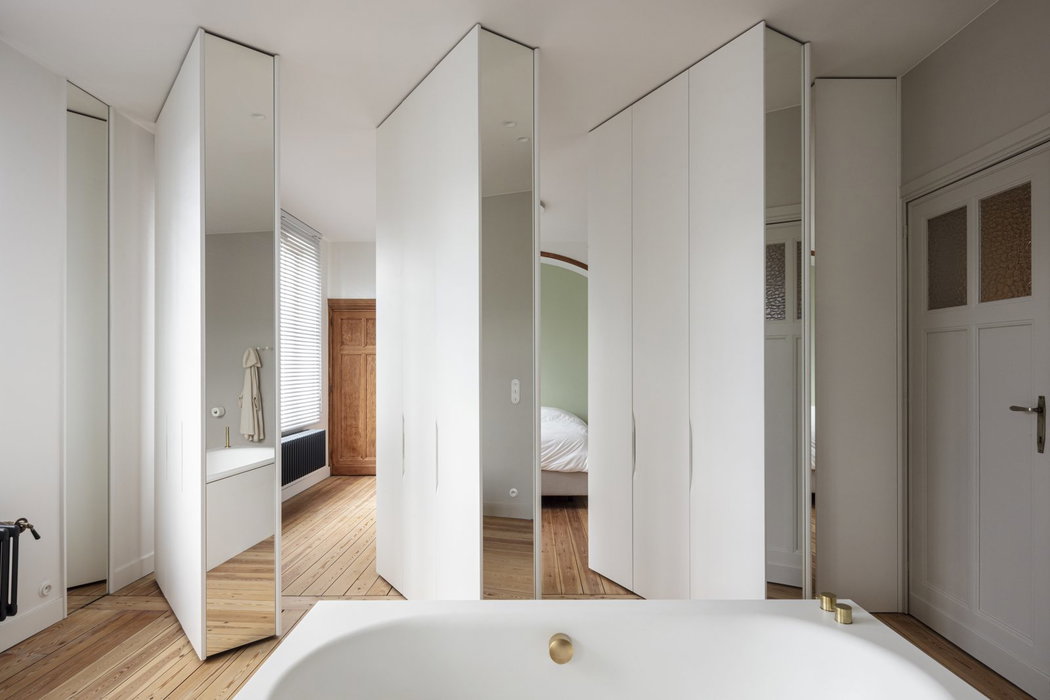
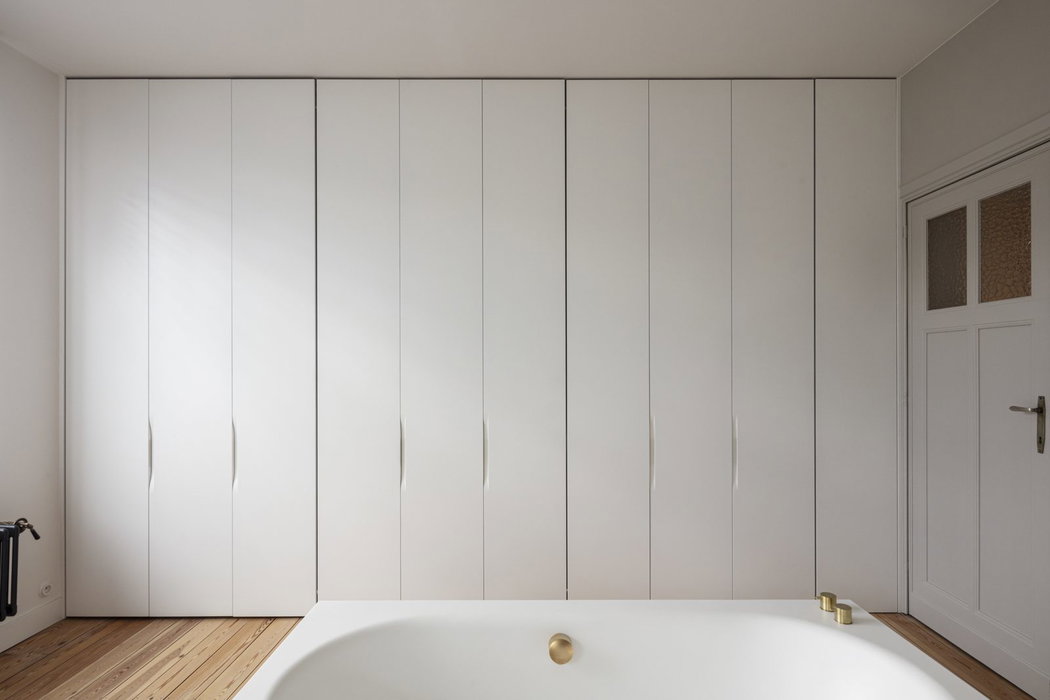
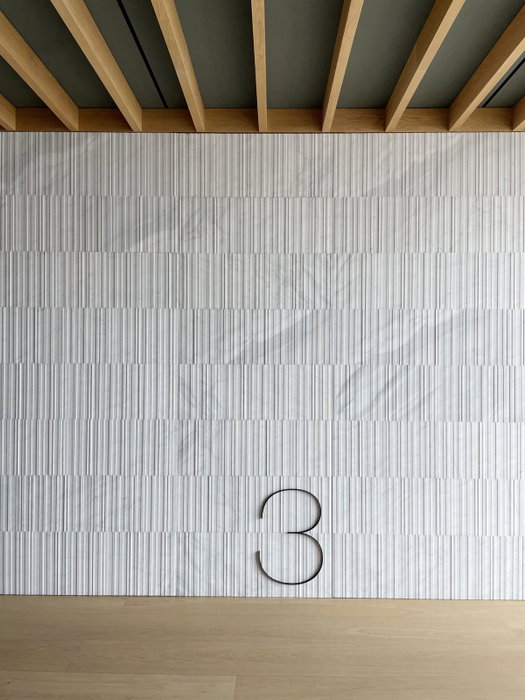
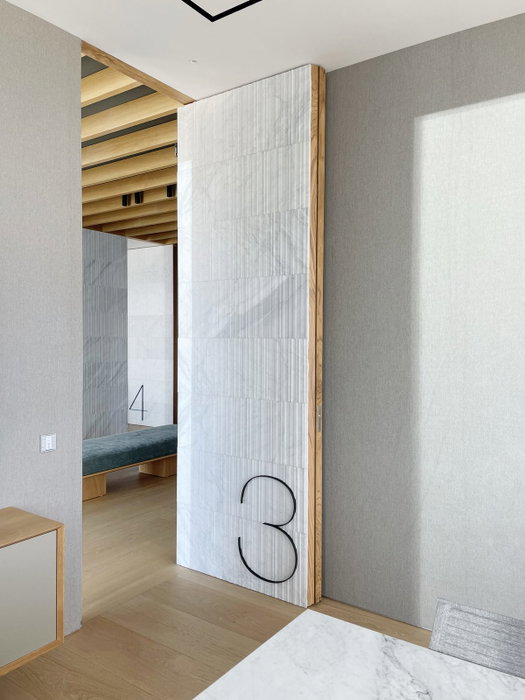
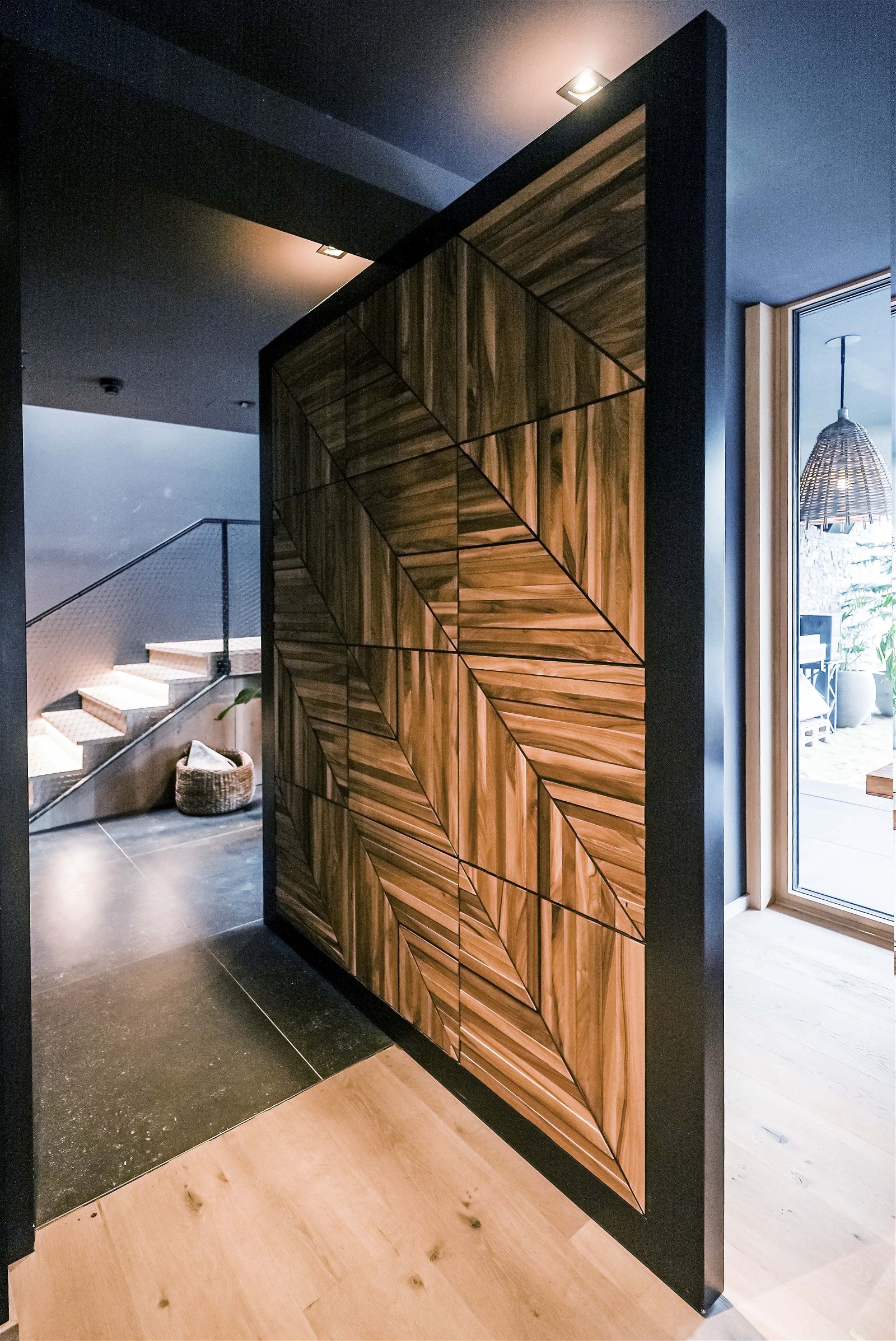
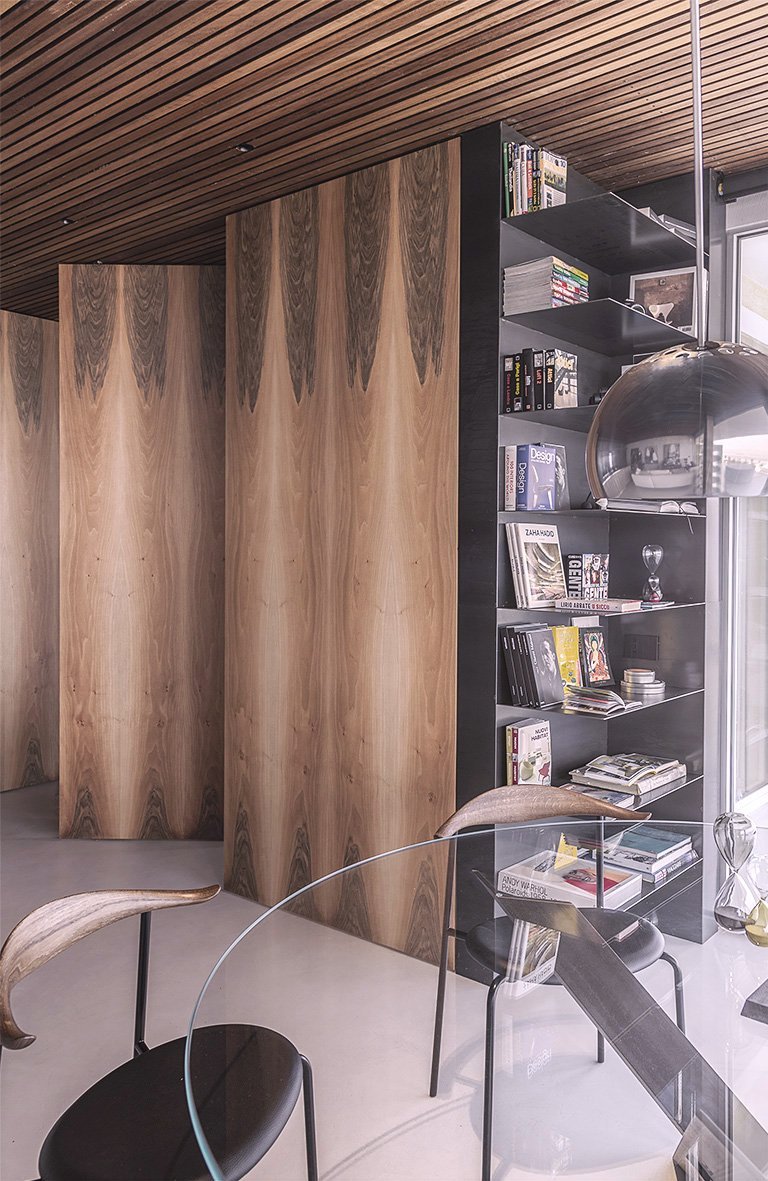
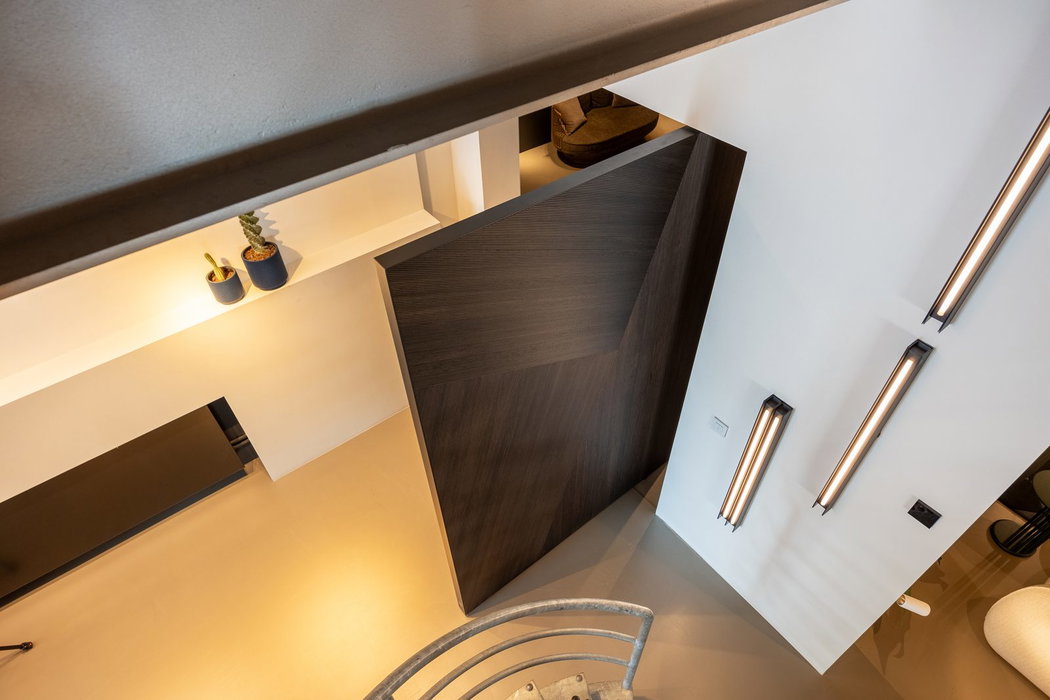
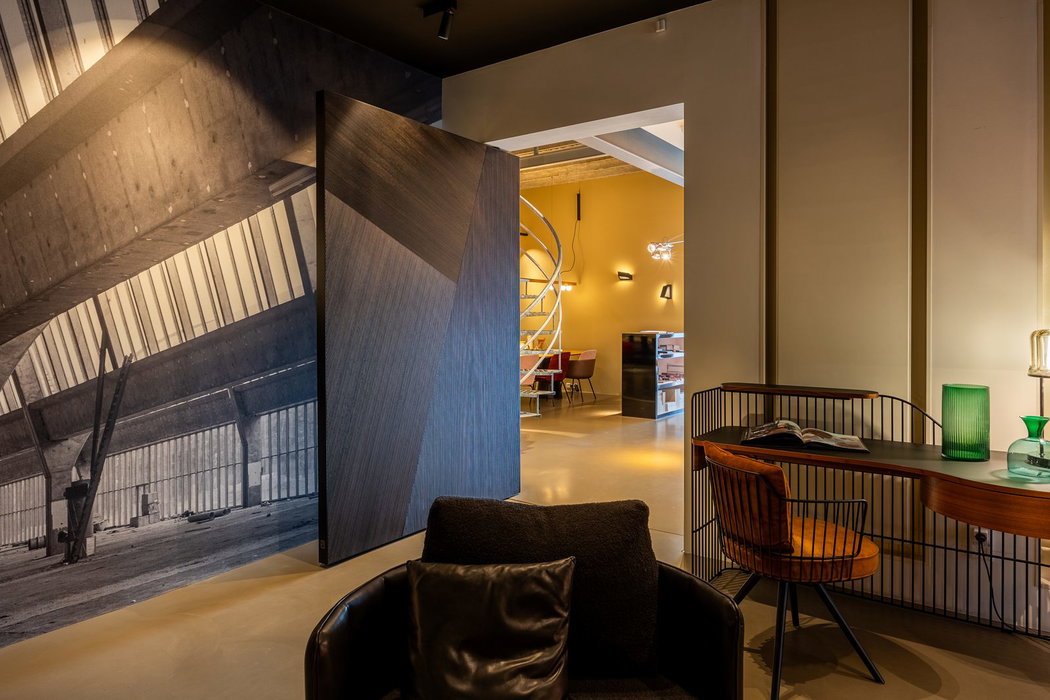
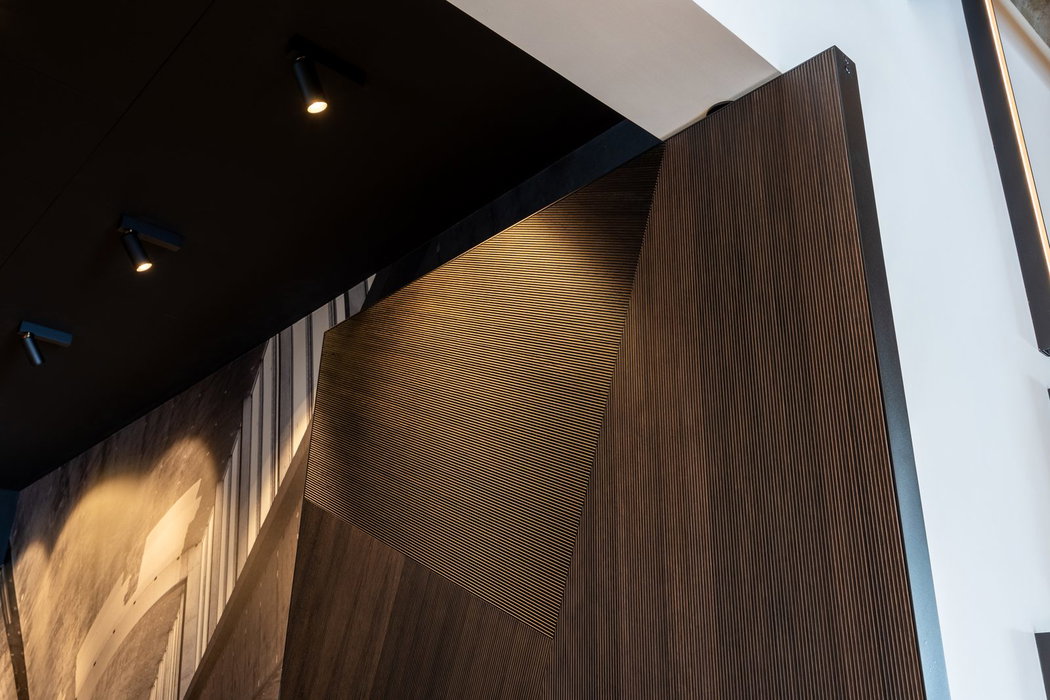
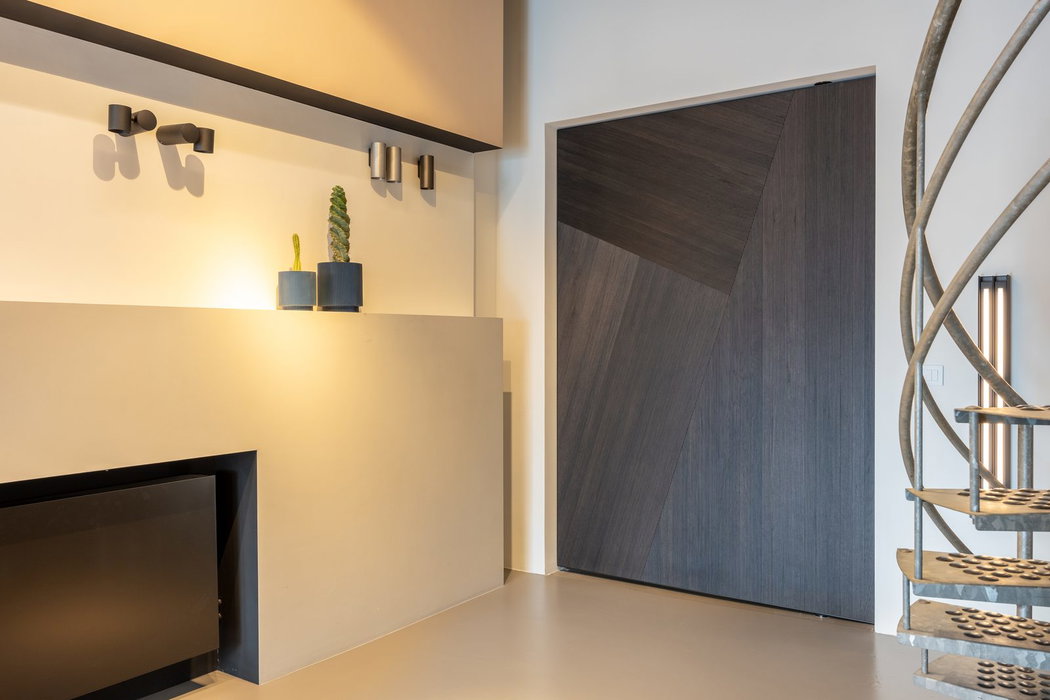
Three properties, three quite different jobs for the same hinge. At Hotel Gerl in Salzburg the pivot doors are up on the roof, where the owners wanted guests to wonder what was on the other side. On the Adriatic coast, three walnut doors split a space that has to work differently in the morning and the evening. Depot Boijmans in Rotterdam is a public art depot, so its four pivot doors take constant traffic.
Each project lists its full credit chain: architect, interior designer, builder, door manufacturer, dealer, photographer.
ossip-van-duivenbode.jpeg)
Frequently asked questions
Is a pivot door suitable for high traffic?
Yes. The mechanism is tested to 500,000 movements and is maintenance-free. For doors that have to stand where they are left through a busy service, System Fx holds at 0°, 90°, 180° and 270°.
How is a pivot door cleaned?
In a single pass. There is nothing on the outside of the door to clean around: no knuckles, no leaves, no exposed moving parts, and no gap between hinge and frame. Two flat stainless steel plates are visible, one in the floor and one in the ceiling. FritsJurgens makes no antimicrobial claim, so the advantage is geometric rather than chemical.
Is a pivot door accessible?
System M+ NHO meets ICC A117.1-2017, which aligns with the ADA: a minimum of 5 seconds to close from 90° to 12°, and no more than 5.0 lbs (22.2 N) to open.
Can a pivot door divide a restaurant or an event space?
Yes, and this is where System Fx earns its place. Four hold positions through a full 360° turn, free swing between 10° and 80°, and with centre placement the whole panel becomes a pivoting wall.
Can a pivot door be used in a bathroom or a spa?
Yes. At floor level a pivot door has no frame, no rail and no track, so water has nowhere to collect. A Flush floor plate is recessed into the floor, which leaves even less of an edge. System One suits frameless glass and the slimmest profiles.
What maintenance does a pivot door need?
None. The system is maintenance-free for the tested life of 500,000 movements. There is no service contract to sign and no maintenance line to budget.
How long does installation take, and can it happen while the hotel is open?
The building work is two fixings, one plate in the floor and one in the ceiling, mortised 8 mm into the floor. Doors arrive finished from the door manufacturer, so time in the room is short. The adhesive cures in 24 hours and the door stays stationary for that period. In practice a property refurbishes a floor at a time while the rest keeps trading.
What happens at a refurbishment?
A Flush floor plate finishes into the existing floor without rebuilding it, and no frame has to come out. That is what makes a floor-by-floor programme possible instead of closing a wing.
Next step
Talk to us about a project, or find the local partner who will supply and support it. FritsJurgens supplies through dealers and distribution partners in Europe, the Middle East, North America and Asia-Pacific.